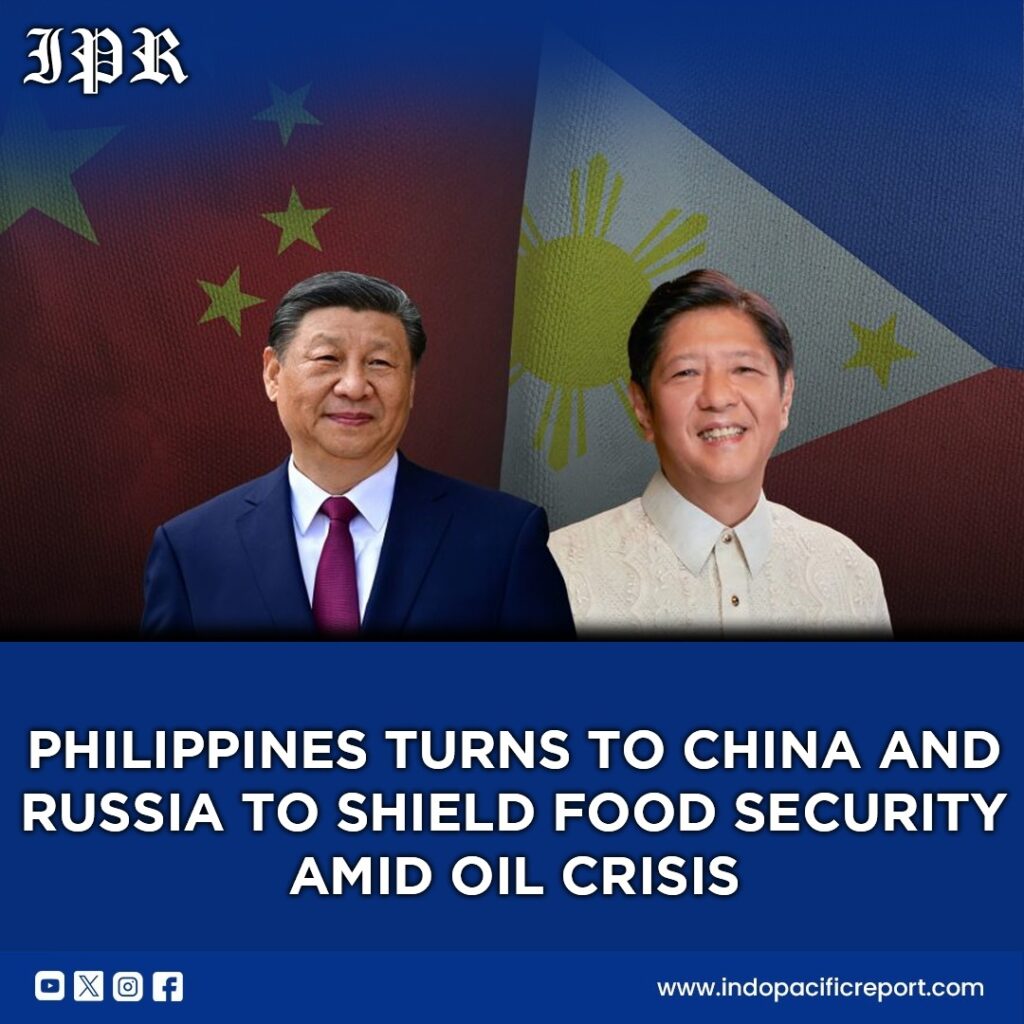
The Philippines has entered urgent negotiations with major fertilizer exporters, notably China and Russia, amid a 40% spike in fertilizer prices. While the country has secured roughly 84% of its immediate fertilizer needs, rising costs and transportation bottlenecks caused by the ongoing Middle East conflict threaten rice harvests and key agricultural exports, including bananas and coconut oil. Manila’s outreach to India and Belarus signals a broader hedging strategy, reflecting the country’s recognition that food security and global commodity supply chains are now intimately linked to geopolitical stability in distant theaters.
Viewed through the lens of great-power competition, this development highlights the intersection of energy, agriculture, and international influence. China and Russia are increasingly leveraging strategic commodities to consolidate influence in Southeast Asia, while the US and its allies remain concerned with the implications of rising food and fuel costs on regional stability. The Philippines’ move to negotiate directly with these powers illustrates a pragmatic approach: balancing economic necessity with diplomatic risk while navigating the competing priorities of multiple global actors.
From a regional security and economic architecture perspective, these supply disruptions underscore Southeast Asia’s vulnerability to distant conflicts. The surge in Brent crude to over $103 per barrel, combined with potential blockades in the Strait of Hormuz, has driven both fertilizer and fuel prices higher, linking agricultural production directly to energy security. For the Philippines, this crisis amplifies the stakes of existing maritime and security arrangements. Food and energy supply resilience is no longer just a domestic concern—it now depends on stable access to distant supply chains, highlighting the strategic vulnerability of island and peninsular nations in globalized markets.
Alliance dynamics are also at play. While the Philippines maintains close military and economic ties with the United States and Japan, these partners cannot unilaterally solve disruptions in fertilizer or oil markets. Manila’s willingness to negotiate with China and Russia demonstrates an emerging triangular balancing strategy: relying on Western military partnerships for security while engaging pragmatic economic diplomacy with rival powers to maintain essential supplies. This mirrors broader trends in Southeast Asia, where states increasingly pursue dual-track policies to hedge against disruptions from both regional and global shocks.
The maritime and trade implications of this crisis are profound. The Philippines depends on imported fertilizers shipped via the South China Sea and Indian Ocean routes, both vulnerable to disruptions from geopolitical conflict or energy supply shocks. Rising oil prices not only increase transport costs but also threaten food export competitiveness, potentially destabilizing domestic rural economies. The situation exemplifies how energy, agriculture, and maritime security are interlinked, creating new vulnerabilities that extend far beyond traditional territorial disputes.
Strategically, these developments carry broader consequences for the Indo-Pacific balance of power. Manila’s need to secure fertilizer supplies from multiple global actors reinforces the reality that economic resilience is a key component of national security. Nations that cannot guarantee agricultural or energy inputs risk domestic instability, which in turn affects their ability to contribute meaningfully to regional security initiatives. For Washington and Tokyo, the Philippines’ reliance on non-Western suppliers underscores the limits of alliance influence in economic spheres, even as these countries continue to strengthen defense and deterrence posture in the region.
Forward-looking assessment: The fertilizer negotiations, coupled with rising oil and energy costs, illustrate a new dimension of geopolitical competition: critical commodities as leverage in regional strategy. Southeast Asian states will need to integrate energy and food security into broader defense and foreign policy planning. Manila’s engagement with multiple suppliers is a prudent hedge, but sustained price volatility or further disruptions could strain domestic stability and complicate regional security cooperation. In a larger sense, the crisis signals that economic resilience has become inseparable from military and diplomatic strategy in the Indo-Pacific.
Audience Question: Can Southeast Asian countries maintain food and energy security without deepening dependence on global powers like China and Russia, or is strategic reliance inevitable?