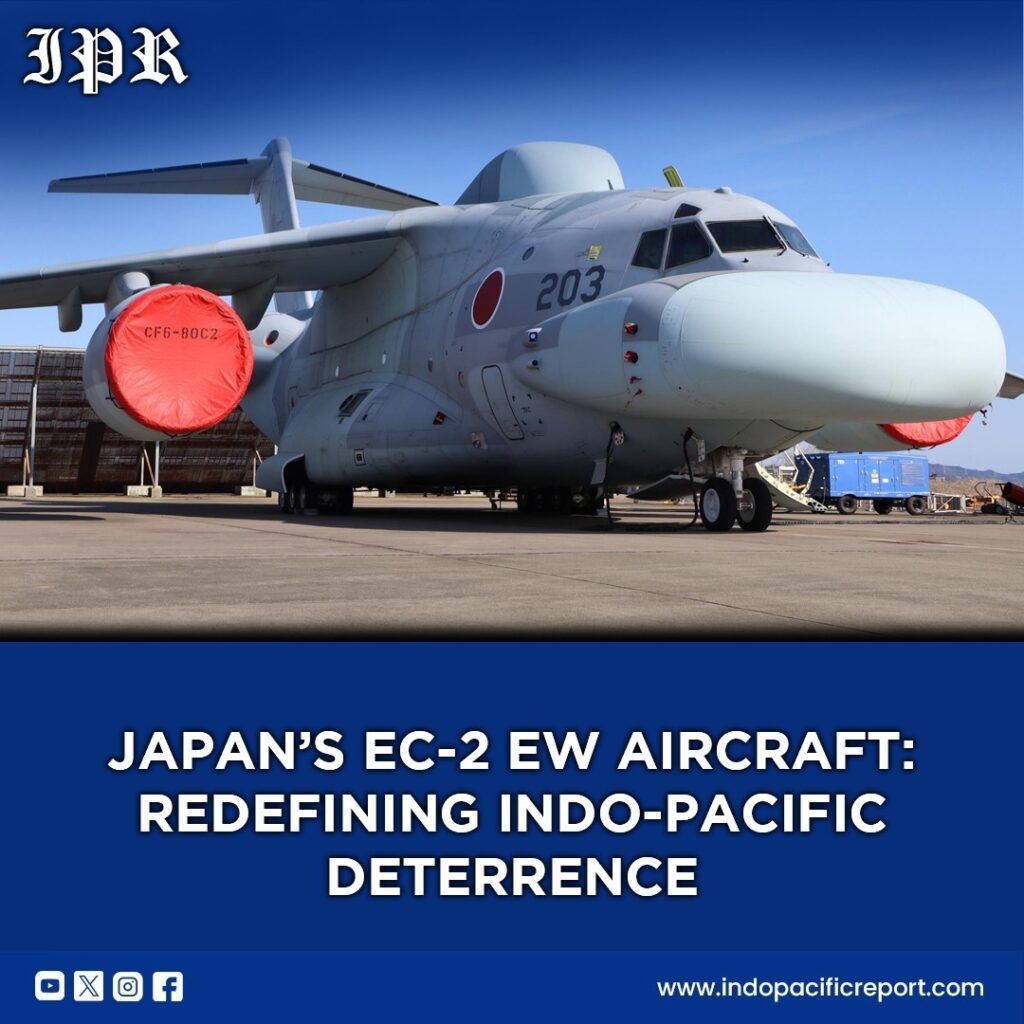
Japan is preparing to deploy its first Stand-off Electronic Warfare (EW) aircraft, likely called the EC-2, based on the Kawasaki Heavy Industries C-2 transport platform. Flight testing has begun, with service entry planned for FY 2027. This platform represents Japan’s first dedicated EW aircraft and signals a deliberate move to strengthen capabilities in electronic and information warfare, a domain increasingly central to modern conflicts.
From a great-power competition perspective, the EC-2 is a clear message to Beijing and Pyongyang. Electronic warfare enables disruption of radar, communications, and missile systems—key to limiting adversary operational freedom. By acquiring this capability, Japan is enhancing deterrence in the East China Sea, Taiwan Strait, and beyond, while demonstrating it can respond independently if tensions escalate.
Within the regional security architecture, the aircraft adds a new layer to Japan’s layered defense network, complementing existing missile defenses like Patriot, THAAD, and Aegis-equipped destroyers. It also strengthens Japan’s contribution to multilateral operations, signaling that Tokyo can act both independently and alongside allies to ensure electromagnetic and information superiority in the Indo-Pacific.
The EC-2 also impacts alliance dynamics, particularly with the United States. By integrating with U.S. electronic surveillance and strike platforms, the aircraft allows Japan to participate in joint missions that enhance early warning, communications disruption, and defensive countermeasures. Its stand-off capabilities reduce the risk to human crews while providing allies with a credible electronic warfare partner.
From a maritime and economic strategy angle, the aircraft helps protect Japan’s trade-dependent economy. It can operate over contested waters like the South China Sea and Taiwan Strait, supporting naval forces, securing sea lanes, and suppressing adversary radar—all without placing crews in direct danger. This low-risk, high-impact capability strengthens Japan’s ability to safeguard critical maritime routes.
The broader Indo-Pacific balance of power is affected as Japan develops capabilities beyond traditional missile and air defense. The EC-2 expands Japan’s deterrence toolkit, complicates adversary operational planning, and enhances the survivability of allied forces. For regional neighbors, it signals Japan’s technological edge and reinforces its role as a stabilizing actor, while likely prompting Beijing and Pyongyang to rethink operational calculations.
Forward-looking assessment: The EC-2 is more than a new aircraft; it represents a shift toward multi-domain defense and information dominance. As Japan expands the program, it will strengthen deterrence, improve joint operational capabilities, and solidify Tokyo’s role as a central security actor in the Indo-Pacific. Its deployment will influence both regional power calculations and alliance planning for years to come.
Audience Question: Will Japan’s new electronic warfare aircraft trigger a regional arms race, or strengthen stability through deterrence?