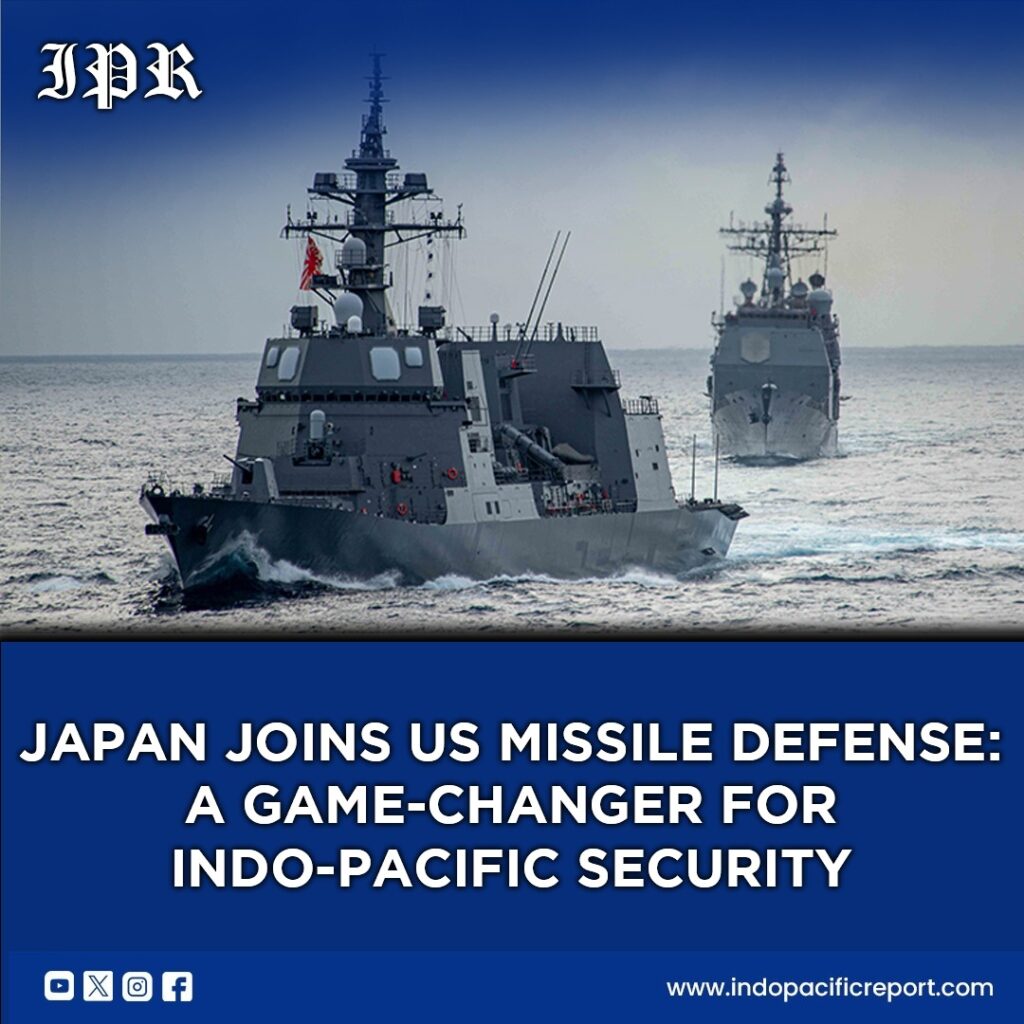
Japan’s decision to formally join the US-led Golden Dome missile defense initiative marks a major step in regional security cooperation. During the March 19 summit between Prime Minister Sanae Takaichi and President Donald Trump, Tokyo is expected to confirm its role in co-developing or producing missiles to replenish US stocks affected by conflicts in Iran and Ukraine. This move signals Japan’s shift from a primarily defensive posture to an active contributor in shaping the Indo-Pacific security landscape.
From the perspective of great-power competition, Japan’s participation strengthens the US-led deterrence framework against China and Russia. Beijing’s growing arsenal of long-range and hypersonic missiles has been a key concern for Tokyo. By integrating into Golden Dome, Japan enhances regional missile defense capacity, complicates potential attack plans, and strengthens allied signaling. It also sends a clear message that US allies in the region are willing to share operational responsibility for collective defense.
Looking at regional security architecture, Japan’s role deepens interoperability with US forces and adds layers to missile defense networks. Golden Dome is not just about intercepting incoming missiles—it also includes sensor integration, early warning systems, and rapid response coordination. Tokyo’s contribution reinforces the credibility of collective defense in the East China Sea, Taiwan Strait, and broader Western Pacific, while offering neighboring states a model for coordinated threat management.
In terms of alliance dynamics, co-developing missiles reduces Japan’s dependence on foreign imports and strengthens its domestic defense industry. For the US, it reassures Washington that allies are not passive recipients but active partners in sustaining regional security. This strengthens the alliance and ensures that combined capabilities remain resilient even if US forces are stretched by global crises.
From a maritime and economic strategy perspective, Japan’s participation supports the protection of vital sea lanes and maritime infrastructure. By enhancing missile coverage over key chokepoints, Japan can safeguard its trade routes while supporting broader regional stability. Joint production and technology sharing also foster industrial growth, linking economic security with defense strategy.
The implications for Indo-Pacific power balance are significant. Japan’s engagement consolidates the US-led security network, reinforcing deterrence against Chinese and North Korean missile threats. It also signals that allies are capable of adapting to new challenges, from conventional missile threats to strategic contingencies, ensuring that regional deterrence is credible and multi-layered.
Forward-looking assessment: Japan’s involvement in Golden Dome strengthens deterrence, enhances alliance cohesion, and integrates missile defense into a broader Indo-Pacific strategy. As missile threats evolve and US defense resources are stretched globally, Japan’s active role will be critical in maintaining stability and credible defense postures in the region.
Debate Question: Should Japan focus solely on allied missile defense support, or also develop independent systems to hedge against regional uncertainties?
Relevant Hashtags:
#JapanDefense #GoldenDome #USJapanAlliance #MissileDefense #IndoPacificSecurity #ChinaDeterrence #RegionalStability #Geopolitics