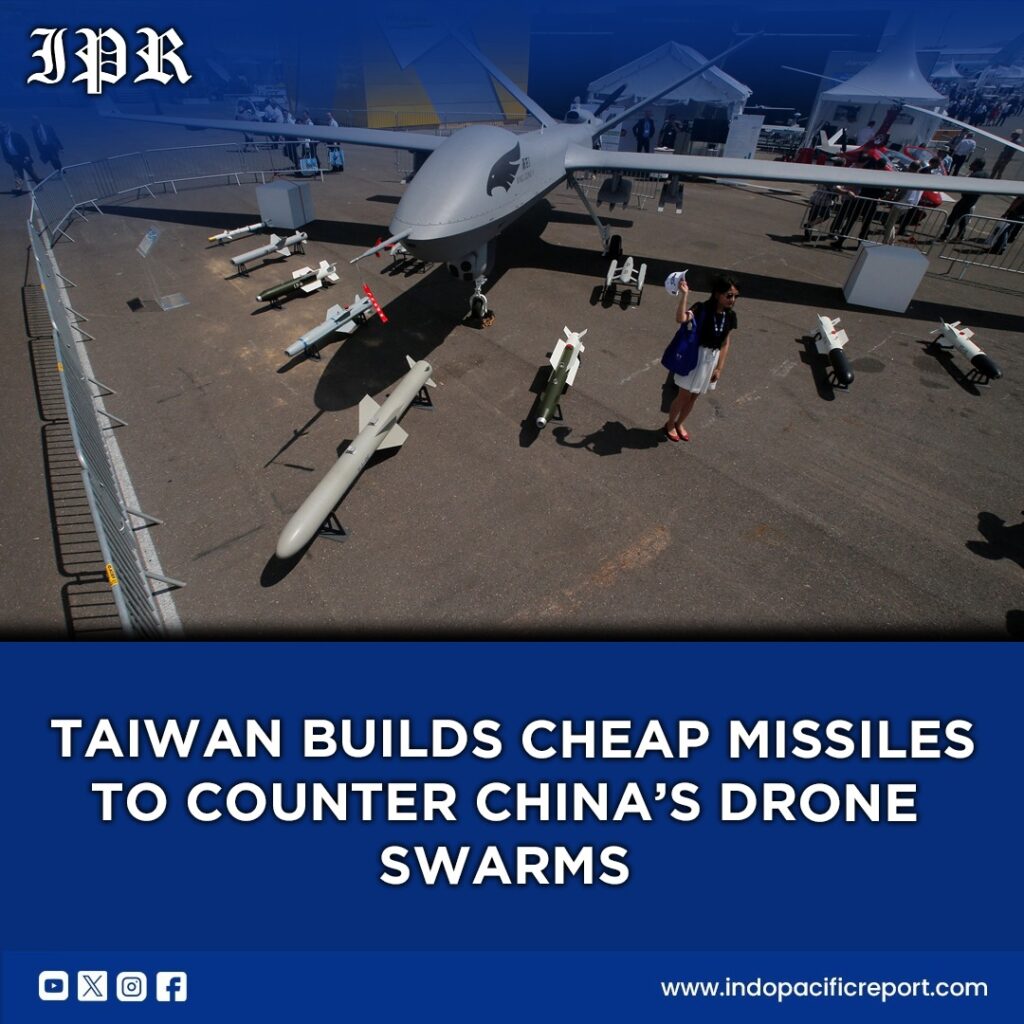
Taipei is accelerating the development of cost-effective air defense systems as China expands the use of low-cost, high-volume strike weapons. These include drones, cruise missiles, and rockets designed to saturate defenses in a potential conflict. The National Chung Shan Institute of Science and Technology plans to begin testing next year, focusing on interceptors that can neutralize these “lower-tier” threats while conserving advanced missiles for strategic targets.
From a great-power competition perspective, Taiwan faces an asymmetric challenge. China’s strategy relies on mass-produced, inexpensive weapons to overwhelm Taiwan’s high-end missile systems. By developing affordable interceptors, Taiwan aims to maintain credible deterrence without risking the depletion of its advanced defensive arsenal. This approach signals that Taiwan can adapt cost-efficiently to Beijing’s evolving tactics.
The move also reshapes regional security architecture. Taiwan’s “T-Dome” concept integrates domestic systems—Strong Bow, Sky Bow III, Sky Sword II—with U.S.-supplied Patriot missiles. This layered network covers low, medium, and high-altitude threats while countering rockets and long-range missiles. A sensor-to-shooter system accelerates engagement times, allowing Taiwan to respond to multiple simultaneous threats—a model of integrated, small-state defense in the Indo-Pacific.
Alliance dynamics are key. Taiwan’s procurement of 102 PAC-3 interceptors and additional NASAMS units strengthens its operational alignment with the United States. This dual approach—domestic resilience plus allied support—signals to Beijing that any saturation attack will face high costs and uncertainty, reinforcing deterrence while maintaining strategic independence.
Economically and operationally, the emphasis on affordable interceptors reflects strategic pragmatism. Taiwan cannot match China in sheer numbers of missiles or drones. Cost-efficient solutions preserve advanced interceptors for high-value threats while creating a flexible, sustainable defense. For other Indo-Pacific nations, this illustrates how hybrid defense strategies—combining domestic innovation with allied systems—can counter asymmetric threats efficiently.
The implications for regional balance of power are significant. Taiwan’s approach strengthens deterrence credibility without triggering immediate escalation. It also sets a precedent for smaller states under pressure from high-capability neighbors, showing that layered, integrated defenses and cost-aware planning can provide credible protection in a modern, contested environment.
Forward-looking assessment: Taiwan’s T-Dome system and affordable interceptor program are more than technical upgrades—they are strategic signals. They demonstrate resilience, adaptability, and cost-effective deterrence. In the Indo-Pacific, the era of low-cost swarming weapons will favor states that combine high-end systems with flexible, layered defenses and strong alliances. Taiwan is showing how to survive and deter without overextending resources.
Audience Question:
Should other small Indo-Pacific states adopt low-cost, layered air defenses to counter China’s missile and drone swarms?