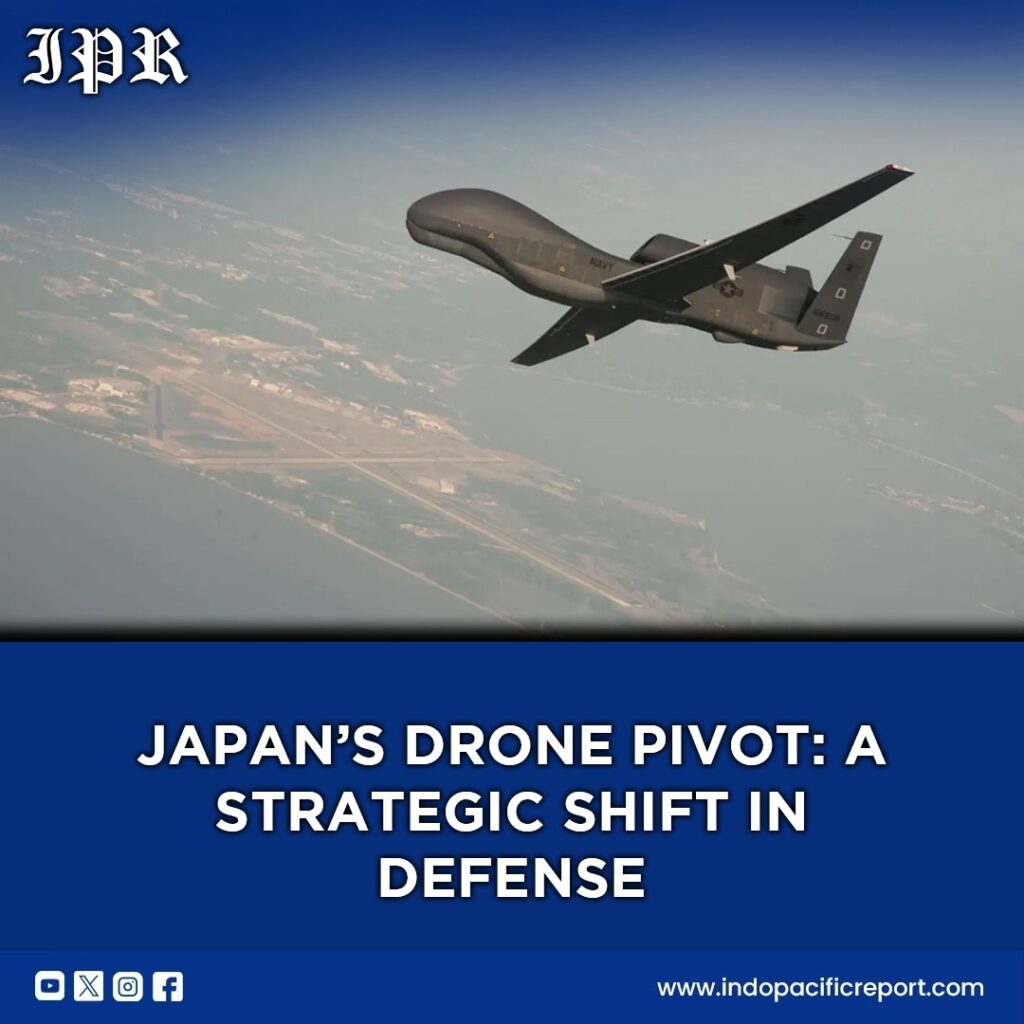
Japan is considering buying or co-developing Ukrainian drone-based air defense systems. This is a major shift for Tokyo, which has long avoided exporting weapons and focused on strictly defensive capabilities. The war in Ukraine has produced innovative technologies, especially interceptor drones that can shoot down swarms of cheap, long-range drones like Shahed/ Geran-2. For Japan, facing threats from China and North Korea, these systems offer a cost-effective way to improve air defense without over-relying on expensive missiles like the Patriot.
From a great-power competition perspective, this move is about adapting to new forms of warfare. Swarming drones are cheap, abundant, and difficult to stop with traditional missiles. By adopting Ukrainian interceptor drones, Japan could strengthen its layered air defenses and increase deterrence against regional threats. This is a strategic step, showing that Japan is thinking beyond conventional military hardware and focusing on asymmetric solutions.
The decision also reshapes regional security architecture. High-tech drones allow Japan to protect critical areas, such as industrial centers and maritime trade routes, more efficiently. It also signals to allies in the Indo-Pacific that small and medium powers can adopt new technologies to balance regional power, even when facing larger militaries. Other countries may follow suit, leading to a wider network of drone-enabled defense systems across the region.
Alliance dynamics are important. Japan will not provide weapons to Ukraine directly, but collaborating on drones creates indirect strategic benefits. It strengthens ties with Ukraine, signals flexibility to the U.S. and NATO partners, and opens paths for technology sharing. Such cooperation enhances interoperability and reinforces collective defense networks without violating Japan’s post-WWII defensive principles.
Economically and strategically, these drones offer Japan more scalable defense options. Interceptor drones are cheaper than missile systems and can handle multiple threats at once. They also allow Japan to develop domestic expertise in unmanned and AI-enabled systems. This could enhance Japan’s future deterrence capabilities, strengthen maritime security, and protect critical sea lanes in the Indo-Pacific.
In terms of regional balance of power, Japan’s potential adoption of Ukrainian drone technology is subtle but meaningful. It improves deterrence and raises the cost of coercion for adversaries. Over time, it could encourage other middle powers in the region to invest in similar asymmetric capabilities, strengthening collective resilience and shaping Indo-Pacific stability.
Looking ahead, the key question is whether Japan’s engagement with Ukraine will spark wider adoption of drone-based defense across the region. If successful, Japan could modernize its defensive posture and set a precedent for middle powers adapting to new warfare technologies. This step shows that even traditionally defensive states must innovate to maintain security in a rapidly evolving strategic environment.
Audience Question:
Can Japan’s new drone strategy deter regional threats, or will it trigger an arms race?