U.S. Troops’ Stay at Lumbia Air Base Temporary
one evening, whispers began spreading across social media in the Philippines. Photos of foreign military vehicles, unfamiliar uniforms, and cargo shipments arriving in Mindanao started circulating online. Some people asked a simple but powerful question: Are U.S. troops quietly setting up a new base in the Philippines?
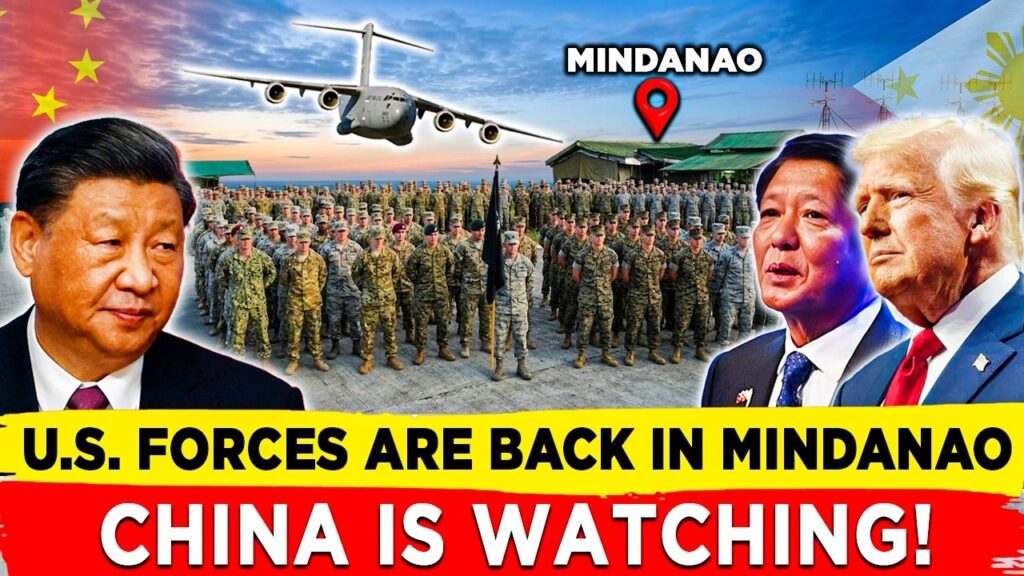
In an era where every military movement can trigger speculation, the sight of American personnel arriving at an air base in Cagayan de Oro immediately grabbed public attention. For a country that once hosted massive U.S. bases during the Cold War, even a small deployment can spark memories and sometimes anxiety. But the Philippine Air Force quickly stepped in to calm the rumors. “Their presence in Cagayan de Oro is only temporary. They are here for training in humanitarian and disaster response,” explained Philippine Air Force officer Anselmo Ty, commander of the 590th Air Group.
His message was clear: the American troops currently stationed at Lumbia Air Base are not establishing a permanent foothold. They are there for training, cooperation, and preparation, nothing more. Still, the story behind their arrival says a lot about the evolving security landscape in Southeast Asia.https://indopacificreport.com/u-s-plans-largest-ever-arms-sale-to-taiwan-amid-rising-china-tensions/
To understand why this moment matters, it helps to rewind a little. The Philippines and the United States share one of the oldest defense relationships in the Asia-Pacific region. Their alliance dates back to the Mutual Defense Treaty, signed at the height of the Cold War. That agreement essentially promised that if either country came under attack in the Pacific, the other would come to its aid.

For decades, this alliance was visible through enormous American military bases on Philippine soil, places like Clark Air Base and Subic Bay Naval Base. Those installations hosted thousands of U.S. troops and served as major logistical hubs for American operations across Asia.
But in 1991, everything changed. After intense political debate and rising nationalist sentiment, the Philippine Senate voted not to renew the agreement allowing permanent U.S. bases. American forces packed up and left. For many Filipinos, it was a powerful moment of reclaiming sovereignty.
U.S. Plans Largest-Ever Arms Sale to Taiwan Amid Rising China Tensions
Fast forward two decades, and the geopolitical environment began shifting again. Rising tensions in the region, especially in the South China Sea, pushed Manila and Washington to rethink how their alliance should work in the modern era.
Instead of permanent bases, the two countries developed a new framework called the Enhanced Defense Cooperation Agreement, often simply referred to as EDCA. This agreement allows U.S. forces to rotate through selected Philippine military facilities for training and joint exercises. The key word is rotation. Under EDCA, American troops cannot establish permanent bases, and any facilities built under the program remain under Philippine ownership.https://www.youtube.com/watch?v=TTOoTFgBRXs
That distinction matters deeply in the Philippines, where questions of sovereignty and foreign military presence still carry emotional weight. One of the locations designated for such cooperation is Lumbia Air Base. Situated in the northern part of Mindanao, the facility has an interesting history. Before 2013, it actually served as the main civilian airport for Cagayan de Oro. Thousands of passengers passed through its terminals each day.
At its peak in 2011, the airport handled more than 1.4 million travelers. But when commercial operations shifted to the newly built Laguindingan Airport, Lumbia’s role changed dramatically. The site was eventually converted into a Philippine Air Force installation. Today, it operates primarily as a military base but one that can host joint training under EDCA when needed.
Indonesia-Vietnam Building a Blue Economy and Smart Urban Future
That is exactly what is happening now. According to Philippine military officials, roughly one hundred U.S. personnel recently arrived in the area aboard the U.S. Navy cargo vessel USNS Seay. Their mission is tied to ongoing joint exercises between Philippine and American forces.
These exercises are not about combat operations or preparing for war. Instead, they focus heavily on humanitarian assistance and disaster response. For Filipinos, this is not an abstract concept. The country sits along the Pacific typhoon belt and experiences some of the most powerful storms on the planet. Every year, devastating typhoons, floods, and earthquakes challenge local disaster response systems.
Joint training helps both countries respond faster when those disasters strike. During the drills at Lumbia, soldiers practice coordinating rescue missions, delivering aid supplies, and organizing evacuation operations. Some scenarios involve simulated coastal disasters where troops must quickly deploy equipment and personnel to affected communities.
Indonesia and Australia Step Up Defense Ties with Jakarta Treaty Initiatives
These exercises also form part of the broader military engagement known as Balikatan. The word “Balikatan” means “shoulder to shoulder” in Filipino, symbolizing the cooperative spirit behind the training. The current deployment is expected to last until early April 2026, roughly matching the schedule of these activities. After that, the visiting troops will leave.https://www.youtube.com/watch?v=TTOoTFgBRXs
For Philippine defense officials, the benefits of these temporary rotations go beyond simple training. Working alongside American forces allows the Philippine military to gain experience with advanced logistics systems, modern communication tools, and coordinated disaster-response strategies. In practical terms, this can save lives when real emergencies occur.
It also strengthens interoperability, the ability of different militaries to work together effectively during crises. But cooperation like this often raises political questions. Some critics worry that increased U.S. military activity could pull the Philippines deeper into geopolitical rivalries, particularly those involving China and the United States in the broader Indo-Pacific region.
Others fear that rotational deployments could slowly evolve into something resembling permanent basing. Philippine authorities insist that the legal framework prevents that from happening. Under EDCA, all facilities remain under Philippine control, and American access is strictly limited to agreed-upon training activities. There are clear rules governing what visiting forces can and cannot do.
https://www.youtube.com/watch?v=wkQgcz5w6_k
Local officials in Cagayan de Oro have also tried to reassure residents that the presence of foreign troops will not disrupt daily life. Military movements are being coordinated with local authorities, and restrictions on training zones are designed to minimize impact on surrounding communities.
Interestingly, many disaster-response experts see these exercises as particularly valuable for Mindanao itself. The region has experienced its share of natural disasters over the years, and building stronger emergency response networks could make a real difference when the next major storm arrives.https://www.youtube.com/watch?v=TTOoTFgBRXs
For ordinary residents, the sight of foreign soldiers in their city may still feel unusual. But in reality, such rotations have become increasingly common across several Philippine military facilities designated under EDCA.
PH-Japan Relations Reach New Heights: Public Trust and Strategic Advantage
Each deployment follows the same basic pattern: training, cooperation, and departure. Nothing permanent. And that, in many ways, reflects how modern military partnerships are evolving. Instead of massive Cold War–style bases housing thousands of troops, today’s alliances often rely on flexible, temporary arrangements. Forces move in, train together, share expertise, and then rotate out. It is a quieter form of cooperation but one that still carries strategic significance.https://www.youtube.com/watch?v=TTOoTFgBRXs
For the Philippines, maintaining strong alliances while protecting national sovereignty remains a delicate balancing act. The country benefits from defense partnerships, yet it also wants to ensure that its territory remains firmly under its own control.
Temporary deployments like the one at Lumbia Air Base illustrate how that balance can work. American troops arrive. They train. They collaborate with Philippine forces. And when the exercise ends, they leave. The sky above Mindanao returns to its usual calm, and life goes on.
But behind that calm lies something important: a partnership designed not for domination or permanent presence, but for preparation, preparation for disasters, crises, and whatever unpredictable challenges the future might bring.