Indonesia and Australia Expand Security Ties: Middle Powers Step Up in the Indo-Pacific
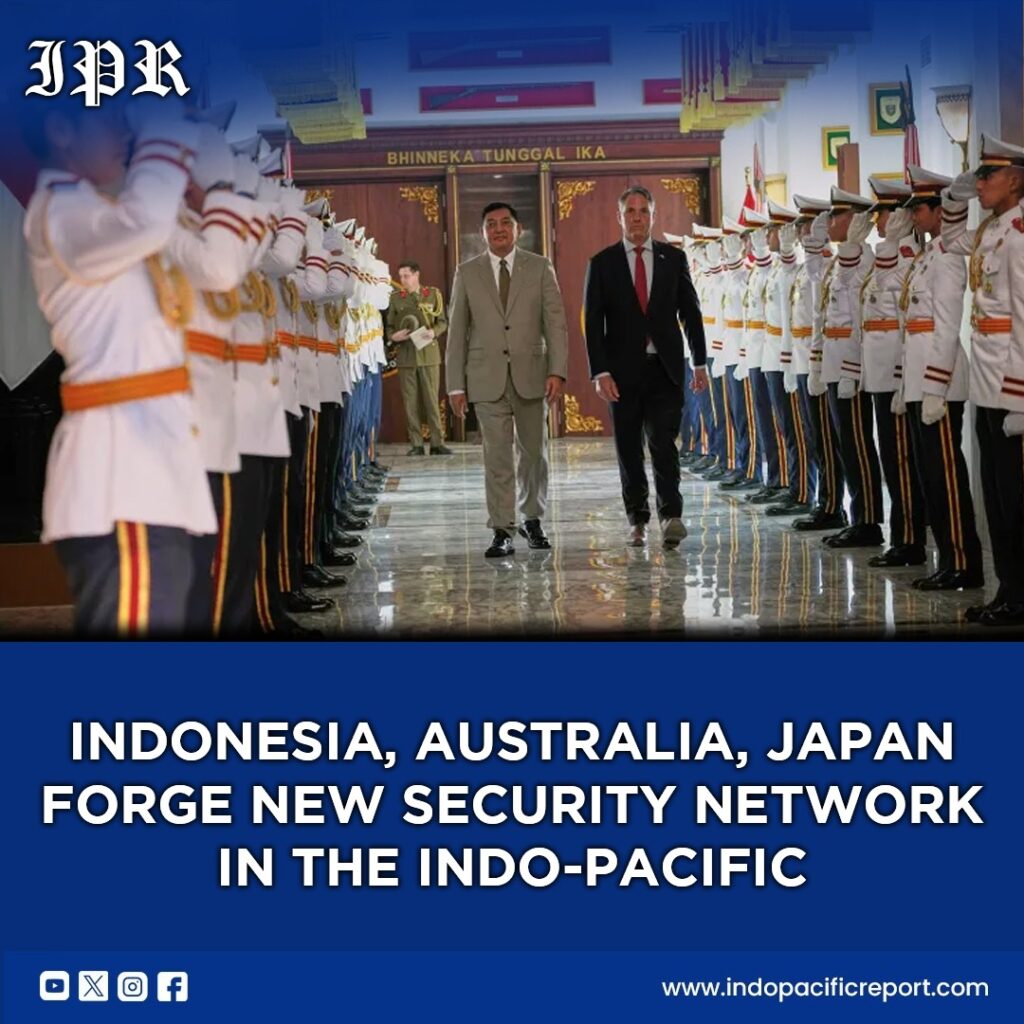
Indonesia and Australia are moving beyond a simple bilateral security arrangement. They are now planning to include Japan and Papua New Guinea in a broader regional security framework. This signals a shift toward practical, cooperative mechanisms among middle powers to address rising challenges in the Indo-Pacific. Intelligence sharing, joint training, and upgraded bases on Morotai Island and North Kalimantan will provide operational depth and strengthen regional readiness.
From a strategic competition angle, this is a clear move to counterbalance China’s growing influence in Southeast Asia and the Western Pacific. By coordinating their defense capabilities, Indonesia, Australia, and Japan create a network that complicates Beijing’s calculations without triggering direct confrontation.
In terms of regional security architecture, upgrading Morotai as a training and operational hub allows multiple countries to train together and monitor key maritime routes. This networked approach supports ASEAN’s centrality and promotes cooperation while keeping regional partners flexible in how they engage.
Alliance dynamics are evolving. Japan’s inclusion signals Tokyo’s willingness to extend its security footprint, while Australia gains forward-operating options near key maritime chokepoints. At the same time, the arrangement remains flexible, avoiding a formal mutual-defense obligation but enhancing practical cooperation.
From a maritime and economic perspective, securing sea lines of communication and monitoring critical trade routes strengthens regional stability. Shared bases, joint exercises, and intelligence coordination provide the partners with better situational awareness and a credible deterrent against potential threats.
Overall, this initiative shows how middle powers are asserting themselves in the Indo-Pacific. By pooling resources and building interoperability, they can influence the regional balance of power, strengthen deterrence, and shape security norms even as U.S.-China tensions continue.
Audience Question:
Could middle-power coalitions like Indonesia-Australia-Japan reshape the Indo-Pacific balance of power without direct U.S. involvement?