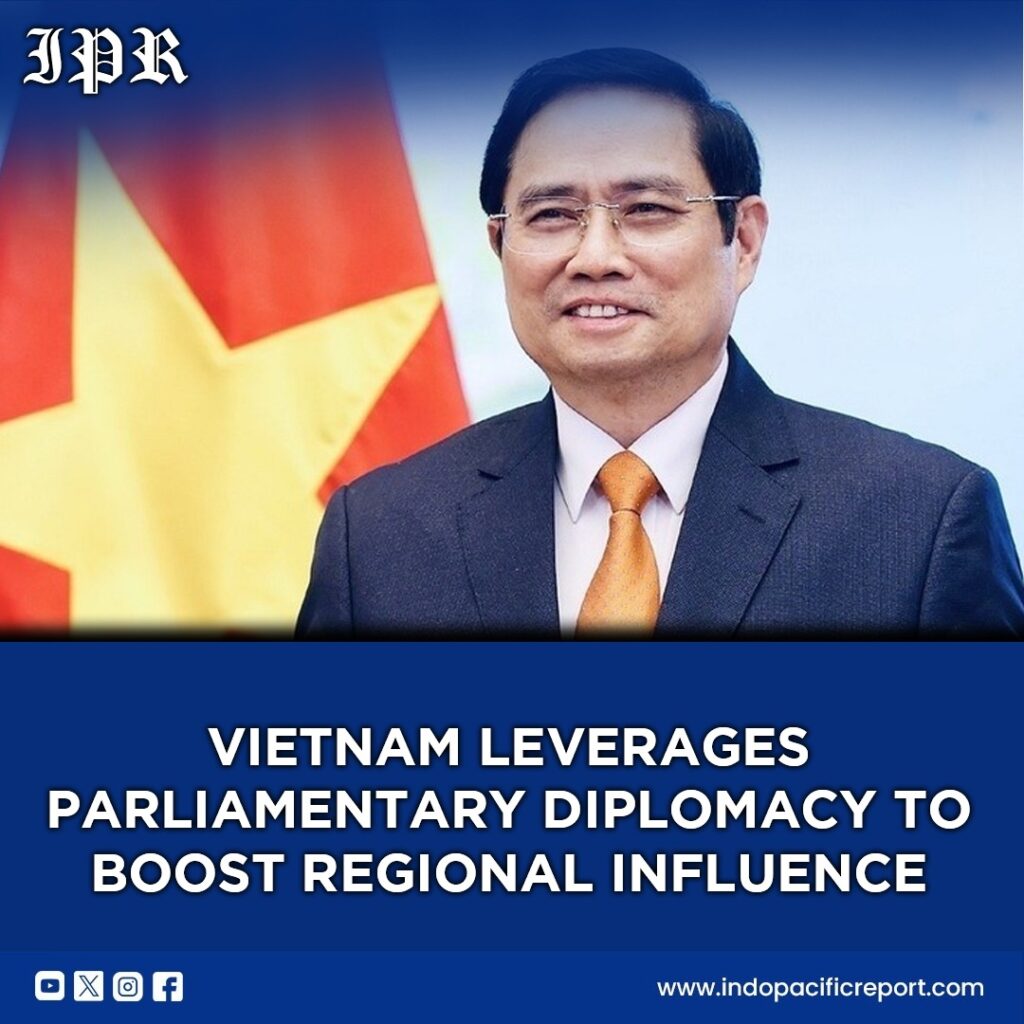
Vietnam is steadily enhancing its global and regional profile through parliamentary diplomacy. Despite differing political systems, Vietnam’s National Assembly (NA) has actively engaged with international and regional partners, notably Malaysia, sharing legislative and governance practices that strengthen democratic foundations and expand avenues for cooperation.
According to Malaysian researcher Enzo Sim Hong Jun, the 15th NA (2021–2026) navigated a challenging global environment marked by pandemic recovery, climate risks, and rising geopolitical tensions. Despite these pressures, the NA has been proactive and reform-oriented, introducing mechanisms such as the first parliamentary supervision forum to strengthen accountability, address socio-economic governance issues, manage public complaints, and promote environmental protection. These reforms have helped improve transparency and public trust in governance.
U.S. Navy Secures Philippines’ $26 Trillion Gas Field, Blocking Outside Interference
A major focus of the NA has been long-term planning. By approving a five-year legislative agenda, Vietnam has enhanced the predictability and consistency of its legal framework, making governance more effective. Efforts to streamline state institutions, remove regulatory bottlenecks, and codify Party policies into law have unlocked productive resources and improved administrative efficiency. These reforms signal Vietnam’s strategic intent to combine economic growth with robust governance.
Technology has also become a central pillar of Vietnam’s parliamentary modernization. The NA is embracing artificial intelligence, digital infrastructure, and specialized platforms to create a “digital parliament,” enhancing transparency and responsiveness. Enzo notes that this positions Vietnam as a forward-looking legislature that can adapt to public expectations and the technological era, while serving as a model for regional parliamentary innovation.
Vietnam’s partnership with Malaysia provides a clear example of the regional impact of parliamentary diplomacy. Since upgrading bilateral ties to a Comprehensive Strategic Partnership in November 2024, both countries have deepened inter-parliamentary cooperation, promoting knowledge sharing, joint policy development, and mutual support in ASEAN’s Inter-Parliamentary Assembly (AIPA). These ties help Vietnam reduce overreliance on major powers, reinforce ASEAN centrality, and strengthen regional neutrality amid intensifying great-power competition.
41 Chinese Vessels Detected in West Philippine Sea, Manila Raises Alarm
The NA is also playing a strategic role in laying a legal foundation for cooperation in high-potential sectors such as the green economy, digital transformation, innovation, clean energy, and the Halal industry. By coordinating policies with Malaysia, Vietnam can leverage complementary strengths to drive sustainable development, support industrialization, and meet its ambitious target of 10% annual economic growth.
Looking ahead, the 16th NA will continue to advance Vietnam’s international commitments, refine the legal framework, and expand parliamentary cooperation through delegation exchanges, formal agreements, and multilateral platforms including the Inter-Parliamentary Union (IPU) and the Asia-Pacific Parliamentary Forum (APPF). Parliamentary diplomacy is proving to be an effective tool for Vietnam to consolidate domestic governance, strengthen regional influence, and strategically navigate a complex global environment.
Audience Question: Can parliamentary diplomacy become as strategically powerful as traditional defense and trade policy in shaping a country’s regional influence?