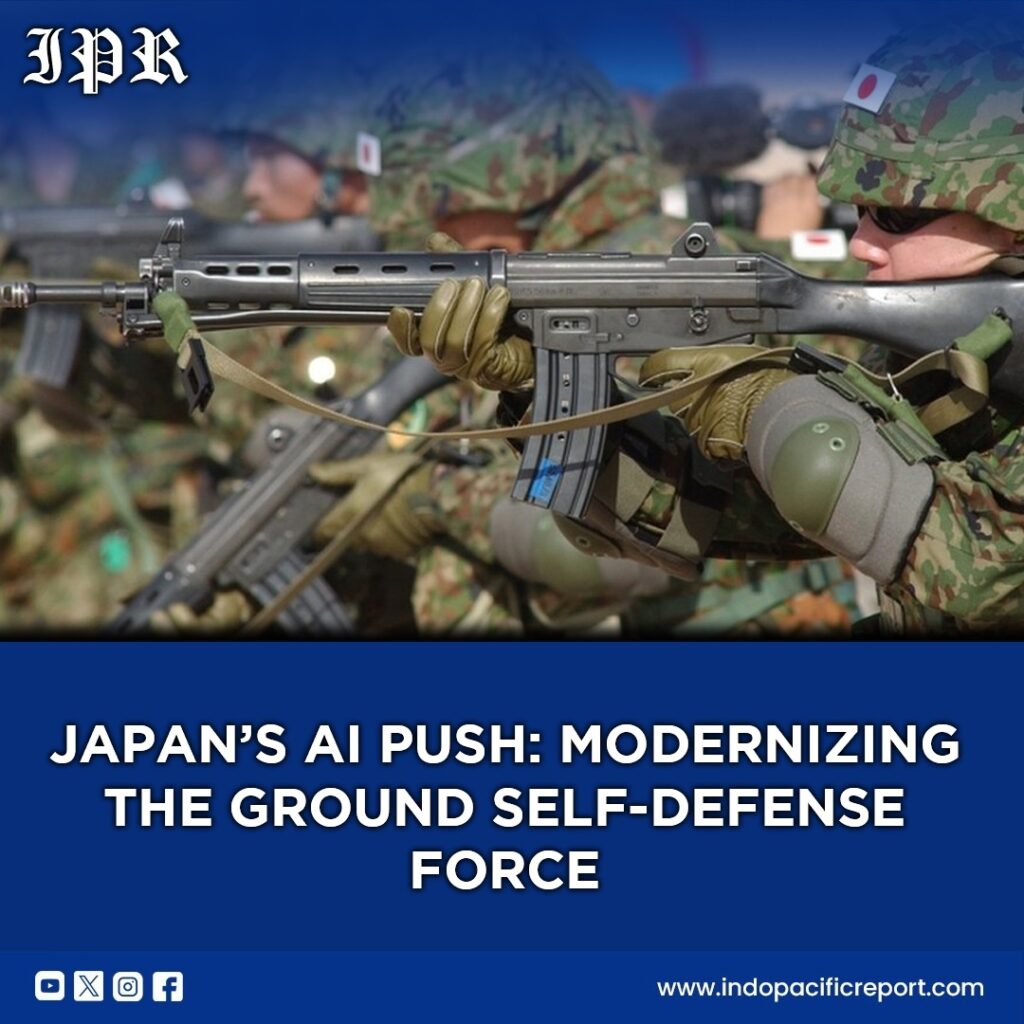
Japan is accelerating the integration of artificial intelligence into its military command and control systems. The Acquisition, Technology and Logistics Agency plans to develop an AI-powered intelligence analysis system for the Ground Self-Defense Force by 2027. Partnering with domestic startup Sakana AI, the initiative aims to streamline battlefield information sharing, automate analysis of enemy forces, and provide commanders with actionable insights in near real time. This marks a significant step in Japan’s pursuit of technologically advanced, networked warfare capabilities.
From a strategic competition lens, the project positions Japan to keep pace with China’s rapidly advancing AI military applications and other regional actors exploring autonomous intelligence systems. By embedding AI at the operational and tactical levels, Japan aims to reduce decision-making latency and increase the effectiveness of smaller, highly trained units—critical in scenarios such as defending remote islands against potential Chinese incursions. The initiative signals Tokyo’s recognition that modern deterrence depends not only on platforms and firepower but on intelligence superiority and rapid operational awareness.
Alliance dynamics also shape this development. An AI-enhanced Ground Self-Defense Force can improve interoperability with U.S. forces in joint operations, particularly under the U.S.-Japan security framework. Automated analysis and information-sharing capabilities would allow Japanese units to rapidly relay actionable battlefield intelligence to American counterparts, strengthening deterrence along the First Island Chain and across the broader Indo-Pacific. This capability could be decisive in scenarios where rapid, coordinated response is essential to counter gray-zone incursions or maritime coercion.
The project also touches on economic and technological strategy. By leveraging domestic startups and commercially available products, Japan reinforces its technological base, strengthens supply-chain resilience, and reduces reliance on foreign suppliers. This approach supports a dual-use innovation ecosystem where commercial AI development feeds into national security applications, creating long-term strategic advantages. It also aligns with Japan’s broader effort to maintain leadership in AI research while mitigating vulnerability to technology transfers or disruptions.
From a regional security architecture perspective, AI integration in Japan’s Ground Self-Defense Force represents a shift toward network-centric, data-driven defense. AI could allow for near-autonomous processing of reconnaissance data from drones, mobile devices, or sensors, delivering real-time situational awareness to headquarters. This reduces the cognitive load on human operators and may allow Japan to maintain defensive readiness with fewer personnel—an important consideration given demographic pressures on its military.
Forward-looking assessment: Japan’s AI intelligence initiative reflects a clear trend: nations in the Indo-Pacific are increasingly seeking technological overmatch rather than relying solely on numerical superiority. If successful, the system will not only enhance Japan’s defensive posture but also set a model for allied cooperation, enabling faster and more precise responses to potential Chinese or North Korean provocations. For competitors, it signals that Tokyo is prepared to integrate advanced technologies into its deterrence calculus, making any escalation riskier and costlier.
Audience question:
As Japan moves toward AI-driven intelligence and operational planning, how might this reshape the balance of power with China, and will human decision-making remain central in future conflicts?