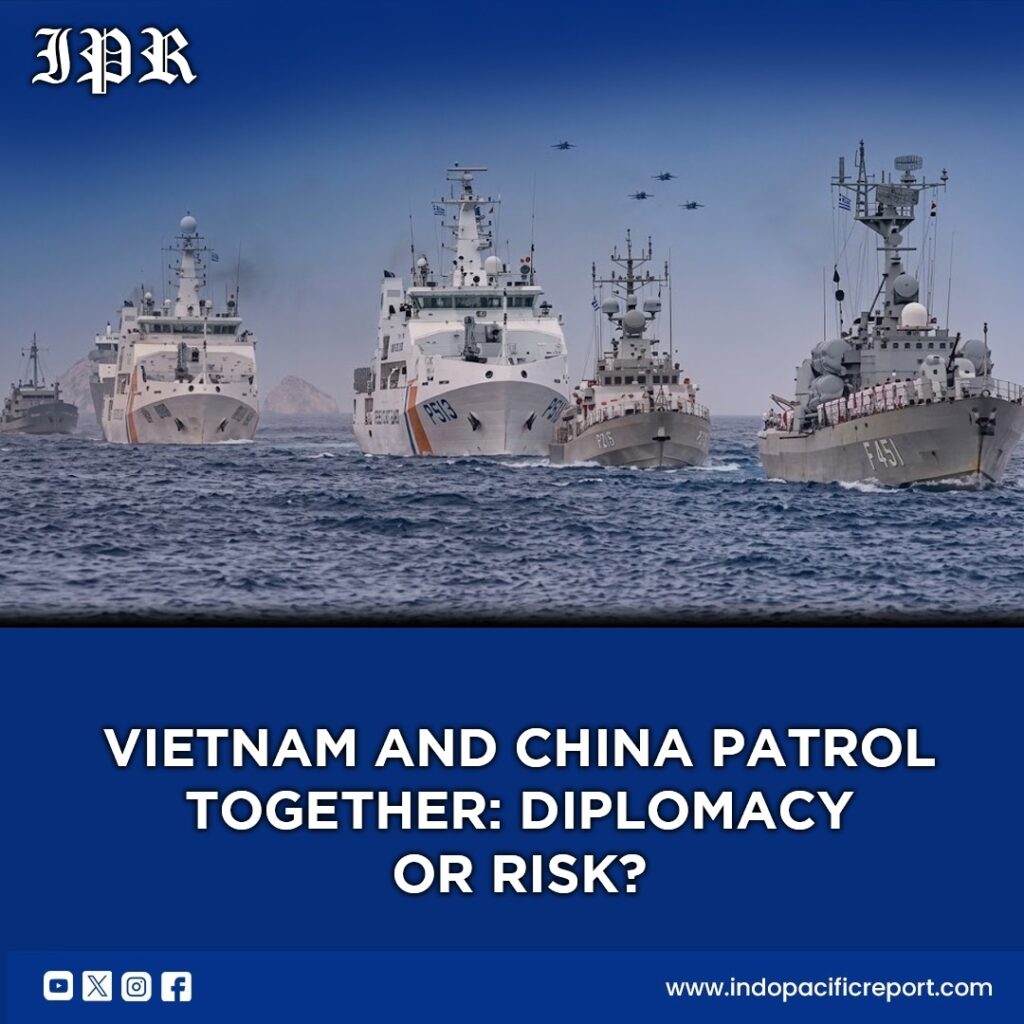
Vietnam and China continue joint naval patrols in the Gulf of Tonkin despite long-standing maritime disputes. These exercises, under the China-Vietnam Border Defence Friendship Exchange, include military maneuvers, medical aid, and cultural activities. For Vietnam, this represents a careful balancing act: engaging China diplomatically while protecting its sovereignty.
From a great-power competition perspective, Vietnam is managing pressure from China while avoiding direct confrontation. Joint patrols give Hanoi operational insight into Chinese tactics and behavior, without escalating conflict. At the same time, it signals that Vietnam is willing to cooperate where possible, preserving strategic flexibility.
Within regional security architecture, these exercises serve as confidence-building measures. They do not resolve the South China Sea disputes but reduce the risk of accidental clashes. Vietnam demonstrates that smaller powers in the Indo-Pacific can maintain autonomy while engaging larger neighbors pragmatically.
Alliance dynamics are also at play. Vietnam relies on U.S. security ties and regional partnerships for deterrence, but over-aligning against China could provoke unnecessary escalation. Joint patrols allow Vietnam to maintain dialogue with Beijing while reinforcing its military readiness—essentially, hedging against risk while asserting sovereignty.
From a maritime and economic strategy perspective, patrols help secure key waterways and fisheries. They also protect potential offshore energy resources and shipping lanes. Vietnam’s approach highlights the need to combine diplomacy, surveillance, and presence operations in contested waters.
Implications for Indo-Pacific balance of power: Vietnam’s cautious engagement shows that smaller states can influence regional stability without full-scale confrontation. By navigating cooperation and deterrence, Hanoi strengthens its position, sets precedents for responsible maritime behavior, and preserves international norms in the South China Sea.
Forward-looking assessment: Joint patrols may reduce accidental conflict but cannot substitute for stronger regional mechanisms or strategic alliances. Vietnam’s choices will shape both its sovereignty and the broader credibility of international law in Southeast Asia.
Question for readers:
Can Vietnam truly protect its sovereignty through joint patrols with China, or does this approach risk normalizing Beijing’s dominance?