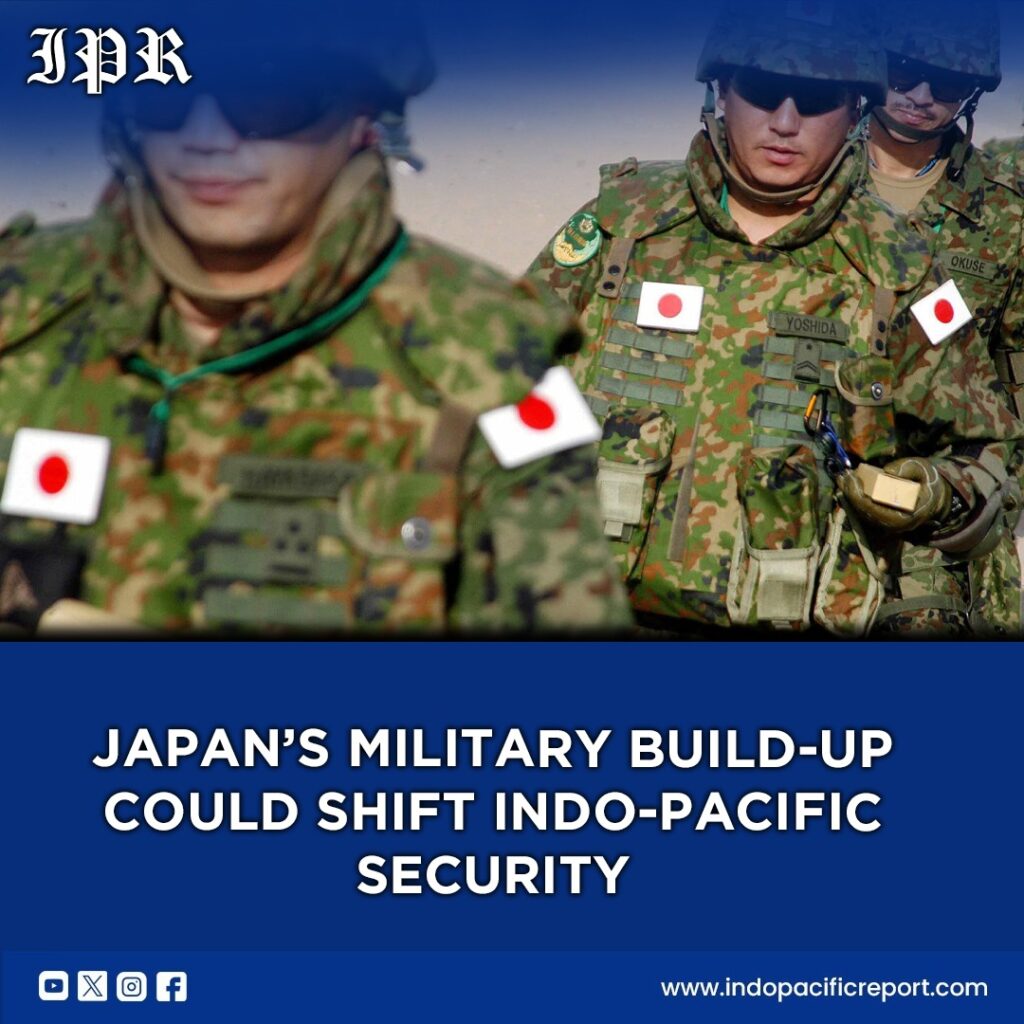
Japan’s postwar trajectory is showing signs of a marked departure from its traditional defensive posture. Since October 2025, under Prime Minister Sanae Takaichi, Tokyo has accelerated military expansion, revising key security documents, reconsidering the Three Non-Nuclear Principles, and signaling constitutional amendments to convert the Self-Defense Forces into a conventional military. These developments signal Japan’s intention to reclaim “normal” military status—a shift with profound implications for the Asia-Pacific security landscape.
Viewed through the lens of great-power competition, Japan’s moves are intertwined with China’s rise and the U.S.’s strategic posture in the region. The deployment of upgraded Type 12 and Type 03 missiles near southwestern islands, including Yonaguni, places offensive capability within striking distance of key Chinese maritime routes and Taiwan. These measures are not purely defensive; they provide Tokyo with strategic leverage, complementing U.S. deterrence efforts while signaling to Beijing and regional actors that Japan intends to play a more assertive role in the Indo-Pacific power balance.
The implications for regional security architecture are significant. Japan’s remilitarization complicates ASEAN and East Asian security frameworks, which have long relied on a stable postwar order where Japan’s military was constrained by constitutional limitations. The expansion of offensive capabilities and close ties with Taiwan and the Philippines extend Japan’s operational reach into the Taiwan Strait and the South China Sea. For Southeast Asian states and China alike, Tokyo’s militarization introduces new variables into contingency planning, maritime surveillance, and conflict avoidance.
Alliance dynamics are central to understanding Japan’s emerging posture. Its alignment with the United States provides both political cover and operational integration. Close military coordination with the Philippines and Taiwan demonstrates that Japan’s new capabilities are not intended to operate in isolation. Instead, they enhance the collective deterrence framework in the region. Yet, these alliances are double-edged: they increase Tokyo’s strategic influence but risk entangling Japan in potential conflicts triggered by other regional flashpoints, particularly cross-strait tensions.
From a maritime and economic strategy perspective, Japan’s southern and eastern expansion enhances its capacity to project power over critical sea lanes and chokepoints. Control over these routes, particularly near the Taiwan Strait and the northern South China Sea, has implications for regional trade and energy flows. Militarization allows Japan not only to support allied security objectives but also to safeguard its own economic interests, particularly as China continues to assert maritime dominance in nearby waters.
The broader Indo-Pacific balance of power is thus entering a phase of recalibration. Japan’s militarization reinforces the U.S.-led strategic architecture but introduces new sources of tension. While intended as deterrence, the combination of offensive weapons deployment, constitutional reform, and political mobilization toward right-wing priorities may heighten mistrust with China and other regional actors. Over time, Japan could evolve into both a stabilizing and destabilizing force, depending on how it balances national ambition with alliance commitments.
Looking forward, the trajectory suggests a more assertive Japan integrated into regional deterrence networks. Yet, Tokyo must manage perceptions carefully: signaling strength without provoking conflict will be essential to maintaining regional stability. The international community, especially neighboring Asian nations, should closely monitor Tokyo’s military reforms and alliance behaviors, as Japan’s actions will increasingly shape the strategic calculus of the Indo-Pacific.
Question for readers:
Will Japan’s remilitarization strengthen regional deterrence—or could it become the next flashpoint in the Indo-Pacific?