Why Does the Philippines Need a Missile Shield Now?
The night sky over the Western Pacific has grown increasingly crowded, not with stars, but with missiles. In recent years, the region surrounding the Philippines has witnessed a dramatic rise in missile tests and military exercises. In 2023, Kim Jong Un oversaw a series of hypersonic missile launches by the North Korean military, weapons capable of traveling at extreme speeds and maneuvering unpredictably in flight. Analysts warned that some of these systems could potentially reach targets across much of East and Southeast Asia.
At the same time, tensions have intensified in the South China Sea. Military drills conducted by People’s Liberation Army near contested waters have become more frequent, while advanced missile systems continue to be deployed across the region. For countries located along major sea lanes, particularly the Philippines, these developments raise a difficult but unavoidable question. Is the country prepared for the missile threats of the modern era?
The Philippines sits in one of the most strategically important locations in the world. Positioned between the Pacific Ocean and the Asian mainland, the archipelago forms part of the maritime crossroads through which enormous volumes of global trade move every year. Tankers carrying energy supplies, container ships transporting electronics and manufactured goods, and naval vessels from multiple countries all pass through nearby waters. But geography can be both a blessing and a vulnerability.

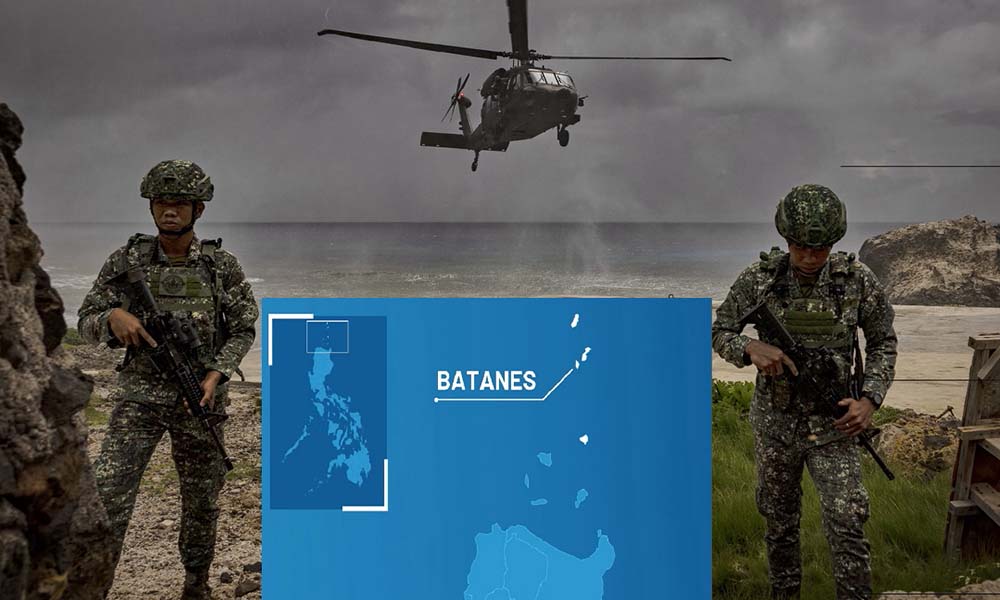
Being located near the heart of the Indo-Pacific means the Philippines lies close to several potential flashpoints. From the Taiwan Strait to the South China Sea, military tensions between major powers have steadily increased. Missiles, once seen mainly as tools of major wars, are now central to everyday strategic planning.https://indopacificreport.com/philippines-is-building-a-missile-wall/
For decades, the Philippines focused its military primarily on internal security challenges rather than large-scale external threats. As a result, its defense structure developed around counterinsurgency operations and maritime patrols rather than high-technology air and missile defense systems. Today, however, the security environment has changed dramatically.
Missile technology is spreading rapidly across the Asia-Pacific region. Countries such as China, North Korea, and even distant powers like Russia have expanded their missile arsenals, including ballistic missiles, cruise missiles, and emerging hypersonic systems. Some of these weapons are designed to strike targets hundreds or even thousands of kilometers away with increasing accuracy. For a country like the Philippines, this trend creates a serious vulnerability.
Major population centers, cities such as Manila, Cebu, and Davao, sit within potential strike range of several regional missile systems. Critical infrastructure, including ports, air bases, power plants, and communication hubs, could also become targets during a conflict scenario. Yet despite these risks, the Philippines currently lacks a comprehensive missile interception capability.

Unlike countries that operate advanced air defense networks, the Philippines does not yet possess an integrated national missile shield. Its existing air defense assets are limited, and early-warning systems capable of detecting incoming missiles remain underdeveloped.
Instead, the country relies heavily on its security partnership with the United States through the Mutual Defense Treaty. This alliance provides an important deterrent, but relying solely on external support leaves strategic gaps. A national missile defense system could fundamentally change that equation.
How the Philippines Is Building a Missile Wall Against China
At its core, missile defense is about protection, protecting civilians, protecting infrastructure, and protecting the ability of a country to function even during periods of crisis. When an incoming missile can be detected and intercepted before it reaches its target, the consequences of an attack are dramatically reduced.
Studies by defense research organizations have suggested that effective missile interception systems can significantly reduce casualties and economic damage in conflict scenarios. Even the presence of such systems can serve as a powerful deterrent. If a potential attacker knows that missiles may be intercepted, the strategic value of launching them decreases. In other words, missile defense makes aggression less attractive.
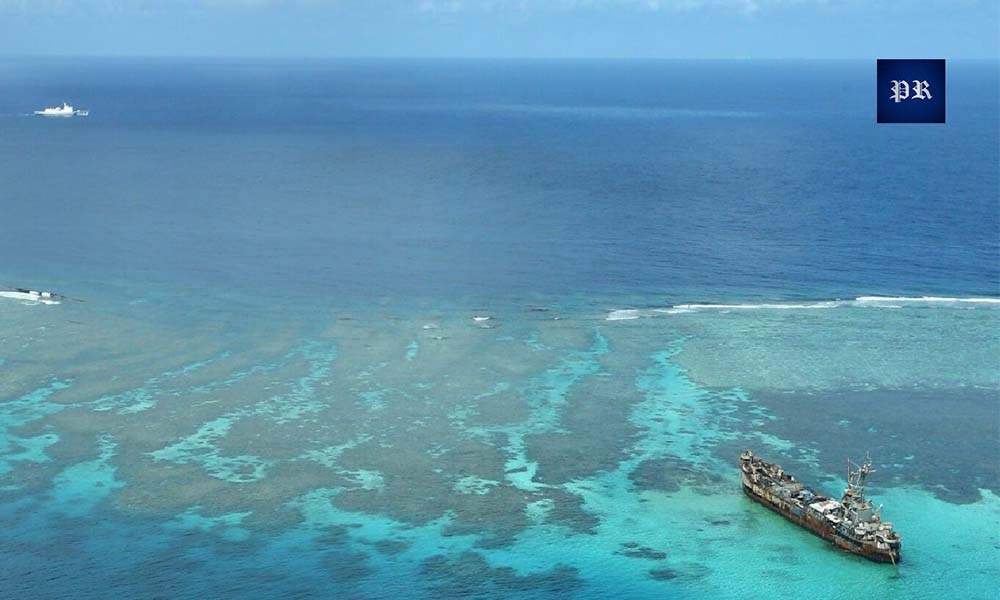
For the Philippines, this capability would also strengthen national sovereignty. A country that can defend its own skies has greater independence in making strategic decisions. It becomes less vulnerable to coercion and more confident in asserting its interests in regional disputes. This matters particularly in areas like the West Philippine Sea, where tensions have occasionally flared over competing maritime claims. Defensive capabilities such as radar networks and missile interceptors would not change the legal dimensions of these disputes, but they would enhance the country’s ability to protect its territory and infrastructure.
Philippines Commissions Its Latest Frigate, BRP Diego Silang (FFG-07)
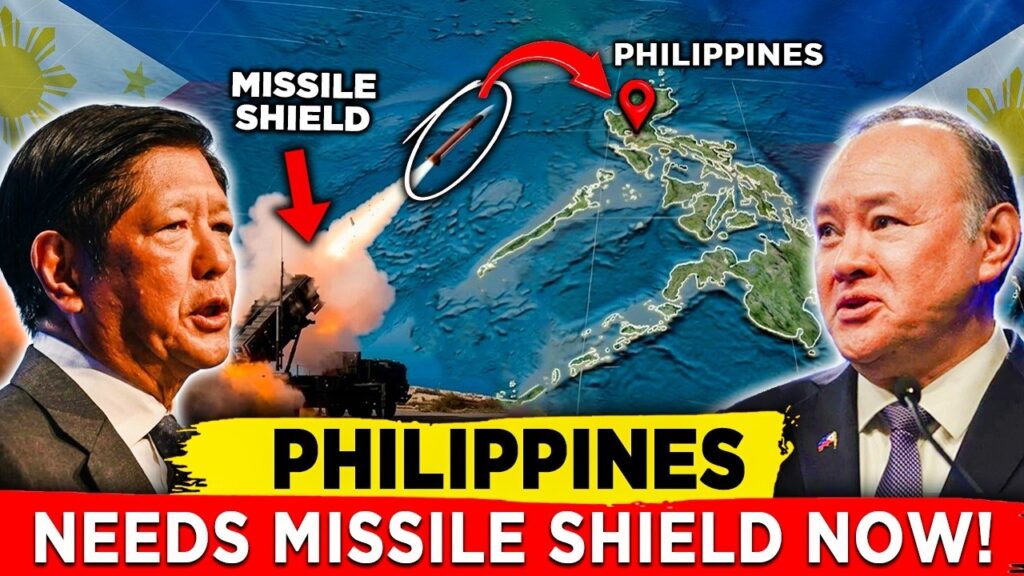
There are several types of missile defense technologies that the Philippines could potentially explore. One option is systems similar to THAAD, which intercept ballistic missiles during the final stage of their trajectory. Another possibility is naval-based protection through platforms connected to the Aegis Ballistic Missile Defense architecture. Land-based systems such as the Patriot missile system could provide point defense for critical locations like military bases and major cities.https://www.youtube.com/watch?v=NUz5aAb3nzY
Each of these systems operates differently, but together they form the concept of layered defense, multiple detection and interception points that increase the probability of stopping incoming threats. Building such a shield would require significant investment. Radar installations would need to be deployed across the archipelago, linked to command centers capable of coordinating responses in real time. The armed forces would require specialized training, and cybersecurity protections would be essential to prevent digital interference with defense networks.
The financial cost would certainly be substantial. Missile defense systems are among the most technologically complex and expensive components of modern military forces. Yet the cost of vulnerability could be far greater.
A single successful missile strike on critical infrastructure could disrupt economic activity across the entire country. Ports, airports, and industrial zones represent billions of dollars in investment. Damage to these facilities could ripple through supply chains, disrupt trade, and undermine investor confidence.https://youtu.be/yr2662KQCyA?si=jy2lB7KU9HhwtQ6J
Conversely, strong defensive capabilities can reassure both domestic industries and international partners. When investors see that a country takes security seriously, confidence grows. Stability and security remain key factors in economic development.
Missile defense also has diplomatic dimensions. A defensive shield is fundamentally different from offensive weaponry. Its purpose is not to threaten neighbors but to protect national territory. Many countries that maintain missile defense systems, such as Israel, South Korea, and Japan, frame them as purely protective measures.
Japan–Philippines Security Shift: The Possible Transfer of Type-03 Air Defense System
Israel’s Iron Dome has intercepted thousands of rockets aimed at civilian areas, dramatically reducing casualties. South Korea’s deployment of THAAD provides protection against missile threats from North Korea, while Japan has invested heavily in Aegis-based defenses to safeguard its islands and maritime approaches. These examples illustrate a key lesson: missile defense works best as part of a layered, integrated system supported by strong alliances.https://www.youtube.com/watch?v=BiolVulsrHk
For the Philippines, partnerships with countries like the United States, Japan, and South Korea could help accelerate the development of such capabilities. Technology transfer, joint training exercises, and shared early-warning data would strengthen both national and regional security. Of course, building a missile shield would not be without challenges.
Budget constraints remain a major consideration. Defense spending competes with many other national priorities, including infrastructure, healthcare, and education. Policymakers would need to carefully balance these demands while explaining to the public why strategic defense investments matter.https://www.youtube.com/watch?v=WpT72pG5rU8
There are also diplomatic sensitivities. Some neighboring powers might view the deployment of missile defense systems with suspicion, interpreting them as part of a broader military alignment.
China Fires Flares at Philippines Aircraft as EW Warfare Goes Live in the Spratlys
Managing these perceptions would require careful communication. Emphasizing the purely defensive nature of missile shields and integrating them within regional security dialogues, can help reduce misunderstandings.https://www.youtube.com/watch?v=WpT72pG5rU8
Ultimately, the debate over missile defense reflects a deeper transformation in how nations think about security. In the past, geography alone provided some protection for island nations like the Philippines. Oceans acted as natural buffers against invasion. But in the age of long-range missiles and hypersonic technology, distance no longer guarantees safety. Security today depends on preparation.
The Philippines stands at a strategic crossroads in the Indo-Pacific. Its location places it at the intersection of global trade routes, regional alliances, and geopolitical competition. As the strategic environment continues to evolve, the country faces difficult choices about how to protect its people and its sovereignty.https://www.youtube.com/watch?v=yr2662KQCyA
Developing a missile shield will not solve every security challenge. But it represents an important step toward building a more resilient defense posture, one capable of responding to the realities of modern warfare. In an era when threats can travel thousands of kilometers in minutes, waiting until a crisis emerges may simply be too late. Preparing today ensures that when the next test of regional stability arrives, the Philippines will not be caught unprotected beneath the skies.https://youtu.be/SAHYHBitTHQ?si=wp1Wrd1ARJL6CHwi