South Korea Joins China and India in Northern Sea Route Push: Arctic Trade Becomes Asia’s Strategic Frontier
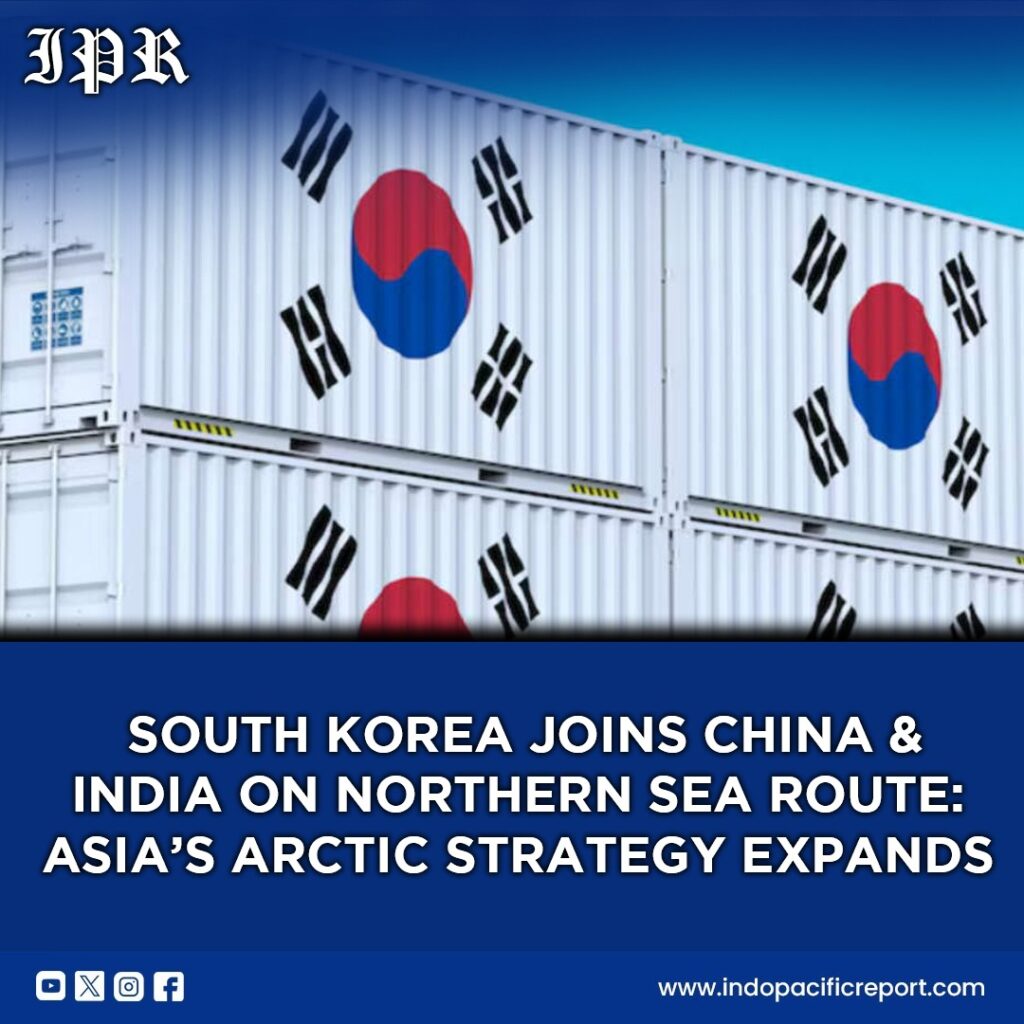
South Korea is now part of the growing group of Asian nations partnering with Russia to develop the Northern Sea Route (NSR), a maritime corridor along Russia’s Arctic coast. Rosatom, Russia’s state nuclear energy company, has long operated icebreakers to maintain cargo traffic along the NSR, and now aims to create a Trans-Arctic Transport Corridor linking sea, river, rail, and road transport. This year, for the first time in five years, Chukotka received all necessary cargo before the ice formed, saving Moscow millions on icebreaker escorts.
From a great-power competition perspective, this marks a shift in Arctic geopolitics. China and India are leveraging Russia’s Arctic infrastructure to reduce reliance on traditional maritime chokepoints like the Malacca Strait and the Suez Canal. South Korea’s entry signals a broader Asian strategy to expand influence and secure faster, alternative trade routes, even as Western powers maintain a dominant presence in global shipping lanes.
In regional security terms, the NSR underscores the dual-use nature of Arctic development. While primarily commercial, Russia’s control over nuclear-powered icebreakers gives it operational leverage over the corridor. Cooperation with Asian partners enhances Moscow’s strategic footprint, while also providing participating nations access to a secure and potentially militarily relevant Arctic route.
Alliance dynamics are evolving. Unlike formal security pacts, Arctic collaboration blends economic and strategic interests. China’s growing role, India’s cautious engagement, and South Korea’s participation demonstrate a new form of multi-vector partnership. These relationships may eventually influence decision-making in broader Indo-Pacific security frameworks, as Asian powers hedge against Western dominance.
From a maritime and economic strategy standpoint, the NSR provides shorter, faster, and more cost-efficient routes between East Asia and Europe. Reduced transit times lower fuel costs and enhance competitiveness for Asian exporters. For Russia, higher cargo volumes generate significant budgetary savings and create leverage for expanding Arctic infrastructure, including ports, logistics hubs, and icebreaker fleets.
Implications for the Indo-Pacific balance of power are profound. By joining NSR development, Asian nations gain alternative trade routes and strategic depth, reducing their vulnerability to chokepoint disruptions in the South China Sea or the Indian Ocean. Over time, the corridor could become a geostrategic lever, allowing Asia to project influence into high-latitude regions while reshaping global trade networks.
Forward-looking assessment: The Northern Sea Route is no longer just a Russian economic project; it is becoming an emerging axis of Asian economic and strategic power. South Korea’s participation alongside China and India signals the start of a high-latitude, Asia-centered trading and influence network that may challenge traditional Western maritime dominance in the coming decade.
Audience Question: Will Arctic trade routes like the NSR give Asia real economic independence, or could they spark a new arena of geopolitical tension?