North Korea Tests Missile During US-South Korea Drills: What It Means for Regional Security
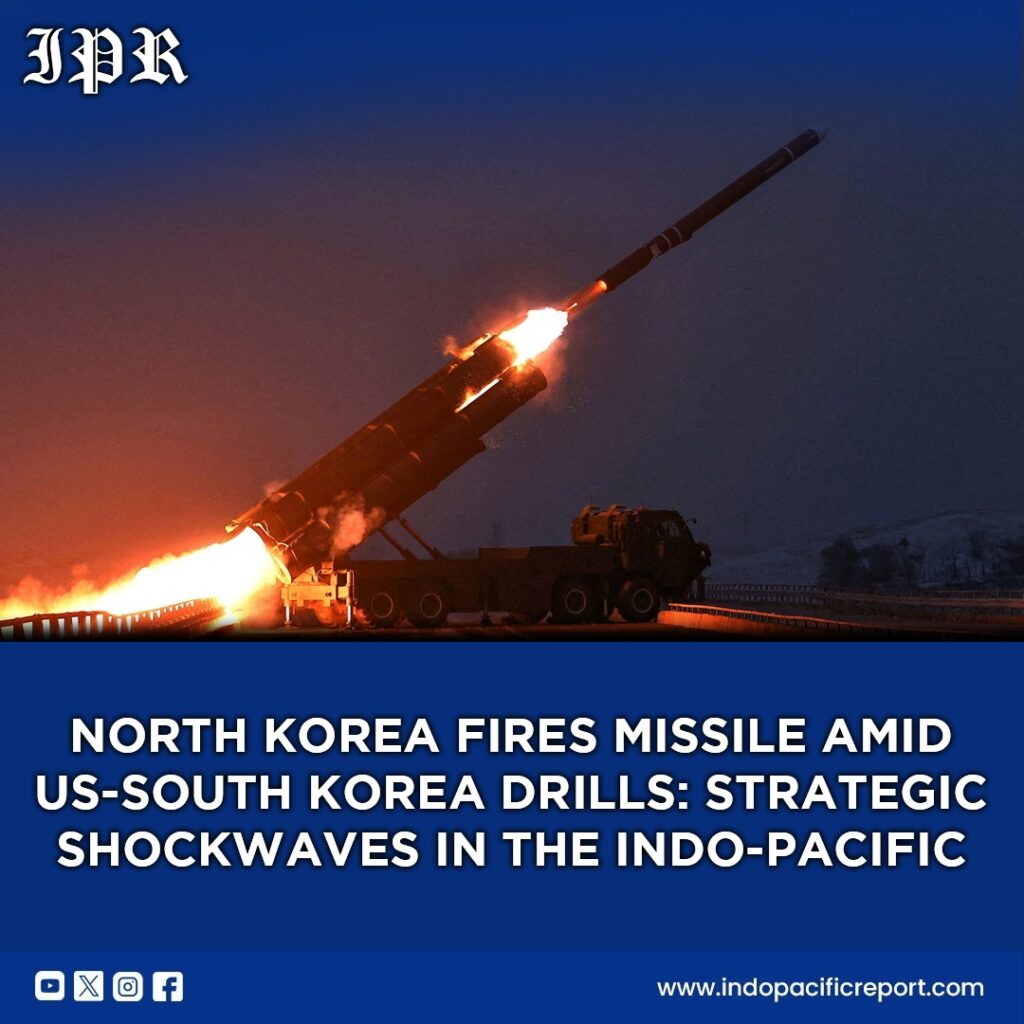
North Korea has launched a missile into the sea amid joint U.S.-South Korea military exercises. While details are limited, the launch is a clear signal from Pyongyang of both military capability and political resolve. This action occurs against the backdrop of escalating tensions on the Korean Peninsula and highlights the ongoing friction between deterrence and provocation.
From a great-power competition perspective, the test underscores the strategic tension between the U.S. and China. While Washington projects power through alliances and forward-deployed forces, Beijing must balance its influence with the risk of instability along its borders. North Korea’s missile launches remind both powers that Pyongyang remains a key, if unpredictable, actor in regional security dynamics.
Looking at the regional security architecture, these launches expose gaps in missile defense and early warning systems. South Korea, backed by U.S. missile defense capabilities, remains prepared to intercept limited strikes, but each test demonstrates the limits of current deterrence frameworks. Pyongyang’s ongoing missile development continues to complicate both conventional and nuclear threat calculations.
Alliance dynamics are also central. Joint U.S.-South Korea drills serve as both a deterrent to Pyongyang and reassurance to Tokyo, Taipei, and other regional partners. However, repeated provocations risk fatigue among South Korean policymakers and citizens. These exercises reaffirm U.S. commitments to allies and signal that its extended deterrence capabilities remain credible.
From a maritime and economic strategy angle, the missile’s trajectory into international waters is carefully calculated. It avoids direct escalation while sending a clear message. The surrounding seas are vital trade routes. Any misstep could disrupt shipping, global markets, and regional economies, highlighting the broader stakes of North Korea’s actions.
In terms of the Indo-Pacific balance of power, the missile tests maintain Pyongyang’s leverage in negotiations while strengthening the rationale for U.S. and allied forward deployments. Over time, this may drive accelerated investments in missile defense, amphibious forces, and strike capabilities across the region, reshaping the strategic environment from the Korean Peninsula to the Western Pacific.
Forward-looking assessment: North Korea’s missile tests during U.S.-South Korea drills are deliberate, signaling capability and political intent. While immediate escalation is unlikely, these actions reinforce the importance of adaptive alliance strategies, enhanced early warning, and maritime security planning. Even limited provocations carry outsized strategic weight in the Indo-Pacific, influencing deterrence and long-term regional stability.
Audience Question: Do North Korea’s missile tests strengthen regional deterrence, or do they risk escalating conflict in the Indo-Pacific?