Vietnam is positioning itself as a key player in global critical minerals, including rare earths and cobalt. These minerals are vital for high-tech industries, defense systems, and renewable energy. While the United States pushes for coalition-building and diversified supply chains, Hanoi is focusing on self-reliance, aiming to control extraction, processing, and trade within its borders.
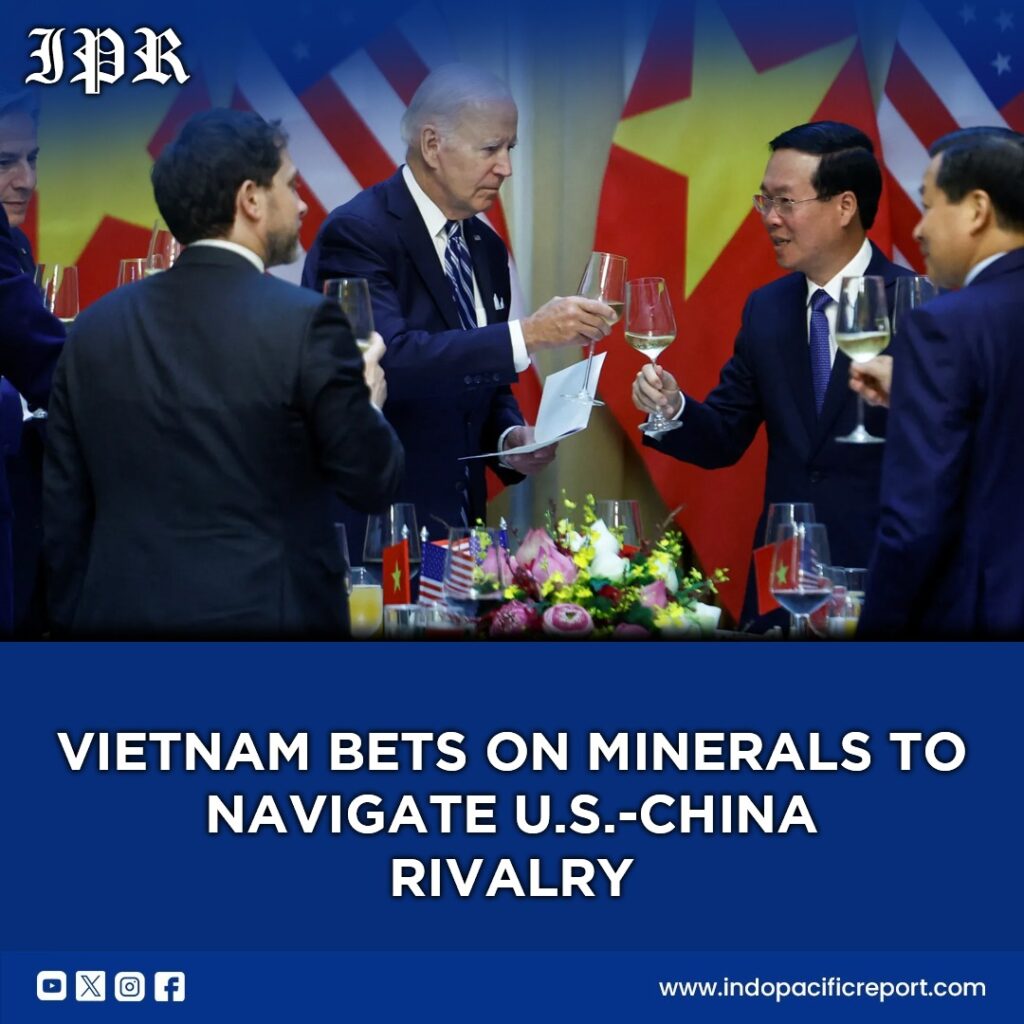
From a great-power competition lens, Vietnam’s strategy is a balancing act. It wants U.S. investment and access to technology, but it also needs to avoid overdependence on China, which dominates mineral processing. By emphasizing domestic capacity, Vietnam reduces the risk of being pressured by either Washington or Beijing, signaling that it will act independently in this strategic sector.
In terms of regional security architecture, control over critical minerals strengthens Vietnam’s strategic autonomy. These resources underpin defense modernization, maritime surveillance, and industrial development. By securing domestic supply, Hanoi can protect its defense and energy infrastructure, especially in the South China Sea, without relying entirely on foreign partners.
Alliance dynamics are influenced as well. Vietnam can participate in U.S.-led supply chain initiatives without fully committing, retaining leverage in negotiations. At the same time, China remains a major trading and processing partner, forcing Hanoi to manage relations carefully. This allows Vietnam to hedge, keeping options open while protecting sovereignty.
From an economic and strategic perspective, Vietnam’s approach turns natural resources into a geopolitical tool. Rare earths allow Hanoi to influence regional supply chains, attract foreign investment, and strengthen industrial and defense capabilities. It also reduces exposure to sanctions, trade shocks, or sudden policy changes from external powers.
Implications for the Indo-Pacific balance of power: Vietnam’s push for self-reliance boosts its autonomy and strengthens its position as a capable middle power. This strategy makes Hanoi more resilient to external pressure, enhances its role in maritime and economic security, and signals to ASEAN neighbors that domestic capacity is a key hedge against great-power dominance.
Forward-looking assessment: Vietnam’s strategy in critical minerals is a long-term bet on sovereignty and resilience. It strengthens defense, enhances leverage in U.S. and China negotiations, and supports economic independence. For the Indo-Pacific, this highlights the strategic importance of resource autonomy and signals that middle powers can shape regional security and economic outcomes without full reliance on a single great power.
Audience Question for Debate: Can Vietnam’s focus on self-reliance in critical minerals fully protect it from pressures by China and the U.S., or will dependency on one power remain unavoidable?