Vietnam is holding its 2026 national elections for the 16th National Assembly and 11th Ho Chi Minh City Council. On paper, the polls emphasize participation: early voting for offshore workers, nearly half of candidates are women or from ethnic minorities, and domestic media highlights fairness and inclusivity.
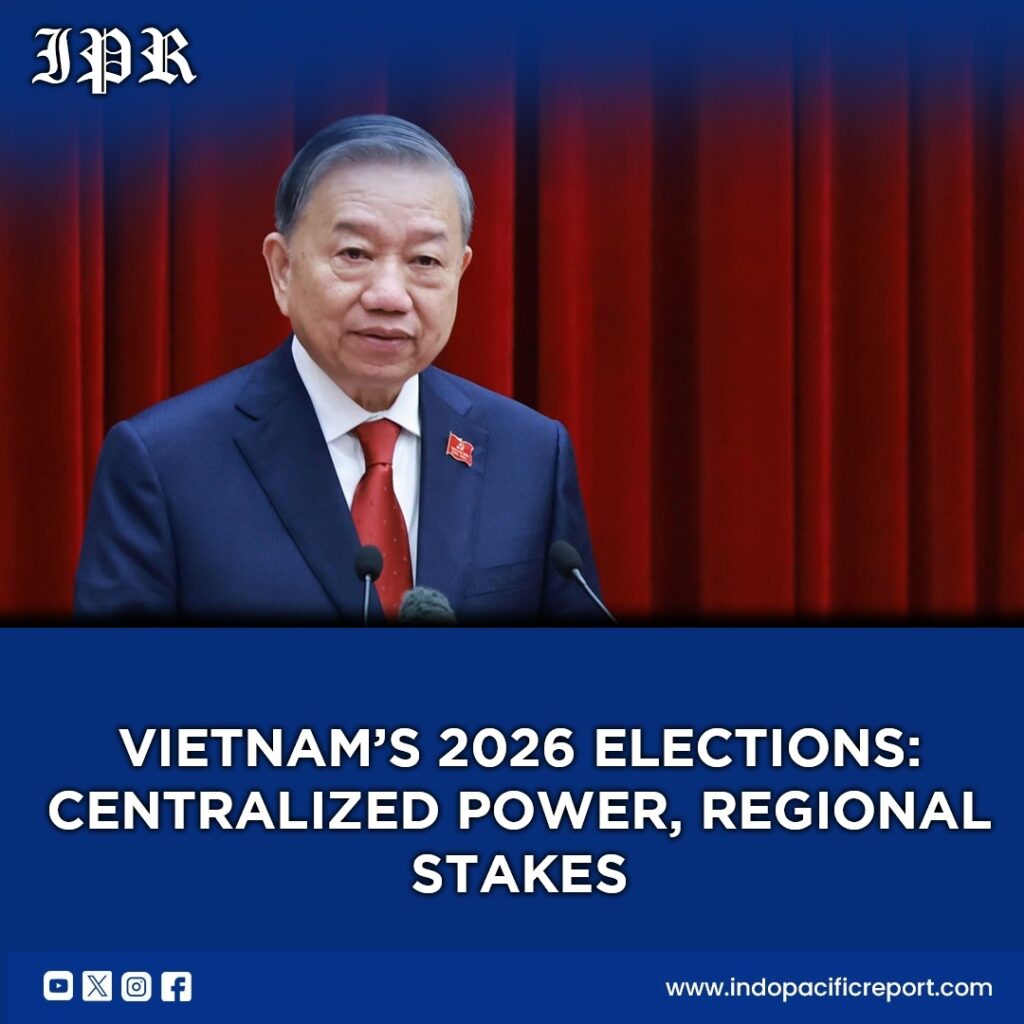
In reality, this is a tightly controlled process. Only Communist Party members effectively run. Independent or self-nominated candidates, like the openly gay jurist Lương Thế Huy in 2021, are absent. Party General Secretary Tô Lâm continues to consolidate power, overseeing security, media, and the political system itself. The National Assembly is expected to remain a “yes-men” legislature, capable of fast-tracking laws with little public input.
From a great-power competition perspective, Vietnam’s centralized political control signals predictability to China. By consolidating leadership, Hanoi strengthens its bargaining position while avoiding internal fragmentation. Beijing benefits from a stable, cooperative Vietnam as tensions persist in the South China Sea. For Washington and its allies, Hanoi’s internal control limits flexibility in influencing domestic politics.
Within the regional security architecture, centralized authority improves Vietnam’s ability to manage maritime security. The Ministry of Public Security plays a key role in elections, population management, and digital surveillance. This infrastructure can extend to coastal and offshore monitoring, ensuring rapid response to incidents in contested waters. In short, political consolidation translates into operational capacity in the maritime domain.
Alliance dynamics are shaped by Hanoi’s careful balancing act. Vietnam maintains ties with the United States and other regional powers. Strong internal cohesion allows Hanoi to negotiate confidently with both Beijing and Washington. Yet, strict political centralization may also limit its strategic maneuvering, reducing room to hedge effectively in the evolving Indo-Pacific balance.
Economically and strategically, the elections coincide with sweeping reforms: digitization of services, new administrative structures, and biometric citizen tracking. These measures allow faster policy implementation and regulatory control over ports, energy infrastructure, and trade routes—critical to Vietnam’s maritime and economic strategy. Centralization enhances efficiency but also concentrates power in the hands of a few decision-makers.
Implications for the Indo-Pacific: Vietnam’s elections illustrate the link between domestic politics and regional strategy. Centralized authority strengthens state control, stabilizes maritime operations, and provides predictability for great-power engagements. At the same time, political rigidity reduces pluralism and flexibility, which could limit Hanoi’s long-term options. For regional actors, this highlights the importance of engaging with Vietnam’s top leadership rather than relying on fragmented local influence.
Forward-looking assessment: Vietnam’s 2026 elections reinforce stability and predictability in Southeast Asia, but at the cost of political competition. Observers should watch how Hanoi uses its consolidated mandate in the South China Sea and regional alliances. Centralization may help the state act decisively, but it also raises the stakes for balancing influence between China and the United States.
Audience Question for Debate: Can Vietnam balance central political control with strategic flexibility in the South China Sea, or does consolidation limit its options?