China Courts Vietnam as Indo-Pacific Rivalry Deepens
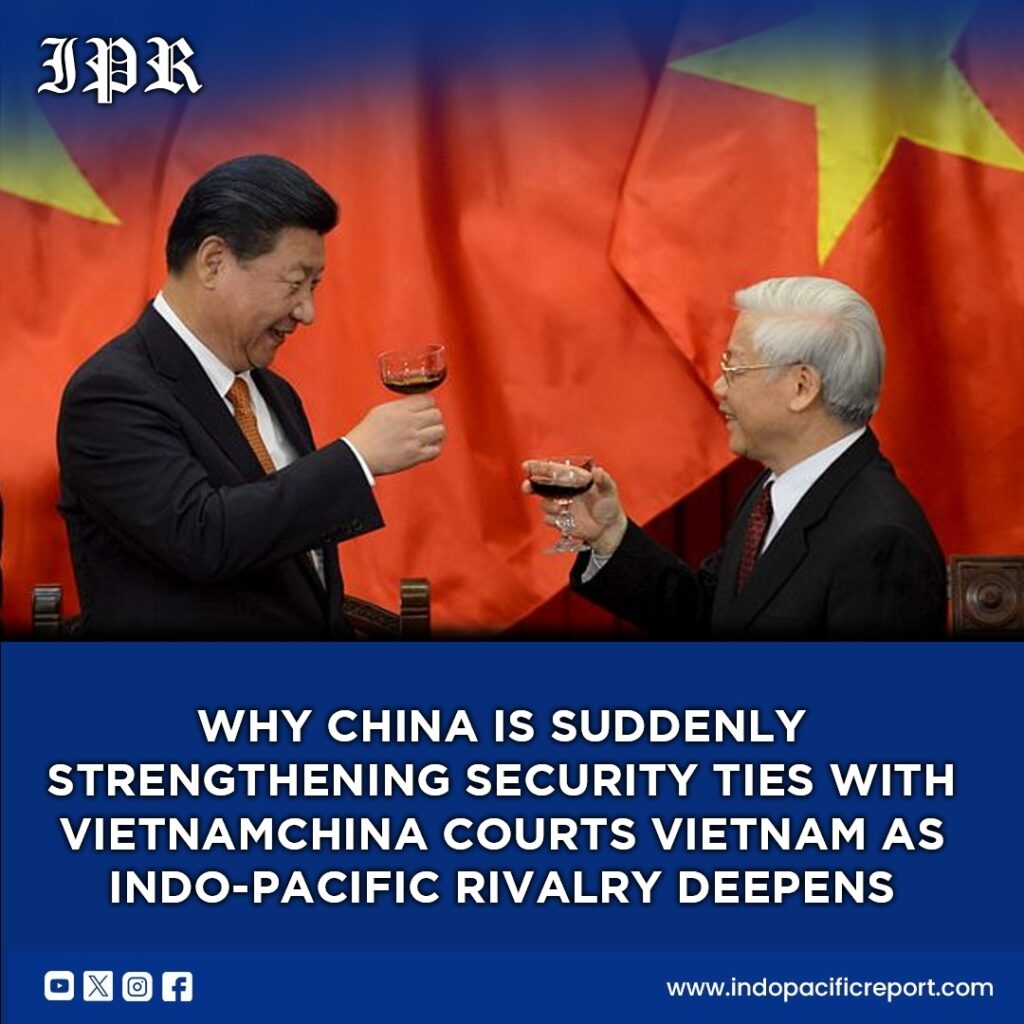
China’s decision to send Foreign Minister Wang Yi and Defence Minister Dong Jun to Vietnam signals a deliberate effort by Beijing to stabilize one of Southeast Asia’s most strategically important relationships at a time of intensifying great-power competition in the Indo-Pacific. The visit, which includes meetings with Vietnamese counterparts on political cooperation, defence collaboration, crime prevention, and regional security, reflects Beijing’s growing concern about the geopolitical fluidity of Southeast Asia. While economic interdependence between China and Vietnam remains strong, maritime disputes in the South China Sea continue to define the deeper strategic context of the relationship. In essence, the diplomacy reflects Beijing’s attempt to manage rivalry without pushing Hanoi decisively into the strategic orbit of the United States.
From the perspective of great-power politics, China’s outreach to Vietnam must be understood against the backdrop of evolving U.S. policy under President Donald Trump. Beijing has increasingly portrayed itself as a stable and predictable economic partner in contrast to Washington’s tariff policies and perceived unilateralism. Chinese officials have emphasized “strategic communication” and coordination in a turbulent international environment, language that echoes broader Chinese narratives about resisting “unilateral bullying.” The messaging is designed to resonate with developing states that are wary of being forced into rigid geopolitical alignments. In this sense, China’s diplomatic engagement with Vietnam is part of a wider strategy to frame Beijing as the anchor of regional stability, even as its maritime claims continue to generate friction with neighboring states.
Vietnam occupies a uniquely sensitive position in the Indo-Pacific strategic landscape. As one of the most capable Southeast Asian states with direct territorial disputes with China in the South China Sea, Hanoi has adopted a nuanced strategy of balancing engagement with hedging. The 45 cooperation agreements signed during Chinese leader Xi Jinping’s 2025 visit to Hanoi—including initiatives on supply chains, artificial intelligence, railway development, and joint maritime patrols—illustrate the depth of economic and institutional connectivity between the two communist neighbors. Yet Vietnam simultaneously shares Washington’s concerns about Beijing’s maritime assertiveness. This duality—economic integration with strategic caution—has become the hallmark of Vietnam’s foreign policy and represents a broader pattern across Southeast Asia.
The visit also reflects Beijing’s attempt to shape the emerging regional security architecture before it solidifies further around U.S.-led networks. Over the past decade, Southeast Asia has become a central arena of institutional competition, where frameworks such as ASEAN-centered diplomacy intersect with expanding minilateral arrangements involving the United States and its partners. By strengthening defence dialogue, law-enforcement cooperation, and joint patrol discussions with Vietnam, China is seeking to embed itself within the region’s security fabric rather than remain an external challenger to it. Such engagement serves a dual purpose: it reduces the risk of crisis escalation in disputed waters while also complicating Washington’s ability to consolidate a coherent balancing coalition.
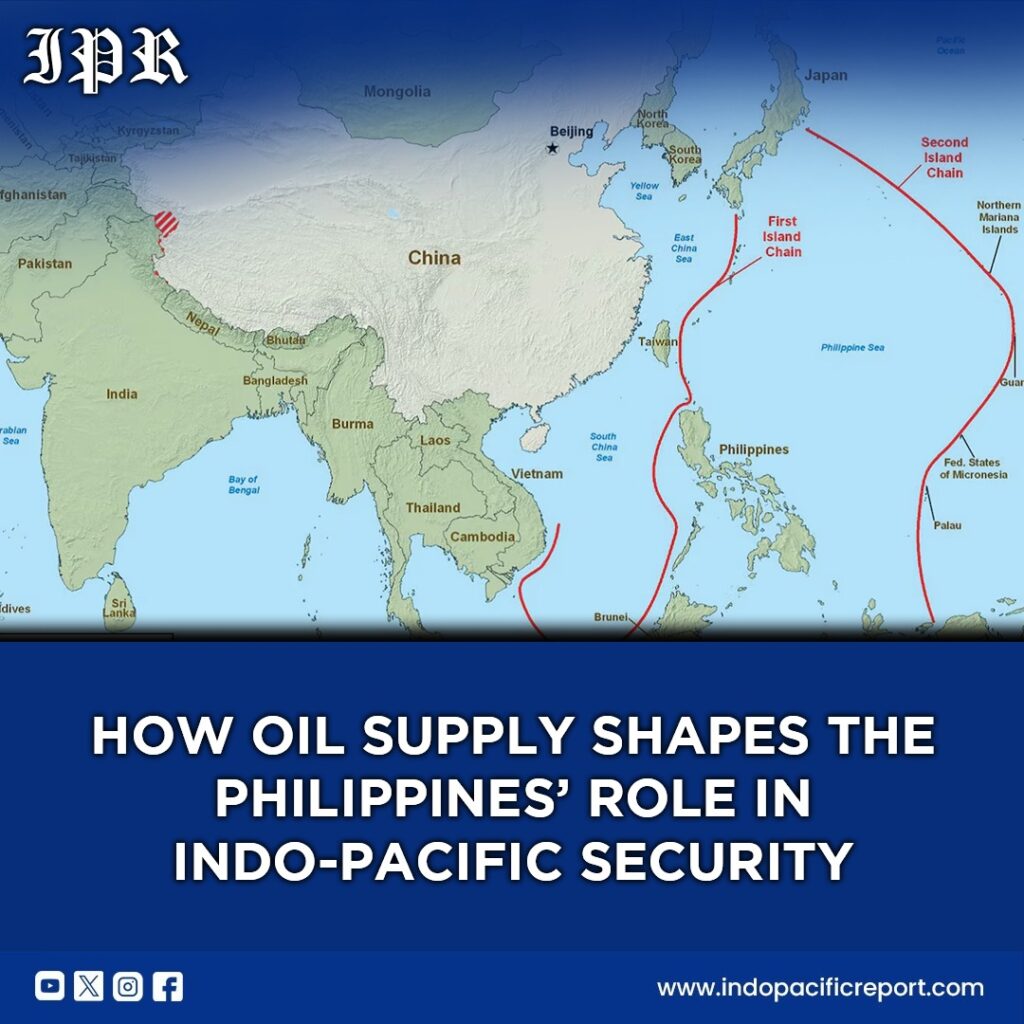
Maritime strategy lies at the heart of the geopolitical significance of the visit. The South China Sea is not merely a territorial dispute but a strategic crossroads linking Northeast Asia, Southeast Asia, and the Indian Ocean through critical sea lines of communication. Control over—or influence across—these waters carries profound implications for energy flows, global trade, and military mobility. Vietnam’s coastline stretches along the western edge of this maritime corridor, giving Hanoi a geographic position of considerable strategic leverage. For China, improving defence coordination with Vietnam may help reduce operational friction in contested zones while limiting the possibility that Hanoi deepens security cooperation with outside naval powers.
At the same time, the economic dimension of Sino-Vietnamese cooperation carries wider implications for supply chain geopolitics. Vietnam has become a key manufacturing hub as global companies diversify away from overdependence on China. By expanding cooperation in logistics, infrastructure, and advanced technologies, Beijing appears to be pursuing a strategy of “co-location” rather than competition—integrating Vietnam into a broader Chinese-centered production ecosystem. Such integration would allow China to retain influence over regional supply networks even as manufacturing disperses geographically. In effect, economic interdependence becomes a tool for strategic insulation, softening the geopolitical impact of supply chain realignment.
The diplomatic choreography surrounding the visit therefore reveals a deeper strategic calculus. China understands that Southeast Asia will remain the decisive arena where the balance of power in the Indo-Pacific is shaped—not through outright alliances but through layered relationships, economic dependencies, and maritime realities. Vietnam, with its historical suspicion of Chinese power yet deep economic ties to Beijing, embodies this strategic ambiguity. By engaging Hanoi at multiple levels simultaneously—political, economic, and security—China hopes to keep the relationship within a manageable competitive framework rather than allowing it to drift toward open alignment with Washington.
Looking forward, the trajectory of China-Vietnam relations will likely mirror the broader evolution of Indo-Pacific geopolitics: cooperative on the surface, competitive beneath. Beijing will continue using economic integration and diplomatic outreach to maintain influence, while Hanoi will seek to preserve strategic autonomy through diversified partnerships. For the region, the significance of these dynamics lies not in immediate confrontation but in the gradual shaping of deterrence and alignment patterns across maritime Asia. If managed carefully, Sino-Vietnamese engagement could reduce the risk of escalation in the South China Sea. But if tensions over sovereignty intensify, the relationship could quickly become a focal point of great-power rivalry in the Indo-Pacific.