30 Chinese Ships Swarm the West Philippine Sea — What Happens Next?
Just before sunrise, when the sea is usually calm and quiet, something unusual appeared on the radar screens of Filipino maritime watchers. Not one vessel. Not five. But dozens. Thirty. Thirty Chinese ships moving together across waters the Philippines calls its own.
Some were large white-hulled vessels from the China Coast Guard. Others were smaller boats suspected to be part of China’s shadowy maritime militia, civilian fishing vessels that often move like a coordinated fleet when tensions rise. To many observers in the Philippines, it didn’t look like fishing. It looked like a message. And maybe even a warning.
Now here’s the question people across Southeast Asia are quietly asking: Was this just another patrol or the beginning of something bigger? Because if you’ve been following what’s happening in the West Philippine Sea, the section of the broader South China Sea claimed by Manila, you know this isn’t just about ships. It’s about power. Territory. And who gets to decide the rules of the sea.
https://www.youtube.com/watch?v=Hh6X9EOeF6Y
For fishermen from small Philippine coastal towns, these waters are not an abstract geopolitical debate. They are surviving. Generations have sailed these seas long before satellites, coast guards, or international court rulings existed. A Filipino fisherman once described it in a simple way: “The sea is our rice field.”
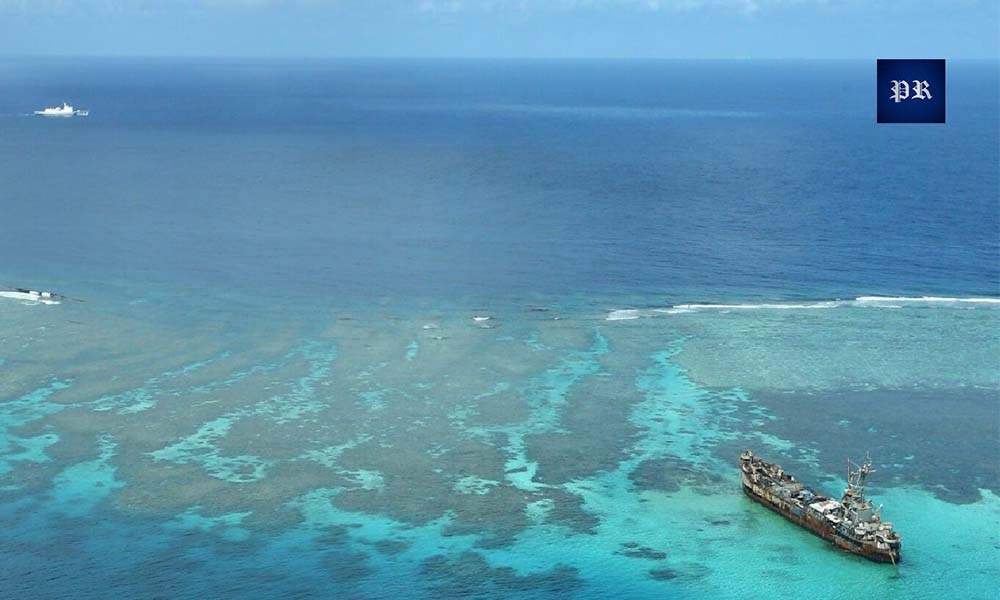
But in recent years, that “rice field” has started to feel crowded and sometimes hostile. Chinese vessels have appeared again and again near contested areas like Second Thomas Shoal, where the Philippines maintains a small military outpost aboard the aging ship BRP Sierra Madre. There have been water cannons, dangerous blocking maneuvers, and tense standoffs that play out far from cameras but carry enormous strategic weight.https://www.youtube.com/watch?v=A40FNkeA9Pk
Still, thirty ships at once? That number makes people pause. Even officials in Manila described the sighting as unusually large. Some analysts think it could be a test, a way for Beijing to probe how far it can push without triggering a serious response. Others see something more calculated. A slow strategy. Send ships. Increase presence. Normalize the patrols. Repeat it often enough that the world eventually stops noticing. And that’s the part that worries many strategists.

Because history has shown that control over the sea doesn’t always begin with warships or missiles. Sometimes it starts quietly, with fleets that appear again and again until they simply become permanent. That’s why this latest swarm of vessels has sparked new questions not only in the Philippines but across the region, from Vietnam to Malaysia, and even among security planners in the United States. Is this another episode in a long-running maritime dispute? Or are we watching the next stage of a much bigger geopolitical contest unfolding in real time? The truth is, the South China Sea has always been complicated. Claims overlap. Maps disagree. Politics runs deep. But when thirty ships suddenly appear in disputed waters, the question becomes unavoidable.
What exactly is China trying to prove and how far is the Philippines willing to push back? To understand what might happen next, we need to step back and look at the deeper story behind these waters, the legal battles that shaped them, and the strategic game now unfolding across one of the most important seas on Earth.https://indopacificreport.com/chinas-growing-flotilla/
Background Context
For many people outside Southeast Asia, the name can sound confusing. Is it a different sea? A new claim? Or just a political label? In reality, the West Philippine Sea is the name used by the Philippines to describe the portions of the broader South China Sea that fall within its Exclusive Economic Zone, or EEZ. Under international law, that zone stretches about 200 nautical miles from a country’s coastline. Within it, a state has the right to explore and use marine resources, fish, oil, natural gas, all of it. And honestly, this isn’t some empty patch of ocean. These waters are incredibly valuable.
The sea is packed with fishing grounds that have fed coastal communities for generations. Beneath the seabed, geologists believe there may be large deposits of oil and natural gas. And above it all runs one of the busiest maritime highways on the planet. Roughly $3 trillion worth of global trade passes through the wider South China Sea every year, tankers carrying energy, cargo ships loaded with electronics, food, and raw materials moving between Asia, Europe, and the Middle East.https://www.youtube.com/watch?v=1xgp02zHzLw
So when tensions rise here, it’s not just a regional issue. The entire global economy quietly depends on these waters staying stable. And that’s exactly why every new confrontation feels a little heavier than the last. The fight over the South China Sea didn’t suddenly appear overnight. It has been building for decades, like a slow-moving storm.
Several countries claim parts of the sea, including Vietnam, Malaysia, Brunei, Taiwan, and the Philippines. Many of these claims overlap, creating a complicated puzzle of maps, history, and competing national interests. But the biggest claim belongs to China.https://www.youtube.com/watch?v=A40FNkeA9Pk
Beijing uses a controversial boundary known as the Nine‑Dash Line, a sweeping U-shaped line that covers almost the entire South China Sea. According to that map, China asserts historic rights over waters that lie much closer to other countries’ coastlines. That’s where things became explosive.
China Fires Flares at Philippines Aircraft as EW Warfare Goes Live in the Spratlys
In 2016, the Philippines took the issue to an international tribunal in The Hague under the United Nations Convention on the Law of the Sea. The case became one of the most significant legal battles over maritime law in modern history. The ruling, formally known as the South China Sea Arbitration (Philippines v. China), was clear. The tribunal concluded that China’s sweeping “nine-dash line” claim had no legal basis under international law. For Manila, it was a huge diplomatic victory. But Beijing rejected the decision outright and continues to ignore the ruling to this day. Which means the dispute never really ended. It just entered a new phase.https://www.youtube.com/watch?v=A40FNkeA9Pk
If you talk to people in the Philippines, especially those living in coastal communities, the issue doesn’t feel like a distant geopolitical chess match. It feels personal. Filipino fishermen have repeatedly reported being chased away from waters their families have fished for decades. Some describe Chinese vessels blocking access to reefs, while others say their boats were shadowed or warned to leave areas they once considered normal fishing grounds.
Japan–Philippines Security Shift: The Possible Transfer of Type-03 Air Defense System
One fisherman from western Luzon once said something that stuck with a lot of people: “Our fathers fished here. Our grandfathers too. Suddenly someone tells us it’s not ours anymore.” That frustration has slowly built into national pressure.https://www.youtube.com/watch?v=ciSNHLochbs
Public opinion surveys in the Philippines have shown strong support, sometimes over 80 percent, for government action to defend the country’s maritime rights. Leaders in Manila know the public is watching closely. And that’s why Manila has continued sending vessels to disputed areas despite repeated confrontations. Coast guard ships escort fishing boats, deliver fuel and food, and sometimes carry supplies to remote outposts in contested reefs. It’s not always dramatic. Sometimes it’s just slow, tense maneuvering between ships under the tropical sun. But every resupply mission, every fishing trip, every patrol carries the same quiet message: The Philippines isn’t planning to disappear from these waters. Not now. Not easily.
The Incident: 30 Chinese Ships
What Actually Happened?
It started with a sight that immediately caught attention inside Philippine maritime monitoring centers. Radar screens began showing clusters of vessels gathering in the West Philippine Sea, far more than what would normally appear during routine fishing activity. As the reports came in, the number became clear, around thirty Chinese ships operating inside waters that the Philippines considers part of its Exclusive Economic Zone.
Thirty vessels moving together is not something officials simply brush off. Even seasoned observers paused for a moment. One or two ships could easily be explained as patrols or fishing boats drifting through. But thirty moving in proximity suggests coordination.
Philippine authorities said several of the vessels were linked to the China Coast Guard, while others appeared to belong to China’s maritime militia fleet, boats that look like ordinary fishing trawlers but are often used to reinforce Beijing’s presence in disputed waters.
The locations where they appeared made the situation even more sensitive. Some of the activity was observed near Scarborough Shoal, known locally as Bajo de Masinloc, a reef that has been one of the most symbolic flashpoints between China and the Philippines for years. Other vessels were seen near Pag-asa Island, a small Philippine-held island in the Spratly chain where a modest civilian community and a military outpost exist side by side. When ships gather in those places, it is rarely accidental. Every movement carries meaning, whether intended or not.
The Different Ships in the Swarm
When headlines say “Chinese ships,” it is easy to imagine a fleet of gray warships sailing together. But the maritime reality in the South China Sea is more layered than that. China usually maintains several types of vessels in contested waters. The most obvious are ships from the People’s Liberation Army Navy, the country’s formal naval force. These are military warships designed for combat operations, and while they are not always involved directly in these encounters, their presence nearby often signals strategic backing.
More commonly seen in daily standoffs are ships from the China Coast Guard. Despite being labeled as law-enforcement vessels, many of them are extremely large and heavily equipped. They patrol disputed areas, escort other Chinese vessels, and sometimes position themselves to block or shadow ships from other countries.https://www.youtube.com/watch?v=ciSNHLochbs
Then there is the most unusual layer of China’s maritime presence, the maritime militia. These vessels often resemble normal fishing boats. Nets hang from their decks, and from a distance they look like part of any coastal fishing fleet. Yet analysts say many operate in organized formations, maintaining a persistent presence around reefs and islands that Beijing seeks to control. It creates a complicated situation. On paper, they are civilians. In practice, they often function as an extension of state strategy.
Manila’s Careful Response
The reaction from the Philippines has been measured but firm. Officials in Manila increased naval and coast guard patrols in the surrounding waters, making sure Philippine vessels maintained visibility in the area.
Escort missions for Filipino fishermen were also reinforced. These patrols are meant to ensure that local boats can continue operating without being pushed away from fishing grounds that coastal communities have relied on for generations.
Government statements described the presence of the Chinese ships as illegal and provocative, emphasizing that the waters lie within the Philippines’ internationally recognized maritime zone.
Yet at the same time, Philippine authorities have tried to avoid actions that might suddenly escalate the situation. Leaders within the Philippine Coast Guard have repeatedly emphasized restraint. Aggressive responses such as ramming, water cannon exchanges, or direct confrontations could quickly turn a tense encounter into something far more dangerous. So the approach has been a careful one: maintain presence, defend rights, but avoid lighting a fuse.
International Reaction
The situation has not gone unnoticed outside Southeast Asia. Under the Mutual Defense Treaty (1951), the United States is a formal defense ally of the Philippines. The treaty states that an armed attack on Philippine forces in the Pacific could trigger a mutual response.
Because of this alliance, Washington and Manila have increased joint patrols and military exercises in recent years. U.S. naval forces also carry out freedom of navigation operations in the South China Sea, aimed at challenging maritime claims that exceed international law.
Indonesia and Australia Step Up Defense Ties with Jakarta Treaty Initiatives
Across Southeast Asia, members of the Association of Southeast Asian Nations have voiced concern about rising tensions, although collective responses have often remained cautious. The region is economically intertwined with China, which makes unified diplomatic pressure difficult.
Still, the appearance of thirty ships in disputed waters sends a signal that few governments can ignore. Every such incident becomes another reminder that the South China Sea is not just a regional disagreement over maps.https://www.youtube.com/watch?v=W5SLEfeZ_1M
It is an unfolding geopolitical contest, one where every patrol, every fishing trip, and every gathering of ships quietly reshapes the balance of power at sea.
Legal and Diplomatic Implications
At the heart of the dispute is a set of rules that most of the world officially agrees to follow at sea. Those rules come from the United Nations Convention on the Law of the Sea, often shortened to UNCLOS. It’s basically the global rulebook for oceans, defining who controls what waters, who can fish where, and how far a country’s maritime rights extend.
Under UNCLOS, the Philippines has sovereign rights over resources within its Exclusive Economic Zone, which stretches roughly 200 nautical miles from its coastline. Inside that zone, Manila has the legal authority to manage fisheries, explore undersea oil or gas deposits, and regulate economic activity connected to those waters.
That’s why every time foreign vessels appear inside the West Philippine Sea, the issue immediately becomes more than a simple patrol. If those vessels are operating without permission, especially if they are escorting fishing fleets or maritime militia, it raises serious questions about whether those actions violate the spirit and principles of UNCLOS. And that is exactly where today’s tension begins.
https://www.youtube.com/watch?v=iJ7w7zu3v4A
The legal debate reached a dramatic moment in 2016 when the Philippines took its dispute with China to an international tribunal in The Hague. The case, formally known as the South China Sea Arbitration (Philippines v. China), produced one of the most consequential rulings in modern maritime law. The tribunal concluded that China’s sweeping claim over most of the South China Sea, represented by the controversial Nine-Dash Line, had no legal basis under UNCLOS.
For Manila, the decision reinforced its maritime rights and clarified that many of the waters Beijing claims actually fall within the Philippine EEZ.
But the ruling did not magically resolve the conflict. China rejected the tribunal’s authority and has never recognized the decision, insisting that its activities in the region are legitimate patrols and law-enforcement operations. That refusal leaves the international legal victory somewhat incomplete. The law may be clear, but enforcement in international waters often depends on diplomacy, power, and persistence.
Why the Philippines Avoided the South China Sea in Its UN Security Council Bid
With the legal framework established but still contested in practice, the Philippines has had to rely on a mix of diplomatic strategies. One path involves direct dialogue with Beijing. Bilateral talks between Manila and Beijing sometimes aim to reduce tensions, manage fishing access, or prevent dangerous incidents at sea. These conversations can be slow and complicated, but they remain one of the few ways to lower tensions without escalation.https://youtu.be/ciSNHLochbs?si=74ByunTDhoxVUcZF
Another channel runs through the regional bloc known as the Association of Southeast Asian Nations. ASEAN has long attempted to negotiate rules of behavior in the South China Sea, including proposals for a formal code of conduct. The challenge, however, is that ASEAN members have very different relationships with China, which often makes reaching a unified position difficult.
Finally, Manila can continue using international legal mechanisms connected to UNCLOS to reinforce its case and remind the global community of the 2016 ruling. While courts cannot physically enforce decisions at sea, legal clarity helps shape international opinion and diplomatic pressure. In disputes like this, legitimacy matters almost as much as ships.
Geopolitical Analysis
China’s Strategic Interests
To understand the presence of Chinese vessels in the South China Sea, it helps to step back and look at Beijing’s broader maritime strategy. China has increasingly relied on what analysts describe as “gray-zone tactics.” These actions fall somewhere between normal diplomacy and open military conflict. Instead of deploying warships aggressively, Beijing often sends coast guard vessels and maritime militia fleets to disputed areas. Their presence is constant but technically non-military.https://www.youtube.com/watch?v=iJ7w7zu3v4A
The idea is subtle but effective. By maintaining ships near reefs, shoals, and islands over long periods, China gradually establishes a form of de facto control without firing a single shot. Over time, presence can become an influence. And influence can slowly reshape reality on the water.
Philippine Strategic Responses
The Philippines has responded by strengthening its own maritime awareness and defensive posture. Patrols in the West Philippine Sea have increased, and surveillance systems now monitor vessel movements more closely than in previous decades. The Philippine government has also expanded cooperation with allies, particularly the United States, to improve naval capabilities, coast guard capacity, and joint maritime exercises. These partnerships aim to send a quiet but clear signal: the Philippines may not match China ship for ship, but it does not stand alone.
Across Southeast Asia, the dispute places the Association of Southeast Asian Nations in a delicate position. Some member states view China’s growing maritime presence as a serious security concern. Others prioritize economic ties with Beijing and prefer cautious diplomacy. This split makes regional consensus difficult.
Iran’s Strikes on U.S. Bases Offer a Warning for Asia-Pacific
At the same time, the risk of miscalculation at sea remains very real. Close encounters between vessels, water cannon incidents, and aggressive maneuvering have already occurred in recent years. When ships operate in tight spaces under political pressure, even a small navigational mistake can spiral into a major diplomatic crisis. That is what makes every new incident so closely watched.
What Happens Next?
One possible outcome is that tensions slowly cool through diplomacy. Renewed talks between the Philippines and China could lead to practical agreements that reduce friction. These might include safety arrangements for fishermen, communication protocols between coast guards, or even limited cooperation on resource management. Such measures would not solve the dispute entirely, but they could lower the immediate temperature in contested waters.https://www.youtube.com/watch?v=W5SLEfeZ_1M
Another scenario is the one many analysts consider most likely, a prolonged standoff. In this situation, Chinese patrols and maritime militia deployments would continue appearing in contested areas. The Philippines would respond with stronger patrols, escorts for fishermen, and increased surveillance. Neither side would escalate dramatically, but neither would back down. The result would be a slow strategic contest playing out year after year.
The most worrying possibility is accidental escalation. A collision between vessels, a misinterpreted maneuver, or a confrontation involving coast guard ships could quickly trigger a larger crisis. Because of the Mutual Defense Treaty (1951), any serious attack on Philippine forces could also draw in the United States, potentially widening the conflict beyond a regional dispute. For that reason alone, even small incidents are watched carefully by governments across the Indo-Pacific.
Expert Views and Commentary
Security analysts often describe China’s maritime militia strategy as a carefully calculated approach to asserting control without crossing the threshold of open warfare. By using vessels that appear civilian, Beijing can maintain constant presence in disputed waters while avoiding the optics of military aggression.https://www.youtube.com/watch?v=wHFsyAtQIgg
Legal scholars point out that international law, particularly UNCLOS and the 2016 arbitral ruling, strongly supports the Philippine legal position. Yet they also acknowledge a difficult reality: international law depends heavily on voluntary compliance, and enforcement becomes complicated when a powerful state refuses to recognize a ruling.
Regional geopolitical experts increasingly view the South China Sea as one of the most important arenas in the broader strategic rivalry between the United States and China. What happens in these waters influences military planning, alliance structures, and defense policies across Southeast Asia. In other words, this is no longer just a territorial dispute over reefs and shoals. It has become part of a much larger global power competition.
Conclusion
The appearance of around thirty Chinese vessels in the West Philippine Sea is not simply an isolated maritime event. It reflects a continuing strategic pattern that blends legal disputes, diplomatic maneuvering, and subtle displays of power.
For the Philippines, the challenge is clear: defend its sovereign rights under international law while avoiding escalation in waters where powerful actors operate side by side.
For the wider region, the stakes are even larger. The South China Sea sits at the crossroads of global trade, military strategy, and international law. How countries respond to incidents like this will shape not only regional security but also the future rules governing the world’s oceans.
And for now, as ships continue to move across those contested waters, the world is watching closely, waiting to see which path the next chapter will take.https://youtu.be/0bvvgt8wZKI?si=QalECKucmfDW1v5e