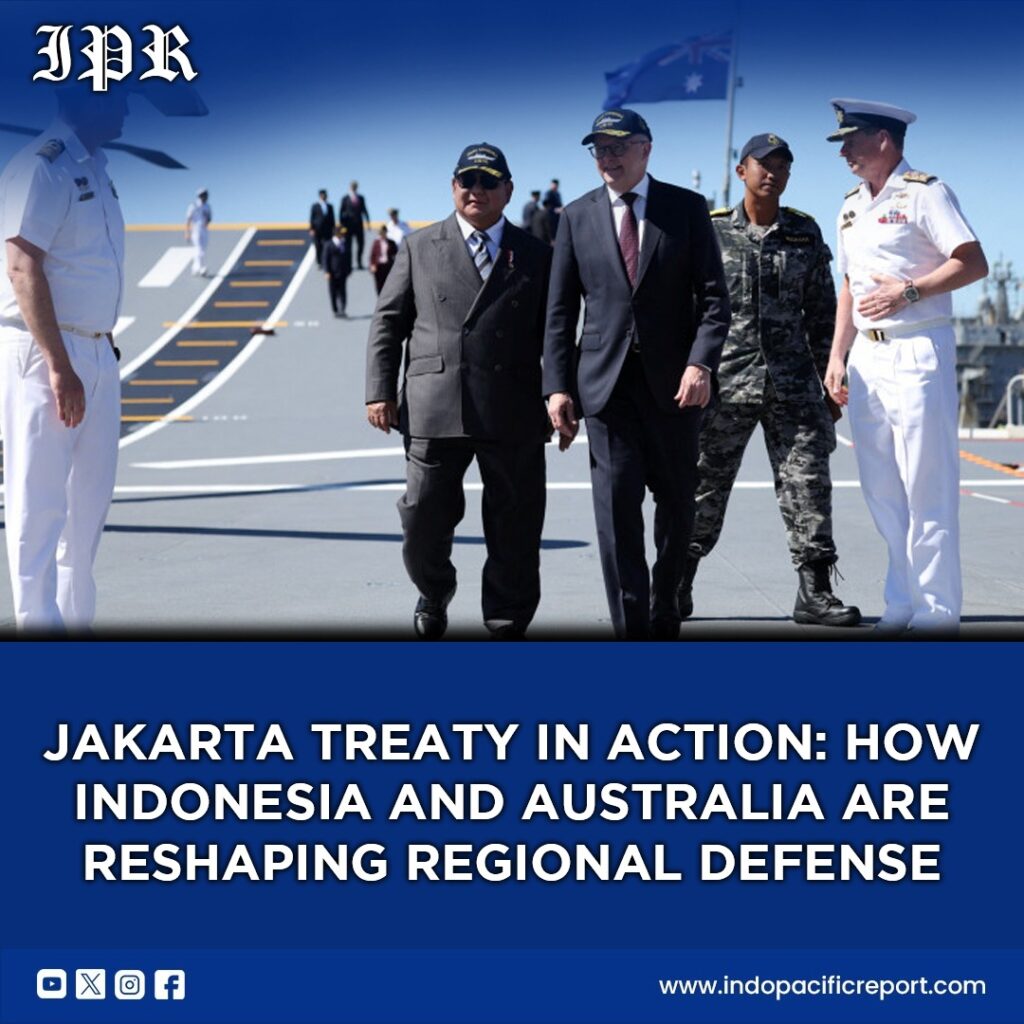
Indonesia and Australia Step Up Defense Ties with Jakarta Treaty Initiatives
Australia is moving forward with practical steps to implement the Jakarta Treaty signed in February 2026, aiming to deepen defense cooperation with Indonesia. Key initiatives include embedding a senior Indonesian officer within Australia’s 1st Brigade in Darwin, assessing and developing training infrastructure at Morotai Island, expanding the Young Leaders Forum for junior officers, and conducting major joint exercises like Kakadu, Pitch Black, and Chriswamara. These measures aim to strengthen trust, improve interoperability, and ensure both nations are ready to respond to regional security challenges.
The moves are strategically significant in the context of great-power competition. China’s growing influence in Southeast Asia makes it essential for regional middle powers to enhance operational readiness. By integrating Indonesian officers with Australian forces and aligning exercises with U.S. rotational presence in northern Australia, both countries are signaling a credible commitment to collective regional security while maintaining a defensive posture.
From a regional security architecture perspective, the Jakarta Treaty’s implementation institutionalizes communication, crisis coordination, and operational cohesion. Trilateral discussions involving Papua New Guinea and planned exercises with other regional partners build a networked approach to security. Expanding programs like the Young Leaders Forum strengthens professional relationships among future military leaders, which is critical for long-term stability and confidence-building.
In terms of alliance dynamics, embedding Indonesian officers within Australian command structures is a breakthrough. It allows Indonesia to directly contribute to planning and operations while gaining exposure to modern military doctrines. This integration fosters shared responsibility for regional security and reduces the likelihood of miscalculations during potential crises.
Maritime strategy and operational readiness also benefit from these initiatives. Developing training facilities on Morotai and North Maluku supports flexible, forward-deployed forces capable of rapid response. The focus on distributed infrastructure, combined with large-scale exercises, strengthens Indonesia’s ability to secure critical sea lanes and project stability across the archipelago.
Implications for the Indo-Pacific balance of power are clear. Indonesia’s central position in Southeast Asia and its enhanced partnership with Australia create a robust middle-power network that can maintain regional equilibrium. By operationalizing the Jakarta Treaty, both nations are improving deterrence, signaling credibility, and preparing the ground for coordinated regional responses without directly provoking great powers.
Forward-looking assessment: The Jakarta Treaty is becoming more than a diplomatic agreement; it is a platform for operational integration, professional development, and regional stability. Continued implementation of joint exercises, embedded command roles, and trilateral coordination will shape the strategic environment in Southeast Asia and reinforce a networked approach to Indo-Pacific security.
Question for the Audience: Could Indonesia’s deepening defense integration with Australia shift the regional balance of power—or risk escalating tensions with China?