Philippine Civilians Sail to Thitu: A Bold Move in South China Sea Tensions
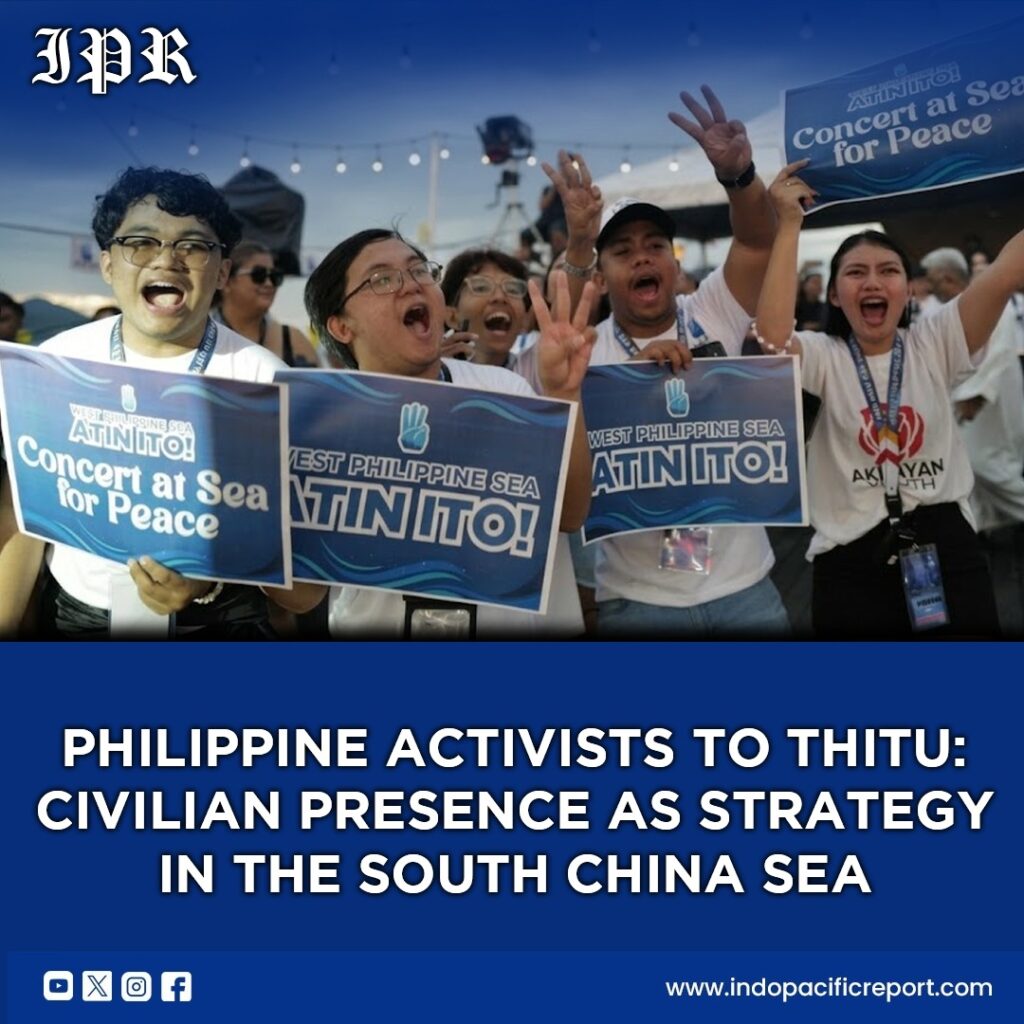
A coalition of Philippine activist groups, known as Atin Ito (“This Is Ours”), is planning a civilian mission to Thitu Island (Pag-asa) in the contested Spratly Islands. Their goal is to deliver food and fuel to the small civilian population there while reinforcing Manila’s sovereignty claims in the face of increasing Chinese activity. Thitu is the largest Philippine-occupied island in the Spratlys and sits just 12 nautical miles from China’s militarized Subi Reef, giving the mission both symbolic and strategic significance.
This civilian initiative reflects a broader trend in gray-zone operations, where non-military actors influence strategic outcomes without direct armed confrontation. By maintaining a visible presence on Thitu, Philippine civilians are asserting territorial control and challenging China’s claim, which spans nearly the entire South China Sea under its nine-dash line. These efforts complement formal state actions, such as military patrols and diplomatic protests, creating a layered approach to sovereignty enforcement.
From a maritime security perspective, the mission underscores the importance of sustaining logistical and humanitarian support in contested areas. Civilian supplies and attention to residents help maintain continuous occupation—a key factor in international law for reinforcing claims. Moreover, by operating near Chinese military installations, these missions send a subtle message of resolve: Manila is actively present in the region and willing to uphold its territorial rights without immediately escalating to armed conflict.
Alliance dynamics are also at play. By showing that it can sustain presence on Thitu, the Philippines reinforces its credibility with security partners such as the United States and Japan. Civilian missions highlight local commitment and bolster the perception that Philippine sovereignty claims are backed domestically, which strengthens allied deterrence messaging in a region where disputes often rely on signaling rather than combat.
In the broader Indo-Pacific balance of power, civilian-led operations like this demonstrate how small states can leverage non-military tools to maintain influence in contested maritime zones. They complicate Beijing’s operational calculus: overly aggressive responses risk international scrutiny, while ignoring civilian presence weakens China’s claims. In this context, non-state actors effectively become instruments of national strategy, merging civic engagement with geopolitical signaling.
Forward-looking assessment: If repeated or expanded, such civilian missions could normalize a hybrid approach to sovereignty enforcement in the South China Sea. Manila’s strategy shows that assertive presence does not always require a military footprint. Still, careful coordination with state authorities and allies is essential to prevent accidental escalation near Chinese forces. Civilian activism is now an active component of maritime strategy, reflecting how domestic advocacy and international security can intersect in modern great-power competition.
Audience Question: Can civilian missions like this really deter China, or do they risk escalating tensions in the South China Sea?