A quiet but important shift is happening in the Indo-Pacific security environment. Japan and the Philippines are steadily strengthening their security partnership in response to growing maritime pressure from China. This is not a formal alliance. But it is part of a wider strategy to improve deterrence in the South China Sea.
Two recent agreements show how this partnership is evolving. The Reciprocal Access Agreement, which entered into force in 2025, allows Japanese and Philippine forces to train and operate more easily in each other’s territory. In early 2026, both countries also signed the Acquisition and Cross-Servicing Agreement. This deal allows them to share logistics, fuel, supplies, and operational support during exercises or deployments.
In simple terms, these agreements make military cooperation smoother and more practical. They improve interoperability — a key concept in modern security partnerships. Forces that train together, share equipment, and coordinate operations can respond faster during crises. In a region where maritime tensions are rising, that matters.
The strategic context is China’s expanding maritime presence. Beijing claims most of the South China Sea within its controversial “nine-dash line.” These claims overlap with those of several Southeast Asian states, including the Philippines.
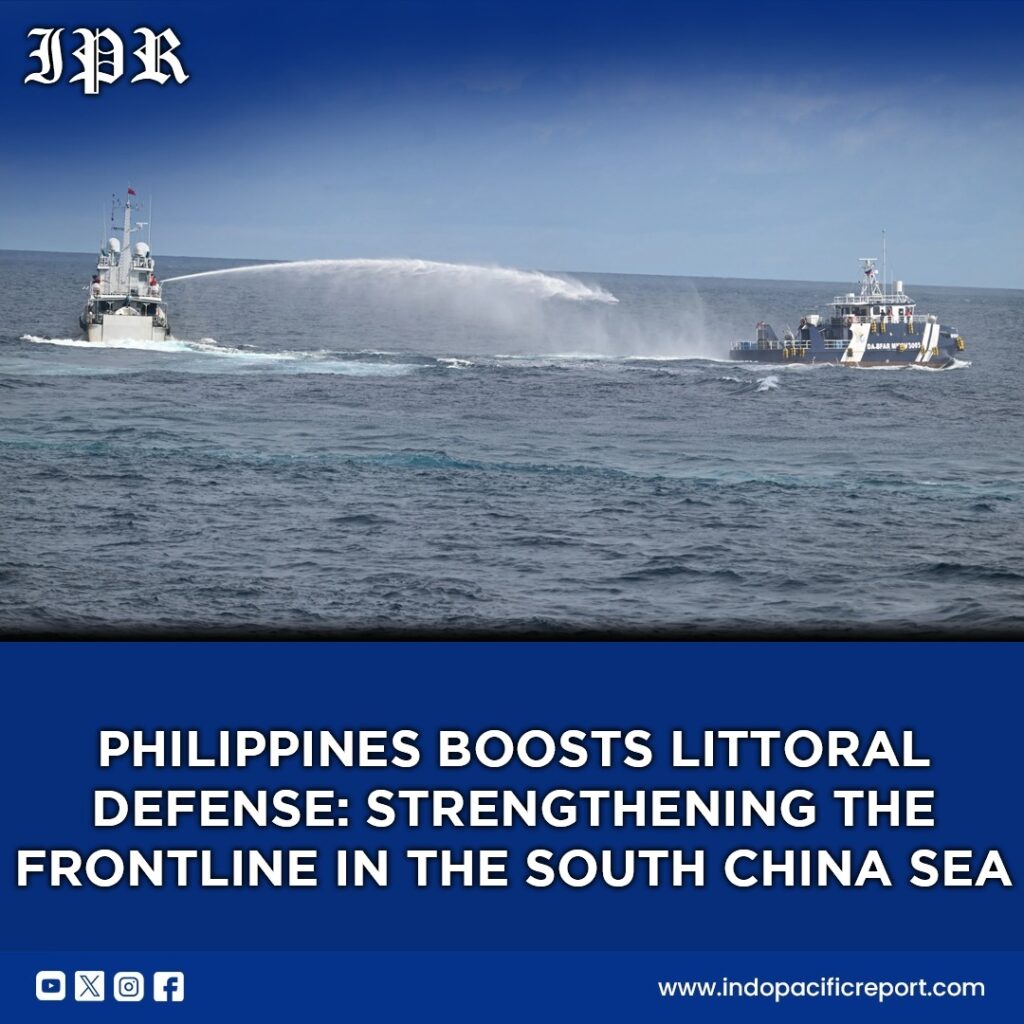
Instead of using direct military attacks, China often relies on what analysts call “gray-zone tactics.” These include coast guard patrols, maritime militia vessels, blocking resupply missions, ramming ships, and using water cannons. The goal is simple: apply constant pressure without crossing the line into open conflict.
This strategy has worked in the past. In the 1990s China gradually established control over Mischief Reef. In 2012, a tense standoff around Scarborough Shoal ended with China gaining effective control of the area. Similar pressure continues today around disputed outposts such as Second Thomas Shoal.
However, Beijing has been careful not to trigger the United States–Philippines Mutual Defense Treaty. Washington has repeatedly stated that an armed attack on Philippine forces could activate this treaty. By staying below that threshold, China keeps the pressure on Manila while avoiding direct confrontation with the United States.
This is where Japan’s role becomes strategically important. Tokyo is not replacing the United States as the Philippines’ main security partner. Instead, Japan is strengthening the middle layer of deterrence in the region.
Over the past decade, Japan has helped modernize Philippine maritime forces. Through loans from the Japan International Cooperation Agency, Japan financed several patrol vessels for the Philippine Coast Guard. These ships improved Manila’s ability to monitor and patrol disputed waters.
Now cooperation is expanding beyond equipment. Japan, the Philippines, and the United States have begun conducting joint maritime activities and coast guard exercises. Bilateral naval drills between Japan and the Philippines are also increasing. The new agreements make these operations easier to organize and sustain.
From a strategic perspective, this reflects a broader change in the Indo-Pacific security architecture. For decades, regional security revolved around a “hub-and-spokes” system centered on the United States. Today the region is gradually moving toward a networked security structure.
Countries like Japan, Australia, and the Philippines are building stronger links with each other, not just with Washington. This creates overlapping partnerships that complicate China’s strategic calculations.
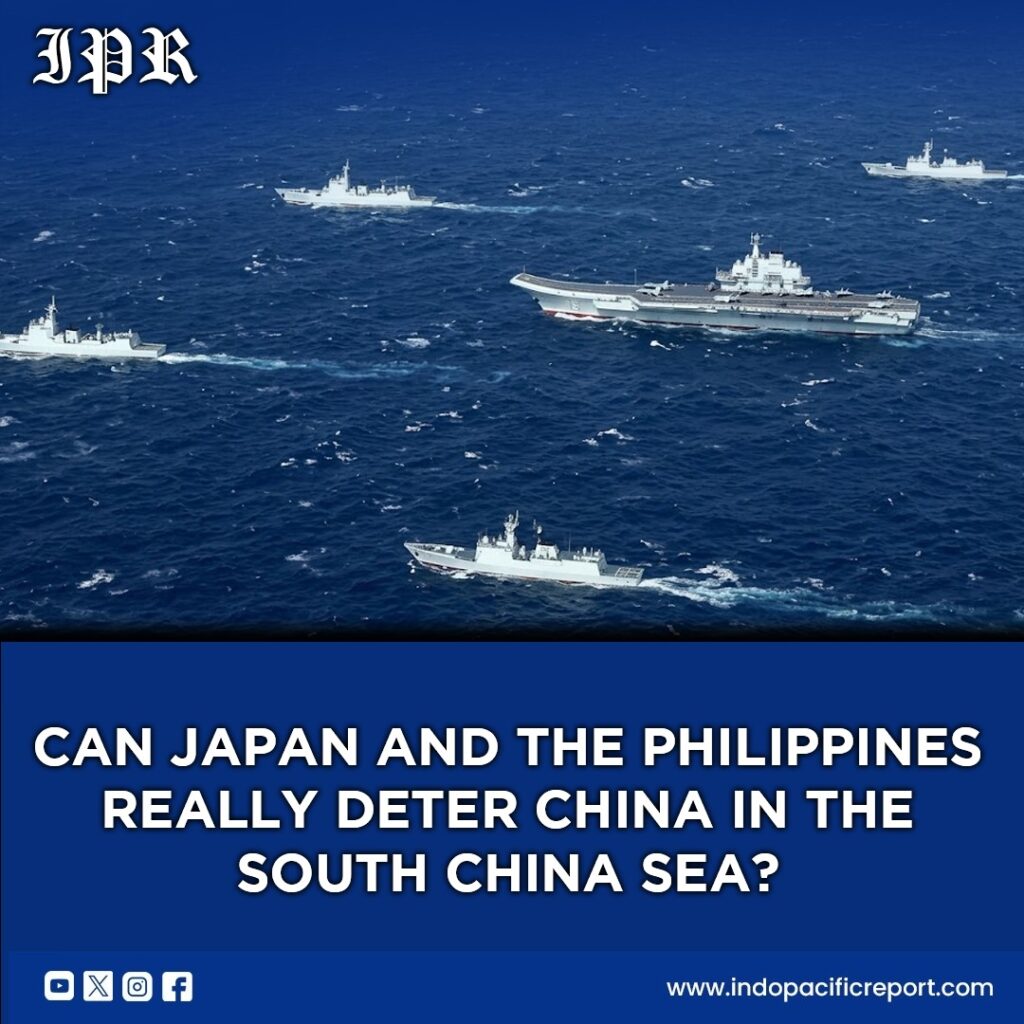
Even so, the military balance remains uneven. China’s coast guard is the largest in the world. Its massive Zhaotou-class cutters are far larger than most Southeast Asian patrol vessels. China still holds a clear advantage in numbers and capacity.
But the purpose of the Japan-Philippines partnership is not to match China ship for ship. The real goal is deterrence by resilience. If Philippine forces become more capable and better supported by partners, gray-zone pressure becomes harder to sustain.
Over time, this could force Beijing into a strategic dilemma. It could escalate pressure and risk broader confrontation. Or it could accept a more contested environment in the South China Sea.
For the wider Indo-Pacific balance of power, the significance lies in the accumulation of partnerships. Each agreement — whether logistical, operational, or technological — adds another layer to the region’s security network.
Individually, these agreements may look modest. But together they are gradually reshaping the strategic landscape. A more connected network of maritime states makes coercion more costly and strengthens regional stability.
The Japan–Philippines partnership therefore reflects a larger geopolitical trend: the Indo-Pacific is slowly building a distributed deterrence system designed to manage China’s rise without direct confrontation.
Will these growing security partnerships actually deter China — or will they push the region toward deeper strategic rivalry?