Philippines Nears Strategic Defense Partnership with France to Enhance Naval Capabilities
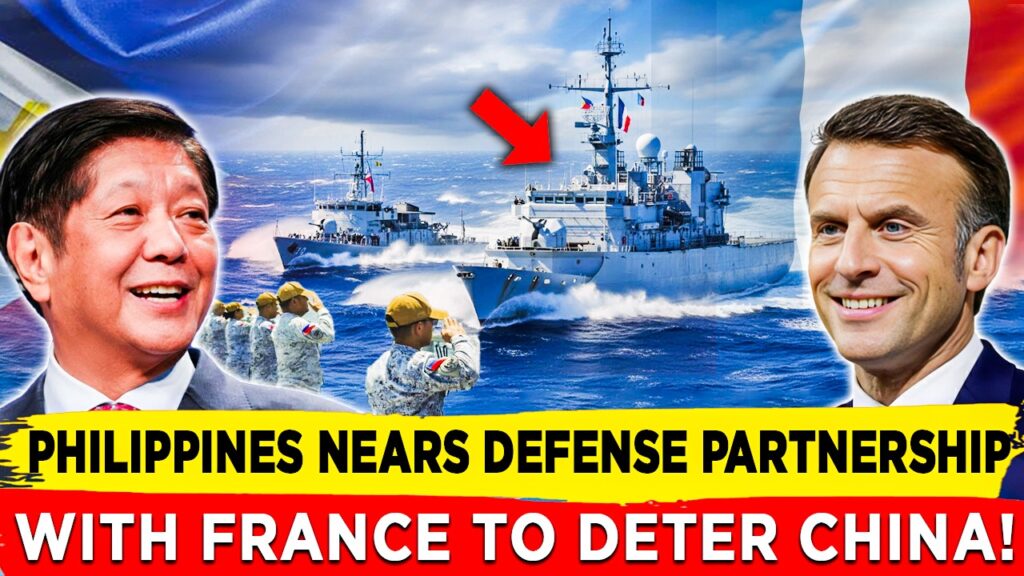
What if the next foreign navy operating alongside the Philippines in the South China Sea isn’t American, Japanese, or Australian but French?” That question alone signals something big is shifting. Because right now, Manila is quietly moving closer to Paris, and it could change how power is balanced in some of Asia’s most contested waters. The Philippines and France are nearing a Strategic Defense Partnership that would allow French naval forces to operate alongside Philippine troops under a proposed Status of Visiting Forces Agreement. On paper, it sounds technical. In reality, it is a strategic message aimed straight at the South China Sea.
Think about it this way. For years, the Philippines has leaned on familiar security partners. The United States provides deterrence through treaty obligations. Japan brings logistics, patrol vessels, and coast guard cooperation. Australia focuses on joint exercises and training. Now France enters the picture not as a distant European observer, but as a resident Indo-Pacific power with warships, overseas territories, and permanent naval presence stretching from the Indian Ocean to the Pacific. This is not symbolism. This is operational intimacy.
France is not new to contested waters. Its navy routinely patrols the Indo-Pacific, protects maritime trade routes, and conducts freedom-of-navigation operations far from Europe. By partnering with France, the Philippines is effectively widening its security net, making it harder for any single actor to apply pressure without international consequences. Instead of standing alone or relying on one major ally, Manila is slowly building a web of partnerships that complicates escalation.
And here’s the bigger point most people are missing. This move is not about preparing for war tomorrow. It’s about shaping behavior today. When multiple capable navies operate together, share logistics, and understand each other’s procedures, it raises the cost of coercion without firing a single shot. That is modern deterrence, quiet, layered, and strategic.
So the real question is not why the Philippines is working with France. The real question is this: is Southeast Asia entering an era where regional security is no longer US-centric, but coalition-based? If that’s the case, then this Philippines–France defense pact is not a side story. It’s a preview of what the next phase of Indo-Pacific security looks like.
Historical Background of Philippines–France Defense Relations
The Philippines–France defense relationship didn’t suddenly emerge. It has been quietly building, step by step, long before today’s headlines. The foundation was laid back in 2016, when Manila and Paris signed their first bilateral defense cooperation agreement. At the time, it barely made news. But strategically, it mattered. It opened the door to military dialogue, officer exchanges, and future coordination at a moment when the South China Sea was already becoming more tense. That agreement planted the seed for a deeper relationship that would grow as regional pressure increased.
Fast forward to the years between 2023 and 2025, and that seed clearly took root. French naval vessels began showing up more frequently in Philippine waters, not just for courtesy visits but for joint drills and operational engagement. Most notably, France deployed elements of its Charles de Gaulle aircraft carrier strike group, one of the most powerful naval formations in Europe. When a carrier group of that scale trains near contested waters, it sends a message: France is not a distant spectator in Indo-Pacific security.
In 2024, cooperation moved into an even more visible phase when France joined the Balikatan exercises, traditionally dominated by the United States and the Philippines. This was significant. Balikatan is no longer just a bilateral drill; it has become a platform for like-minded militaries to practice interoperability in realistic scenarios. France’s participation signaled that Manila was intentionally broadening its defense partnerships beyond its traditional allies.
At the same time, the relationship expanded beyond ships and soldiers. The two countries worked together on maritime domain awareness, sharing information on vessel movements and regional activity through EU-linked platforms such as IORIS. This quieter form of cooperation is just as important as joint exercises. It improves early warning, transparency, and coordination, all essential in crowded and contested seas.
These developments explain why today’s proposed strategic defense pact feels less like a leap and more like the next logical step. Years of drills, port calls, information sharing, and trust-building have already created operational familiarity. The new agreement simply formalizes what has been evolving in practice: a growing strategic alignment between the Philippines and France in an increasingly contested maritime environment.
Objectives of the New Defense Deal
At its core, this new defense deal is not about symbolism. It’s about readiness, presence, and deterrence in real waters, against real pressure. The first objective is to build what militaries call operational intimacy. That means Philippine and French naval forces are not just meeting during exercises, but learning how each other thinks, moves, and responds under pressure. Shared training and coordinated planning ensure that in moments of crisis or uncertainty, both navies can operate together smoothly, without hesitation or confusion. In today’s fast-moving maritime environment, familiarity is a force.
The second goal is far more geographic and far more sensitive: strengthening maritime security in contested areas, especially the West Philippine Sea. This is where Philippine vessels regularly face shadowing, water cannon incidents, and aggressive maneuvering by Chinese maritime forces. A closer partnership with France increases international presence in these waters, reducing the risk that the Philippines can be isolated or pressured quietly. When multiple capable navies operate in the same space, escalation becomes harder and restraint becomes more likely.
https://youtu.be/cEmw6zZlkzU?si=f1ZuXzPA1ZSdtEyS
The third objective focuses on information, awareness, and long-term capability. Through enhanced intelligence sharing and joint training, both sides aim to sharpen their understanding of what is happen`ing at sea, in real time. Better situational awareness means fewer surprises, faster responses, and stronger deterrence. This is not about matching numbers ship for ship. It is about seeing first, understanding faster, and acting with confidence.
Put together, these objectives reveal the deeper logic of the deal. The Philippines is not militarizing for confrontation; it is professionalizing for protection. And France, by committing to closer cooperation, is signaling that stability in the South China Sea is no longer just a regional concern, but a shared strategic responsibility.
Key Features of the Proposed Agreement
What makes this proposed agreement truly significant is not the headline, but what it actually allows both militaries to do in practice. This is where strategy turns into action. One of the most immediate features of the deal is the expansion of joint military activities, both at sea and in the air. Under the agreement, Philippine and French forces would be able to conduct naval and air exercises on each other’s territory, dramatically increasing operational familiarity. These would not be symbolic drills. They are expected to involve advanced tactical scenarios, including complex maritime operations and coordinated responses to grey-zone challenges. Over time, this also improves interoperability during larger multilateral exercises, allowing France to plug more seamlessly into drills involving the United States, Japan, Australia, and other partners.
Another key pillar lies in equipment and technology cooperation, an area where France already has a growing footprint in the Philippines. While not yet fully formalized, discussions point toward deeper collaboration in surveillance systems and patrol capabilities. This builds on existing programs, including the Philippine Coast Guard’s acquisition of forty French-built fast patrol craft under a package valued at roughly 438 million dollars. These vessels are not just assets; they expand presence, response speed, and law-enforcement reach in contested and crowded waters.
Beyond surface vessels, conversations have also touched on French industrial support, including potential involvement in submarine capability development. Even preliminary discussions here are notable. Submarine cooperation signals long-term trust, sensitive technology sharing, and a shift toward more sophisticated maritime defense planning. It suggests that this partnership is not just about today’s patrols, but about shaping future force structure.
Equally important, though less visible, is the focus on maritime domain awareness. Through enhanced use of collaborative platforms such as IORIS, both countries aim to improve real-time monitoring of maritime activity. This helps detect illegal fishing, smuggling, and illicit trafficking before they escalate into security incidents. In a region where information gaps are routinely exploited, better awareness is a form of quiet power.
These features show that the proposed agreement is not a loose framework. It is a practical toolkit. Exercises build trust, equipment builds capacity, and information sharing builds control. This is how modern maritime partnerships are designed, not loud, not rushed, but deeply integrated over time.
Strategic Significance for the Philippines
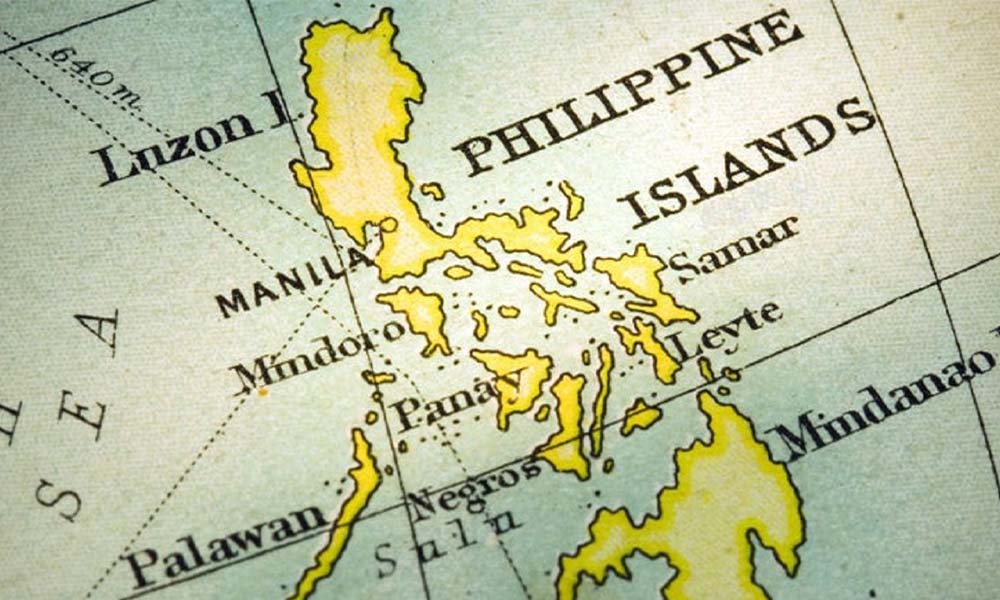
For the Philippines, the strategic value of this partnership goes far beyond diplomacy. It directly affects how the country protects its territory, manages pressure, and positions itself in a crowded security landscape. First, there is the issue of territorial defense. The Philippines is an archipelago of more than seven thousand islands, with vast stretches of ocean to monitor and protect. Improved naval coordination and joint training with a capable blue-water navy like France strengthens the country’s ability to patrol its exclusive economic zone and respond quickly to incursions. This is not just about having more ships; it is about operating smarter across a wide maritime space where gaps can easily be exploited.
Second, the partnership contributes to deterrence, which in today’s Indo-Pacific environment is largely about perception and presence. When Philippine forces train and potentially patrol alongside advanced partners, it signals readiness and resilience. The possibility of expanded joint activities raises the cost of coercive actions by competing powers, particularly in grey-zone scenarios where pressure is applied without crossing the threshold of open conflict. Deterrence here is quiet, but effective.
Finally, the deal reinforces the Philippines’ shift toward broader and more diversified alliances. Rather than relying on a single security guarantor, Manila is building a network of partnerships that includes the United States, Japan, Germany, and now France. This multi-partner strategy reduces strategic vulnerability and increases diplomatic flexibility. It also reflects a clear lesson from recent years: in contested regions, security is strongest when it is shared.
These payoffs show that the Philippines is not simply reacting to pressure. It is adapting. By expanding its defense partnerships and deepening operational ties, Manila is shaping a security posture that is more resilient, more credible, and better suited to the realities of modern maritime competition.
Benefits for France
For France, this pact is a strategic multiplier rather than a simple bilateral arrangement. It strengthens Paris’s influence in Southeast Asia, a region that sits at the heart of its broader Indo-Pacific strategy. France already maintains a regular naval presence in the region, supported by overseas territories and long-range deployments. A deeper partnership with the Philippines gives those deployments greater political legitimacy, operational access, and regional relevance.
The agreement also creates tangible opportunities for the French defense industry. France has been actively promoting its naval platforms, surveillance systems, and training services across the Indo-Pacific. Existing deals, such as patrol craft acquisitions, could pave the way for future contracts, co-development initiatives, and long-term maintenance partnerships. In this sense, strategic cooperation and industrial diplomacy move hand in hand.
Beyond influence and industry, the partnership expands France’s strategic footprint alongside like-minded states committed to a rules-based maritime order. Operating more closely with the Philippines places France directly within key sea lanes of the South China Sea, reinforcing freedom of navigation and signaling that European powers are not disengaged from Indo-Pacific stability.
Regional and International Implications
The implications of this deal extend well beyond Manila and Paris. Regionally, it sends a clear signal that the Philippines is actively diversifying its defense partnerships, reducing over-dependence on any single ally. This diversification enhances strategic autonomy and makes external pressure more difficult to apply.https://www.youtube.com/watch?v=5KbbSneYUi4
Within ASEAN, the agreement may subtly influence security dynamics. As one member state deepens cooperation with an external naval power, it could encourage others to explore similar arrangements, particularly in maritime security, capacity building, and information sharing. While ASEAN unity remains cautious, practical cooperation continues to expand beneath the surface.
Internationally, the deal aligns closely with broader Indo-Pacific initiatives led by the United States, Japan, and European partners. Rather than forming a new bloc, it reinforces overlapping security frameworks that emphasize collective presence, interoperability, and deterrence amid intensifying geopolitical competition.
Challenges and Considerations
Despite its promise, the partnership is not without challenges. Diplomatically, closer defense ties may provoke pushback from regional competitors, particularly China, which views expanding external military cooperation as an attempt to counterbalance its maritime ambitions. Managing escalation while maintaining cooperation will require careful messaging and restraint.
Financial and logistical hurdles also remain significant. Joint operations, sustained exercises, and advanced training demand consistent funding, institutional coordination, and personnel readiness. For the Philippines in particular, translating agreements into lasting operational capability will require long-term investment and planning.
Equally important is political will. Defense partnerships succeed not on paper, but through continuity. Long-term commitment from both Manila and Paris will be essential to ensure that frameworks evolve into real exercises, shared capabilities, and dependable cooperation.
Conclusion and Forward Outlook
The nearing Philippines–France defense deal marks a milestone in bilateral relations, signaling a new phase of maritime cooperation and operational synergy. What began as limited defense engagement has matured into a strategic partnership shaped by shared concerns and converging interests.
With joint exercises on the horizon, equipment cooperation already underway, and diplomats working to finalize the Status of Visiting Forces Agreement, the partnership has the potential to significantly enhance maritime readiness and security. Its impact will be felt not just in exercises, but in daily presence and coordination at sea. https://youtu.be/w6jxq23f0Go?si=wi2eHmtEbIehYqpi