Japan Plans to Export Military Command & Control System to the Philippines
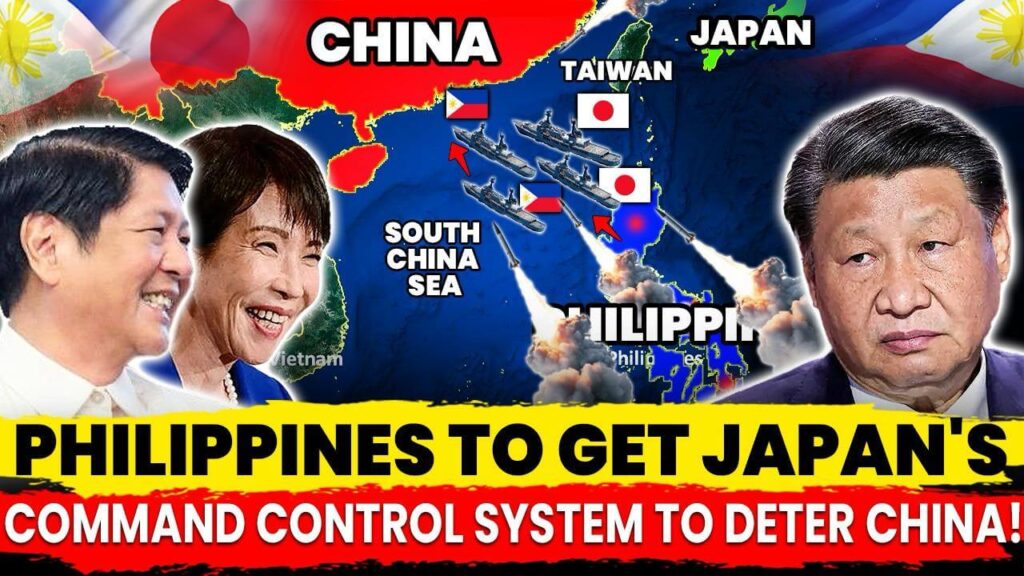
Japan has a long history of not exporting weapons. However, sending the Philippines its first military command and control systems changes the situation. What does this mean for the countries of the Indo-Pacific? Japan and the Philippines are constructing networks and systems and defense doctrines that allow interoperable military commands and conduct. Why did Japan choose the Philippines over more conventional partners like Vietnam, South Korea, Australia, and even the US for training and first command and control systems to be integrated into joint exercises and operations?
This is a new strategic situation for both the US and Japan. The Philippines and Japan are no longer only passive allies of the US. Japan is shifting its international position to be more openly an ally that collaborates to provide regional defense and security, and no longer just self-defense. Japan can now provide military technology and devices, and no longer has to comply with the US restrictions on military technology. The US ally in the South China Sea is the Philippines, and it is completing the fastest modernisation of its military in its history, incorporating new integrated systems, radar and missile systems, enhanced and expanded maritime surveillance, and a new integrated US ally structure around early warning systems.
As Japan moves from being a non-exporter to a proactive partner, the Philippines is shifting from an internal security focus to external defense, including enhancing its military assets to embark on a modern and credible military deterrence system in the West Philippine Sea.
Japan’s moves in the Philippines are motivated not just by technology, but by trust. This is an indication that Manila is now an important security player on the international scene. This is comparable to Norway’s prominence in the Arctic strategy of NATO, or the transformation of Poland from a Soviet era country to a key player in Europe’s defense in the frontline. The Philippines is now being positioned just like Israel and South Korea, which became regional centers in the defense of early-warning missiles, as Southeast Asia’s frontline State in the global Defense and marshaling advocacy.
What are the circumstances that warrant these developments? They are not just centered around the Philippine territorial waters. A Japanese C2 system in the hands of the Philippines signals a stronger military relationship characterized by shared intelligence, integrated threat monitoring, and the initiation of a Japan-Philippines quasi-Defense Alliance in a military relationship which is difficult to imagine a decade ago. This also confirms a shift in strategy whereby middle powers like Japan, Australia, India, South Korea, and France are not waiting on the U.S. to act on its own in a coalition. They are expanding collaborative efforts and multi-national partnerships to address issues created by great-power competition.
It’s not just a defense deal, it’s the start of a new Indo-Pacific partnership, where smaller states do not have to sit back and watch. Where Japan is no longer restricted by the old limitations. Where the Philippines is no longer alone at the frontline. Most importantly, it’s a sign to friends and foes that the Indo-Pacific is moving into a new era of integrated security, where common dangers call for the same technology, united defenses, and common determination.
JAPAN’S SELF-DEFENCE TO REGIONAL SECURITY PROVIDER STRATEGY
Japan is willing to sell military command and control systems to the Philippines – this will mark great changes in Japan’s inability to export military technology. Since the end of the Second World, Japan has restricted itself militarily and has self-imposed export restrictions to what they called the Three Principles on Arms Exports. Under this, Japan could export anything relevant to combat, but could send military helmets, humanitarian aid, and rescue aid. Japan, out of a moral stance stemming from their wartime past, kept itself away from the international arms trade completely. Even when Japan’s export restrictions were relaxed in 2014 to allow a total of 5 targets of export: military technology for rescue, transport, vigilance, surveillance and minesweeping, the restent principle was to provide the help at humanitarian aid and rescuer aid alone, and thus the operational zone aid. The entire message was that Japan will help, but from the side.
However, the past has a strange way of changing beliefs. Over the past decade, China has been expanding their naval reach, increasing the number of times it’ve rehearsed military operations around Taiwan, and increasing their military incursions around the Senkaku Islands. This caused Japan to be on high alert. Japan noticed that China has been getting more and more aggressive and closing the distance with their ships and aircraft. Japan realized that the threats were surrounding it and were becoming more offensive. It was no longer a situation of whether or not Japan wanted to be defensive, but whether it was possible to continue to be that way. Can Japan and the Philippines Really Deter China?
Simultaneously, Washington was urging Japan to take on a more proactive regional position in terms of security. With American focus diffused internationally and with a growing China, the U.S. needed a reliable and able partner in the Indo-Pacific who could assist in maintaining a rules-based order. Japan was the obvious answer: a growing desire to prevent any one power from monopolizing the rivers and a strategically placed ally with technological prowess. Then there is the economic aspect. Japan’s defense industries have modernized at a speed that is rarely recognized outside of the inner circles of policy. Without external markets, defense industries often lack the capacity to innovate, produce, and invest long-term. Tokyo’s defensive technology pressures have made the Philippines a natural partner to fill the gaps of Japan’s politically aligned but strategically valuable technology.
In this situation, Japan’s withdrawal of export restrictions is more than just a change of paperwork. Japan’s position is changing out of necessity due to the growing powers of China, the instabilities of the region, and the growing relationships between similar countries. The export of C2 to the Philippines is more than a small gesture. Japan is now a regional security provider and is willing to help influence the future of the Indo-Pacific.
THE PHILIPPINE–JAPAN SECURITY PARTNERSHIP
On the Philippines’ and Japan’s side, amongst the diplomatic, peaceful, and economic relationships, one of the most pivotal and, again, still one of the most underappreciated partnerships, is Japan and the Philippines’ security relationships within the Indo-Pacific Region. Over the last decade, an initially irregular diplomatic cooperation and security alignment has blossomed into a full quasi-alliance, underpinned by the increasing shared defense and security realignments.

Regular contact and cooperation among the defense ministers has become the standard, and the early 2025 Joint Framework enables both governments to more formally coordinate on defense and security, including the export of military equipment, the transfer of military technology, and defense-industrial security cooperation and military and defense planning. And yes, this is more than simply diplomatic, and yes, this is more than simply building the defense partnerships. On the ground, both the SDF and AFP are realizing a level of interoperability that, until recently, was the sole province of the Philippines’ closest military allies, doing military training exercises, more frequent combined military engagements, and Joint military exchange programs to improve the military’s understanding of each other’s military strategies.
The partnership between the Philippines and Japan is illustrated by the former’s defense exports. In 2023, Japan delivered its first fully assembled defense export, the Mitsubishi air-defense radar system, to the Philippines. Japan’s export of defense equipment was historically significant, and so was the Philippines’ admiration of the system, which was compatible with existing AFP networks, was operationally capable, and had clean integration and strong support throughout the operational lifetime of the system. This success became the groundwork for deeper, more substantial engagements from both.
The Philippines and Japan are now freely exploring the transfer of the Type 03 Chu-SAM, a medium-range missile system, which will considerably improve the air defense mechanism of the former. The effort to export more technology and defense equipment does not end there. Japan has a significant tech edge, especially in submarine warfare, maritime surveillance, and air defense, and there are ongoing discussions with the Philippines to improve these sectors, which will bring the Philippines to modern capabilities. The ongoing collaborations are evident in the joint maritime exercises, training exchanges, and coordination on maritime patrols. Japan is on track to become the Philippines’ third most vital strategic partner, and the most significant after the US, as we see strong joint defense relations developing. This developing dual defense structure will impact the security of the Indo-Pacific for years to come.
STRATEGIC OBJECTIVES OF BOTH NATIONS
At the core of this new partnership are more shifting strategic objectives which make Japan and the Philippines natural allies within the region. Japan’s motivation is the most obvious; Tokyo can no longer depend only on the U.S.-Japan alliance to handle an assertive China as the where power is shifting. Japan needs a network of allies; a “constellation of partners”. By supporting the Philippines, Japan strengthens the southern anchor and thereby builds a more “resilient barrier” to the expansion of China. By exporting advanced systems like the C2 network, Japan is now seen as a “credible” defense exporter, a role they avoided for decades, now as part of an integrated and advanced exporting strategy to assume leadership in the region. And Japan sees a future where air and maritime sensors from friendly- Japan, Taiwan, the Philippines, down to Australia, and a shared democracy can see and understand the movements of China in the Indo-Pacific.
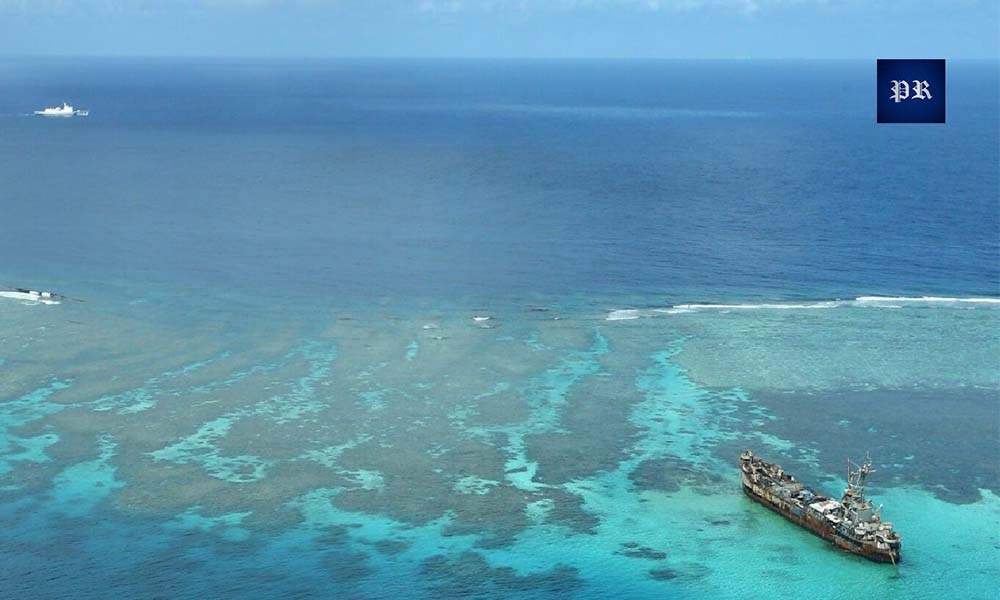
The Philippines has its own urgent and unique challenges. Manila takes daily abuse in the West Philippine Sea, including assaults with water cannons, ship ramming, and militia harassment, and face displacement through disinformation campaigns. Building maritime security is not optional; it is a matter of survival. Building a modern, integrated air and maritime defense system is a requirement for the Philippines to be able to defend itself. Such a system would be able to detect, track, and engage threats before they reach critical levels. Japan has something Manila has been seeking for a long time – dependable and quality military tech that is politically reliable, and that strengthens the AFP’s capacity and lessens its dependency on a single foreign ally.
Furthermore, strengthening ties with Japan also decreases the Philippines’ vulnerability to China’s diplomatic and economic coercion. For Manila, the partnership is not another transaction to acquire military tech. It is a source of strategic insulation, increased confidence, and a signal to the world that the Philippines is no longer alone on the front lines of the Indo-Pacific.
IMPACT — HOW THIS COULD CHANGE REGIONAL DYNAMICS
Japan plans to export Military Command-and-control system to the Philippines will not be a simple bilateral system upgrade. It will affect the whole Indo-Pacific’s intelligence, deterrence, and industrial systems. First, the system enables a revolutionary leap in integrated intelligence and information sharing, enabling the two countries to more quickly and accurately detect, track, and identify a wide range of Chinese vessels and aircraft. With a Japanese C2 system, the Philippines will be able to join a wider real-time surveillance network, from Japan’s radar coverage in the Ryukyu to Taiwan’s monitoring system, and down to the southern defense areas in Luzon and Palawan.
For the first time, the two countries will be able to see the same picture and to be coordinated in their actions across the East China Sea, Bashi Channel, and South China Sea. This will improve their situational awareness and will be able to respond to China’s gray-zone tactics. This type of integration will not only improve the relationship between Japan and the Philippines but will also improve the integration of the U.S.-Japan-Philippines military alliance. This will help them respond to military threats more quickly, accurately, and effectively.

Second, the system helps prevent things on a big scale. China has to think differently the moment it sees Philippine and Japanese sensors, potentially adaptable with American Systems, and that can instantly see and detect sea militia and shadow destroyers or planes that pass the middle lines. Nobody runs Surveillance. Nobody runs surveillance. Nobody runs surveillance, hence everybody runs the risk of getting complacent. China runs the risk of heightened deterrence. China can easily track intrusions, and the same can instantaneously allow Japan to see the same. China loses the ability to spread fear or the ability to move openly and privately in waters that are up for grabs. Over the years, this could become a fully integrated air and missile defense system into which Chinese, Philippine, and other allied sensors would all incorporate, a multi-layered system to provide surveillance, which China would find extremely complex.
The integration of the economic and industrial impact will be felt. The Subic Bay, once the United States of America’s largest overseas naval base, is in the process of renewal, and the revitalization of Hyundai in the Philippines is a great opportunity to become a repair and maintenance support facility for naval systems in the region. If systems, training, and technology from Japan start to flow to the Philippines, Subic will be a key support facility in the Indo-Pacific for a multitude of operational missions from patrol and surveillance to command.
For Japan, this is a new strategic defense market in SEA, and the defense dual-use technology will expand and continue to support a more economically beneficial defense for Tokyo. For the Philippines, this means more local jobs, new technologies, new maintenance contracts, and a stronger Philippine economy, and it defends a new self-sustained defense system in the country.
This does not merely scaffold the Philippines’ defense system. It pivots the Philippines and Japan’s defense partnerships. It will help both countries jointly combat the militarization of the region. It facilitates a defense system in the Indo-Pacific that provides support, surveillance, and command for the countries in the region that share democratic beliefs. Technological and operational partnerships are critical to a balanced power system in the region.
CHALLENGES & RISK ON THE WORLD STAGE
One example of how Japan’s C2 system could improve the Philippines’ security would be the transfer of the system from Japan to the Philippines, as Japan’s C2 system is likely to improve the defense and security capabilities of the Philippines. However, transfer also entails certain challenges and geopolitical risks. First of all, with regard to the Japan-Philippines combination of systems, as the two countries strengthen military and defense links, the Japanese added capabilities aimed at increasing military and defense cooperation with Japan, with China.
Concerning China, it is likely to militarize the Japan-Philippines alliance, both at the level of defense cooperation and at the level of self-defense. China is likely to assert its military power and resources to threaten the DPP. Concerning Japan-Philippines, China is likely to target its offensive and defensive military resources and systems to the alliance. Concerning military resources and systems, China is likely to target its Japan-Philippines alliance military systems.
Japan still has restrictions on its arms export, as it is a change that requires massive shifts in Japan’s post-war tradition as a pacifist state. While Japan does maintain a pacifist approach, and even with changes in public sentiment towards a more defensive posture due to increased threats in the region, a more defensive posture is still radical in Tokyo. Detractors fear that increased defensive exports tend to erode the constitutional restraints that underpin Japan’s self-defense philosophy, while those projects argue that there is a trap in inaction; Japan would lose its defense capabilities and would be militarily encircled by the region’s dominant power, China. Therefore, the balancing act between the pacifist tradition and the strategic necessity is such that any proposed change in defensive export policy requires justification not only in security terms, but also in terms of public political legitimacy at home.
For the Philippines, these challenges are practical but just as important. A modern C2 system faces personnel, doctrinal, and infrastructural challenges. Manila needs to train both technical operators and commanders who must learn a new style of data-driven, multi-sensor decision. Integrating Japanese systems into the Philippine network, which includes U.S., Israeli, South Korean, and proprietary sensors, will require careful guidance to avoid gaps or incompatibility. In the first few years, the Philippines will unavoidably need to depend on foreign technical assistance, which will lead to short-term vulnerabilities in the event of a crisis or a cyber attack. The AFP needs to complete this integration of advanced systems in order to enhance national defense and avoid becoming a lost capability.
Overall, this initiative has both great hope and real danger. China will resist, Japan will deliberate, and the Philippines must modernize more quickly than it ever has. How these challenges will be met aims the Japan–Philippines C2 partnership to either the front of a new Indo-Pacific security system or to simply be an important partnership hindered by Geopolitical Challenges.
The new planned transfer of Japan’s military command-and-control system to the Philippines represents much more than a simple defense transaction. It depicts a critical pivot in the geography of the Indo-Pacific’s defense posture. It indicates that Japan is shedding the cocoon of post-war pacifism and is now assuming the responsibilities of a frontier security provider. It also indicates that the Philippines is not a frontline state that is no longer beholden to internal security concerns and resource constraints. It is now a country that can assimilate sophisticated military systems that were previously the exclusive privilege of the most trusted allies. In conjunction, the two States are entering a new phase of military system-to-system integration, where military systems are no longer siloed but interconnected, transgressing the boundaries of nation-states.
At the same time as this change is taking place, China is getting more and more aggressive, sending out ships and planes, doing economic warfare, using coercive pressure, and doing information warfare. Instead of tackling these challenges individually, Japan and the Philippines are strengthening a network together. This network is designed for early warning, swift action, and response coordination. This is the gradual establishment of a quasi-alliance, complementary to one another and to the understanding that control of the Indo-Pacific will rely on the ability of countries to cooperate.
It is the expansion of Japan’s industrial facilities, the Philippines’ frontline geo-strategic position, and the support of partner countries, primarily the United States and Australia, that is extending the interlined defense network across the Pacific. This network is not designed for hostility. Instead, it was built to secure transparency and to promote security across the fast-shifting strategic landscape of the region.
Japan–Philippines Security Shift: The Possible Transfer of Type-03 Air Defense System
In the future, historians will record events as democracies’ number one C2 partnerships in the Indo-Pacific region as the foundation of cooperative democracies. Future historians will regard the Japan-Philippines C2 partnerships as the first transformation of a new cooperative, prepared, and determined security era.