Philippines-France Maritime Drills
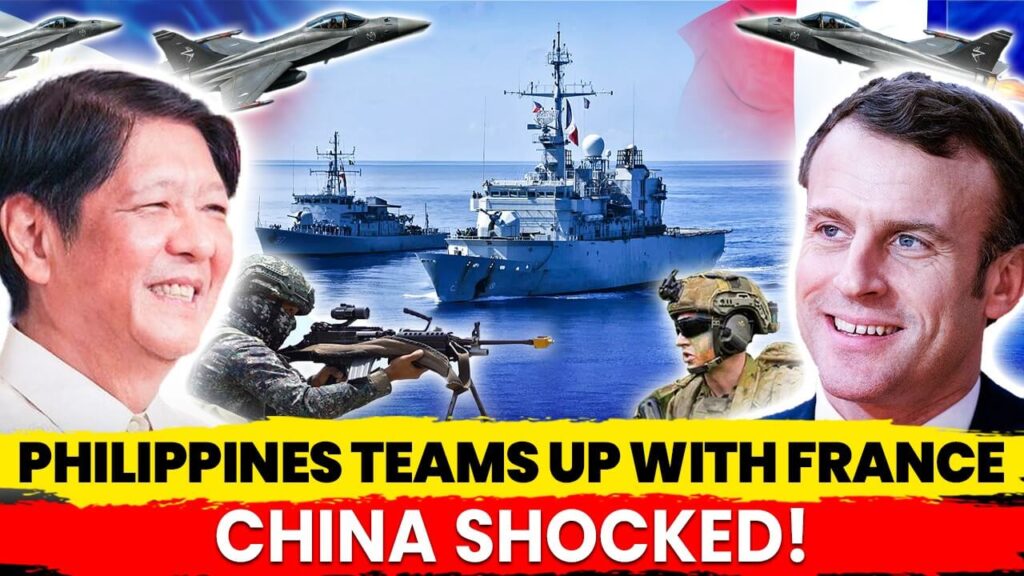
The Indo-Pacific is shifting in ways few imagined even a decade ago, and on November 26–28, 2025, that shift became visible on the waters off eastern Mindanao. In those quiet yet strategic seas, the Philippines and France conducted a maritime cooperative activity that signaled far more than routine naval drills. It marked the arrival of a new security partner in a region where alliances are becoming the backbone of maritime stability. Eastern Mindanao may not draw the same headlines as the West Philippine Sea, but it is a vital crossroads, linking the Philippine Sea, the Pacific approaches, and the shipping arteries that sustain global trade. It is also where strategic competition can quietly shape the region’s future.
What made these exercises remarkable was not their location but the partner standing beside the Philippine Navy. France is not an occasional visitor to the Indo-Pacific; it is the only European power with territories, citizens, armed forces, and legally defined maritime zones in the region. With 1.6 million residents and thousands of troops spread across Polynesia, New Caledonia, and Réunion, France is woven into the Indo-Pacific fabric. For decades, Paris focused on protecting its own island territories, but now it is stepping into a larger role: supporting regional stability and building partnerships with frontline states like the Philippines.
For Manila, this represents a deliberate expansion of its security network. Traditionally, the Philippines leaned heavily on a core group of allies, the United States for treaty-backed defense, Japan for maritime capability, and Australia for joint interoperability. But with China intensifying gray-zone pressure in the West Philippine Sea, ramming boats, firing water cannons, and swarming reefs with militia vessels, the Philippines has realized that survival in the modern Indo-Pacific requires something more than bilateral alliances. It requires a coalition.
That is what makes France’s presence so consequential. Its participation is not symbolic diplomacy; it is the beginning of a broader, multi-layered security architecture that stretches from the Atlantic to the Pacific. It signals that Europe is no longer a distant observer but an engaged actor, willing to share the burden of maritime security and uphold international law. In many ways, this quiet set of drills was a louder message than any press release: the world’s democracies are slowly linking arms in the Indo-Pacific, recognizing that the challenges facing the Philippines do not stop at its coastline; they ripple outward, affecting global stability.
In this sense, the Philippines-France Maritime Drills Strengthen Indo-Pacific Security are more than an event. They are a glimpse of a future where the Indo-Pacific is not shaped solely by regional rivals, but by a growing web of like-minded nations determined to keep the seas open, laws respected, and smaller states protected. France has just taken its place in that emerging network. And for the Philippines, that network may be the strongest strategic shield it has ever had.
THE STRATEGIC LOCATION — WHY THE CELEBES SEA MATTERS
The Celebes Sea has long been one of the most quietly important bodies of water in Southeast Asia, a gateway where the maritime worlds of the Philippines, Indonesia, and Australia converge. Its deep blue corridors are not just empty stretches of water; they are arteries through which global commerce, naval fleets, and underwater assets move between the Pacific and the Indian Oceans. For strategic planners, the Celebes Sea is a hidden but essential link in the Indo-Pacific’s security chain. Any vessel transiting through the Lombok Strait, one of the few deep-water passages capable of accommodating large commercial ships and submarines, inevitably passes into or near the Celebes Sea before fanning outward toward the Philippines or the wider Pacific. This makes the region a natural gateway, one that shapes everything from trade patterns to military logistics.
For years, this area was treated as a quiet backwater, overshadowed by the high-tension drama of the West Philippine Sea. But that perception has changed rapidly. As China expands its naval and coast guard presence deeper into Southeast Asian waters, the Celebes Sea has evolved from a peripheral zone into a frontline maritime checkpoint. It is now a critical arena for coordinated patrols, anti-smuggling operations, counter-terror missions, and the monitoring of unidentified foreign vessels that move into the southern flank of the Philippine maritime domain. What once seemed distant from great-power competition is now a key stage in it.
France understands this better than most. When the French Carrier Strike Group maneuvered through the region in early 2025, it was a deliberate signal: Paris sees long-term strategic value in the Celebes Sea. The area connects France’s Pacific territories to its growing partnerships with Indo-Pacific democracies, and it offers a vantage point for monitoring the movement of submarines, surface ships, and gray-zone actors. For the Philippines, France’s interest validates what Manila has increasingly recognized: the strategic heart of maritime security in Southeast Asia isn’t only in the contested reefs and shoals of the West Philippine Sea. It’s also in the chokepoints and corridors that shape how forces move, how alliances operate, and how deterrence is built.
In this context, the recent Philippines–France cooperative drills were not just symbolic engagement; they were rehearsals for defending one of the Indo-Pacific’s most strategically consequential maritime gateways. The Celebes Sea may not dominate headlines today, but it is becoming one of the places where the future of regional security will be decided.
FORCES DEPLOYED — WHAT EACH COUNTRY BROUGHT TO THE TABLE
The joint drills became a showcase of what modern cooperation between Manila and Paris now looks like, with each country bringing assets that reflect both capability and intent. On the Philippine side, the deployment of the BRP Artemio Ricarte (PS-37) signaled the Navy’s commitment to pushing its surface fleet into more complex, multinational environments. The ship, long used for maritime patrol and interdiction missions, served as one of the exercise’s central platforms, its sensors, command systems, and crew working side by side with French counterparts to synchronize maneuvering, communications, and response procedures. Can South Korea, Japan, and Philippines Deter a Chinese Invasion of Taiwan?
Supporting the surface element from above was the C-208B ISR aircraft, a crucial intelligence asset that has become one of the Philippines’ most reliable eyes in the sky. Able to track vessels, map maritime movements, and gather real-time imagery, the aircraft provided a surveillance backbone to the exercise. Its presence demonstrated how the Philippines is steadily improving its maritime domain awareness, something it badly needs as foreign vessels continue to move across its waters without permission.
To reinforce mobility and rapid-response capability, the Philippines also deployed a Black Hawk helicopter, allowing both nations to practice ship-to-air coordination, medical evacuation drills, and rapid insertion scenarios. Meanwhile, overhead, the roar of FA-50 light fighters added a more potent dimension, these aircraft are among the Philippines’ most modern, capable of maritime patrol, interception, and close support missions. Their participation sent a clear message: the Philippines is not just showing the flag; it is integrating air power into the broader maritime picture.
From the French side, the centerpiece was the FS Prairial, a Floréal-class surveillance frigate based out of Tahiti. Unlike many European vessels, Prairial is built specifically for the vast distances of the Indo-Pacific, patrolling waters thousands of nautical miles from mainland France. Its deployment showed something important: France is not visiting the region as an outsider, but as a resident power with territories, obligations, and strategic stakes. Flying from its deck was the AS365 Dauphin helicopter, a compact but highly capable aircraft used for maritime patrol, search and rescue, and shipborne operations. Its flight patterns and coordination with Philippine assets highlighted the professionalism and adaptability of French naval aviation.
These platforms created a multi-layered operational picture, surface ships exchanging data, ISR aircraft feeding real-time imagery, helicopters bridging air–sea operations, and fast jets expanding the exercise envelope into the upper atmosphere. What emerged was more than a drill; it was a preview of how the Philippines and France could operate in a real maritime crisis. Interoperability improved as crews aligned their procedures; sensor coverage expanded over a wider area; and for the first time, Manila and Paris practiced the kind of air–sea integration that modern maritime security requires.
The combined force demonstrated that when two nations merge their capabilities, French endurance and expertise with Philippine proximity and regional knowledge, they create a joint maritime domain awareness network far stronger than what either could achieve alone. It was a quiet but powerful statement: both countries are serious about securing the Indo-Pacific, and they are learning to do it together.
TRAINING MODULES — WHAT THE EXERCISES COVERED
The training modules carried out during the Philippines-France Maritime Drills revealed the depth of interoperability that both sides are trying to build. The exercises began with division tactical maneuvers, where the BRP Artemio Ricarte and France’s FS Prairial executed formation changes, synchronized fleet movements, and real-time tactical communications, skills essential for ships that may one day operate side by side during a crisis. These were followed by intensive Officer-of-the-Watch drills, sharpening navigation proficiency, command execution, and crisis-response decision-making. Filipino and French officers practiced precision maneuvering under complex scenarios, strengthening not only individual competence but also their ability to react as a cohesive team.
The two navies then rehearsed a replenishment-at-sea approach, the demanding process of bringing two ships into proximity while underway to simulate logistics transfers. This required absolute focus, tight coordination, and trust, reflecting real-world situations where naval forces must sustain operations over long distances. Altogether, these modules served one strategic purpose: to build a shared operational language between Philippine and French naval units, ensuring that when the moment comes to act together, both forces can move, communicate, and respond as one.
STRATEGIC IMPLICATIONS — WHY THESE DRILLS MATTER
The strategic implications of these Philippines-France Maritime Drills extend far beyond the training modules; they represent a meaningful shift in the Indo-Pacific’s evolving security architecture. First, the exercises strengthen mutual trust and operational familiarity, laying the groundwork for deeper cooperation through shared drills, defense technology dialogues, and logistical and training programs already taking shape between Manila and Paris. This is not a symbolic partnership; it is the beginning of a working military relationship supported by real-world interoperability. Second, the joint activities significantly expand maritime domain awareness across southern Mindanao and the Celebes Sea, improving the ability to track illegal maritime activities, monitor gray-zone movements, and identify unidentified vessels entering Philippine waters. Enhanced surveillance means fewer blind spots and a stronger regional presence in routes long exploited by smugglers, militants, and foreign vessels.
Finally, France’s active participation sends a powerful signal about European commitment to Indo-Pacific stability. By joining operations that reinforce freedom of navigation and international law, principles increasingly challenged in the South China Sea, France adds diplomatic and military weight to the coalition, pushing back against coercion. In essence, these drills do not just improve skills at sea; they expand alliances, strengthen regional security, and weave France more tightly into the Indo-Pacific’s emerging balance of power.
THE DIPLOMATIC DIMENSION — WHAT’S HAPPENING BEHIND THE SCENES
Behind the maritime drills lies a deeper diplomatic effort quietly reshaping the Philippines–France security relationship. High-level engagements have intensified, highlighted by the visit of Brig. Gen. Mickael Le Cam of France’s Defense Armament Directorate to the Philippine Navy headquarters, a meeting that went far beyond courtesy. Discussions centered on technical defense solutions, modernization pathways, and potential acquisitions that could expand Manila’s naval capabilities in the coming years. France is not simply offering symbolic support; it is opening the door to advanced naval technologies, training frameworks, and long-term interoperability.
Parallel to this, both nations are close to finalizing a Philippines–France Status of Visiting Forces Agreement (SOVFA), a landmark pact that would allow French and Filipino forces to conduct joint exercises on each other’s territory, similar to the arrangements Manila already holds with the United States, Japan, Australia, Canada, and New Zealand. Once completed, this agreement will formalize France’s role as a regular, institutionalized security partner, not just an occasional visitor, deepening military access, training opportunities, and operational coordination. In effect, diplomacy is creating the legal and strategic foundation for France to become a lasting part of the Philippines’ evolving defense architecture and the broader Indo-Pacific security network.
FRANCE’S RISING ROLE IN THE INDO-PACIFIC
France’s expanding role in the Indo-Pacific is not symbolic; it is strategic, deliberate, and rooted in long-term geopolitical planning. Paris understands that the region is no longer just an economic engine; it is the world’s new security center of gravity. With permanent territories such as New Caledonia, French Polynesia, and Wallis and Futuna, France possesses one of the largest maritime zones on Earth, giving it a direct stake in regional stability. To protect this footprint, France maintains a robust military presence, regularly deploying its Carrier Strike Group under Mission CLEMENCEAU 25, along with surveillance frigates, maritime patrol aircraft, and rapid-response naval detachments. These deployments are not mere demonstrations of goodwill; they reflect France’s intent to uphold a rules-based maritime order, prevent coercion, and ensure freedom of navigation across the Indo-Pacific’s strategic waterways.
At the strategic level, France’s objective is clear: to serve as a European anchor in a region increasingly shaped by competition between the U.S., China, and their partners. Paris sees the Philippines as a critical partner in this effort. The more the Philippines strengthens its maritime defenses, the more stable northern Southeast Asia becomes. And as more middle powers like France, the U.K., and Germany step into the Indo-Pacific, China’s ability to exert unilateral pressure decreases. With every exercise, port call, and negotiations for a Status of Visiting Forces Agreement (SOVFA), France is quietly building a long-term Indo-Pacific presence, signaling that Europe is no longer content to watch events unfold from afar. It is now a committed player, one whose involvement adds diplomatic weight, operational capability, and strategic balance to a rapidly shifting region.
CONTEXT: PART OF A BROADER NETWORK OF DRILLS
The Philippines-France Maritime Drills Strengthen Indo-Pacific Security – Indopacific report Strengthen Indo-Pacific Security are not an isolated event; they are part of a rapidly expanding web of multilateral security exercises that place the Philippines at the center of the Indo-Pacific’s new defense architecture. Over the past year, Manila has participated in some of the region’s most consequential joint activities: the India–Philippines–Japan drills in the West Philippine Sea on November 29, the Philippines–India bilateral naval exercises on November 26, and a series of U.S.–Japan–Australia–Philippines trilateral and quadrilateral operations that stretched across 2025.
Each of these engagements carries its own significance, but together they reveal a clear pattern: the Philippines is emerging as a strategic hub, a meeting point where the interests of major Indo-Pacific powers converge. Once seen as a vulnerable flashpoint, the country is now becoming a catalyst for collective defense, a staging ground for interoperability, and a proving ground for new regional alliances. This broader network of drills signals a new strategic reality: the Philippines is no longer merely reacting to events in the West Philippine Sea; it is actively shaping the security environment of the region, supported by partners who increasingly see Manila as essential to maintaining a free, open, and stable Indo-Pacific.
OVERALL ANALYSIS — WHAT THIS MEANS FOR THE PHILIPPINES
The Philippines’ joint exercises with France mark more than just another line in the military calendar; they represent a meaningful evolution in Manila’s strategic landscape. First, the drills signal that the Philippines has gained a new and credible European security partner, adding depth to an alliance network that is no longer limited to traditional partners like the United States, Japan, and Australia. This diversification matters: the more nations committed to Philippine security, the stronger the country’s deterrence posture becomes. Second, the exercises send a clear message to Beijing: the Indo-Pacific is no longer a sphere dominated by a single power. Democratic nations, big and small, are increasingly willing to show presence, build partnerships, and challenge coercive behavior. Third, the cooperation opens practical pathways for Philippine naval modernization.
French sensors, maritime helicopters, frigate upgrades, and potential technology-transfer arrangements suddenly become realistic options. And with France’s strong defense industry, Manila can tap into high-quality systems without relying solely on one supplier. Finally, France’s participation strengthens the expanding multilateral security architecture forming around the Philippines. Tokyo, Washington, Canberra, New Delhi, and now Paris, each adds a new pillar to a growing coalition that sees Manila as a strategic anchor in the Indo-Pacific. For the Philippines, this moment signals a shift from vulnerability to relevance, from isolation to partnership, from being a flashpoint to becoming a central player in a wider regional security network.
CONCLUSION — THE EMERGENCE OF A NEW STRATEGIC PARTNERSHIP
The Philippines-France Maritime Drills Strengthen Indo-Pacific Security – Indopacific report Strengthen Indo-Pacific Security are more than a symbolic handshake between two distant nations; they mark the quiet emergence of a new strategic axis in the Indo-Pacific, one that blends European capability with Southeast Asian resilience. What unfolded in the waters off Mindanao is part of a larger geopolitical recalibration: Manila is no longer relying on a single alliance or a single region for security. It is building a network, layered, diversified, and increasingly multinational. France’s involvement brings with it deep naval experience, world-class defense technology, and the weight of a European power willing to operate thousands of miles from home in defense of a rules-based order.
As both nations near the signing of a Status of Visiting Forces Agreement and accelerate talks on defense modernization, the partnership is shifting from occasional interaction to strategic alignment. France, with territories and permanent forces in the Pacific, has a long-term stake in regional stability. The Philippines, facing escalating pressure in the West Philippine Sea, gains not only a new partner but a credible one with global reach, diplomatic influence, and advanced maritime assets.
In a region where coercion and unilateral actions threaten peace, this growing partnership reinforces a critical message: the Indo-Pacific is not alone, and the Philippines is no longer standing by itself. Instead, it is becoming a central hub for like-minded nations committed to stability, sovereignty, and the defense of international law. The Manila–Paris connection is still evolving, but one thing is already clear: it is shaping a stronger, more resilient security architecture for Southeast Asia and redefining what cooperation in the Indo-Pacific can look like in the years ahead.
Japan–Philippines Security Shift: The Possible Transfer of Type-03 Air Defense System