The Possible Transfer of Type-03 Air Defense System
The Indo-Pacific is entering a turning point, and the shift is happening faster than anyone expected. For the first time in Japan’s post-war history, Tokyo is seriously considering the export of a frontline air-defense weapon, the Type-03 Chu-SAM, to the Philippines. Ten years ago, this would have been unthinkable. Today, it feels almost inevitable. One Japanese security analyst captured the moment perfectly: “When China changes the status quo by force, Japan must change its policies by necessity.” And that necessity is now being felt most intensely in Manila, where Chinese vessels are ramming Filipino boats, firing water cannons, jamming communications, and challenging the Philippines’ rightful presence in its own waters.
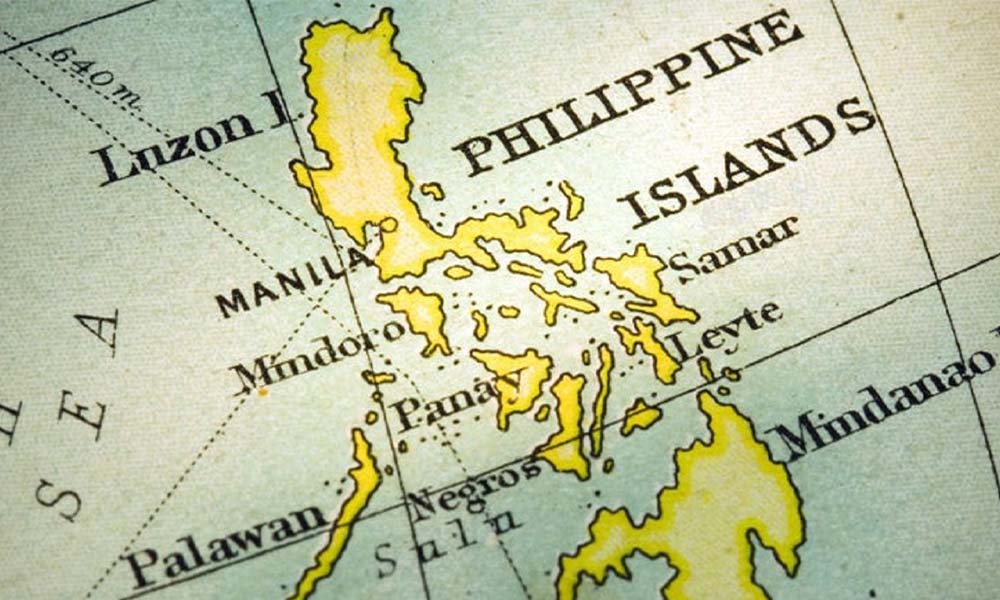
As these confrontations rise in frequency and intensity, the Philippines finds itself confronting an uncomfortable question: How do you defend a nation of 7,641 islands without a credible air-defense shield? This is why Manila is accelerating its move toward multi-layered air defense, starting with short-range systems, expanding to medium-range capabilities, and now potentially integrating a modern Japanese surface-to-air missile system designed to intercept cruise missiles, aircraft, and even some advanced drones.
The potential Type-03 transfer goes far beyond simple military cooperation. It marks a historic shift in Japan’s identity from a self-restricted “defense-only” state to an emerging proactive security provider in the region. For decades, Japan relied entirely on the U.S.–Japan alliance to shape its defense posture. But as China expands militarily, economically, and politically across the South and East China Seas, Japan is stepping into a role it has long avoided: deterring threats, strengthening partners, and shaping the Indo-Pacific alongside the United States, not behind it.
For the Philippines, this moment is equally decisive. After years of reacting, absorbing pressure, and navigating diplomacy, Manila is beginning to build the hard power needed to defend its skies, secure its maritime outposts, and reinforce its sovereignty. And the possible arrival of the Type-03 system signals something much larger: the birth of a strategic partnership capable of reshaping the regional balance, one missile battery at a time.
BACKGROUND — WHY JAPAN’S DEFENSE EXPORTS WERE HISTORICALLY RESTRICTED
For most of the post-war era, Japan lived under the shadow of its own pacifist constitution. Scarred by the legacy of World War II and shaped by U.S.-imposed reforms, Tokyo adopted some of the strictest rules on weapons exports anywhere in the world. These restrictions were enshrined in what became known as the Three Principles on Transfer of Defense Equipment and Technology, which essentially barred Japan from selling lethal weapons abroad. For decades, Japan allowed only a narrow list of exports: search and rescue gear, surveillance systems, minesweeping equipment, transport assets, and patrol boats, tools designed to signal restraint, not power projection. Tokyo believed that by limiting its military footprint, it could avoid fueling regional tensions and preserve its image as a peaceful nation.
But the world around Japan changed faster than its rules did. As China began deploying coast guard mega-ships, militarizing artificial islands, and pushing deeper into the East and South China Seas, Japan found itself operating in a very different security environment from the one that shaped its pacifism. At the same time, North Korea’s growing missile arsenal, now capable of striking most of Japan, forced Tokyo to rethink the wisdom of staying passive while rivals expanded militarily. By 2024–2025, pressure had grown from inside and outside the government to lift restrictions that no longer matched the reality of Japan’s strategic challenges. This is why the new coalition under Prime Minister Sanae Takaichi has proposed abolishing the outdated “five-category rule” by 2026, enabling Japan to export a full spectrum of defense equipment, including missile systems like the Transfer of Type-03 Air Defense System. And because these restrictions were cabinet-level policies, not laws, Japan can revise them swiftly, without the legislative gridlock that other nations face.
Recent decisions prove that Japan is already stepping into this new identity. Between 2023 and 2025, Tokyo loosened its restrictions enough to export Patriot PAC-3 interceptor missiles to the United States, a landmark move since those missiles are critical to Japan’s own missile-defense shield. It also entered the GCAP (Global Combat Air Program) with the UK and Italy to co-develop a next-generation fighter jet, another sign that Japan is no longer content with an exclusively defensive posture. These changes signal a deliberate transition from a “self-defense only” mindset to a broader ambition: becoming a regional security contributor, supporting partners, and strengthening the network that can balance China’s rise. The possible transfer of the Type-03 to the Philippines is not an anomaly; it is the logical next step in Japan’s strategic evolution.
WHY THE PHILIPPINES IS A PRIORITY PARTNER
Japan’s growing interest in transferring the Type-03 air-defense system to the Philippines is not accidental; it is the result of rapidly shifting strategic realities that have placed Manila at the very center of great-power competition. Over the past three years, China has escalated pressure around the Philippines to a level the region has never seen before: repeated water-cannon blasts, dangerous ramming, laser harassment, and relentless gray-zone intimidation in areas like Second Thomas Shoal and Scarborough Shoal. Chinese maritime militia “swarm fleets” sometimes 50, 70, even over 100 vessels, now regularly encircle Philippine positions in coordinated shows of force designed to exhaust Manila’s patience and test its deterrence limits. One senior ASEAN diplomat captured the new reality bluntly: “The Philippines is now the front line of the entire Indo-Pacific.” And this is precisely why Japan sees Manila as a priority security partner: what happens to the Philippines now shapes the stability of the entire first island chain.
At the same time, the Philippines itself has undergone a dramatic doctrinal shift, moving away from decades of internal security operations and embracing an external-defense posture aimed at countering maritime coercion. In just a few years, Manila has integrated BrahMos supersonic anti-ship missiles, Spyder short-range air defense systems, new long-range surveillance radars, and a growing network of EDCA bases hosting U.S. aircraft, missiles, and rotating troops. Joint patrols with Japan, the United States, and Australia have become routine, reflecting a new confidence in collective deterrence and a shared belief that stability depends on credible military presence.
What binds Japan and the Philippines even closer is the landmark Japan–Philippines Reciprocal Access Agreement (RAA), signed in 2024 and now in force, a historic pact that allows both armed forces to train, deploy, and operate from each other’s territory. This is not a symbolic agreement. Japanese troops have already conducted real exercises in Luzon, Palawan, and the northern coastlines, including scenarios that directly support maritime domain defense and Taiwan-adjacent contingency planning. Tokyo now sees Manila not as a peripheral partner, but as a strategic anchor, the southern gate of the first island chain, guarding the waters between Taiwan, the Luzon Strait, and the West Philippine Sea.
In this context, the potential transfer of the Type-03 Chu-SAM is not simply a defense sale, it is Japan betting on the Philippines as a crucial partner in shaping the future balance of power in the Indo-Pacific.
THE TYPE-03 CHU-SAM — WHAT IT ACTUALLY OFFERS THE PHILIPPINES
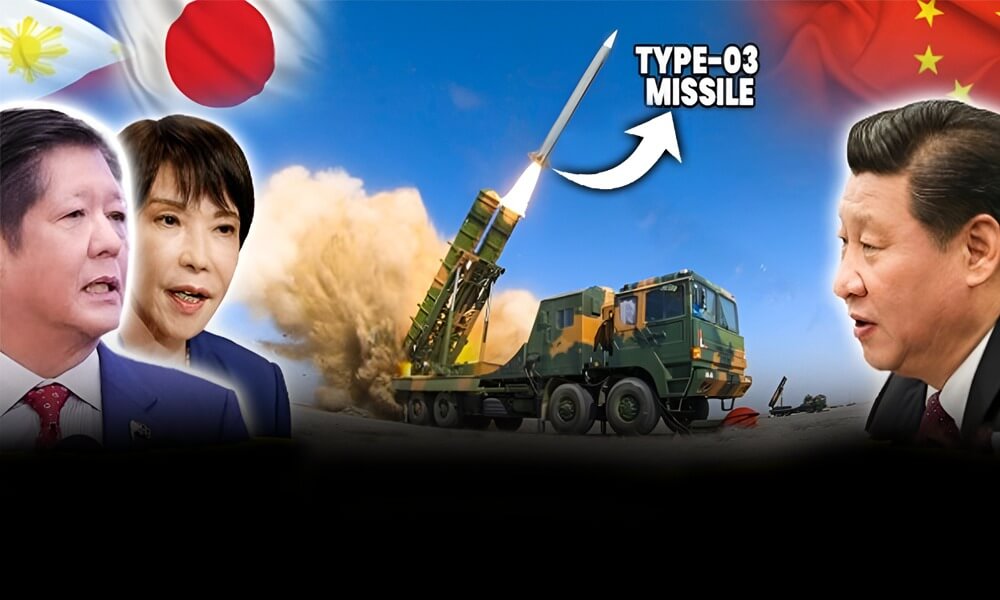
If Japan ultimately transfers the Type-03 Chu-SAM to the Philippines, Manila would gain something it has never possessed before: a true mid-range, mobile, modern air-defense shield capable of protecting bases, coastal zones, and strategic chokepoints from hostile aircraft, drones, and cruise missiles. At its core, the Chu-SAM delivers a powerful mix of range, speed, and precision. It can intercept targets at ~50 km, reach altitudes of 10 km, and hit threats traveling at high speeds using a Mach 2.5 missile guided by an advanced active radar homing seeker in its terminal phase. Unlike fixed systems such as Patriot batteries, the Type-03 is built for movement, carried on 8×8 military trucks that allow rapid redeployment across Luzon, Palawan, Zambales, or the northern coastline within hours. Each launcher carries six missiles, while its radar can track up to 100 airborne targets and engage multiple threats simultaneously, a critical capability when facing drone swarms, fast jets, or coordinated grey-zone aerial harassment.
But the true power of the Chu-SAM lies in integration. The system can seamlessly plug into U.S. surveillance networks, Philippine coastal radar systems, and Japan’s command-and-control architecture, effectively giving the Philippines a smaller, mobile version of Aegis-ashore. This would allow the AFP to create layered air-defense bubbles around EDCA bases, naval hubs, or critical WPS monitoring stations, something the country currently lacks. Compared to existing systems, the value becomes clearer: Spyder provides short-range, point-defense (20 km); Patriot PAC-3 offers high-end ballistic and cruise missile interception but is expensive, static, and scarce; the Type-03 sits exactly in the middle, covering the crucial “gap” in the AFP’s emerging air-defense network. It is fast, mobile, and scalable, the kind of system that gives Manila breathing room and forces China to think twice before escalating aerial intimidation. In short, the Chu-SAM is not just another piece of equipment; it is the missing middle layer that transforms Philippine air defense from patchwork to architecture.
THE POLITICAL SENSITIVITY — WHY THIS EXPORT MATTERS
The potential transfer of the Type-03 Chu-SAM to the Philippines is not just a military transaction, it is a political earthquake in Tokyo, Manila, and Beijing. Inside Japan, the issue is already stirring quietly but growing resistance. Critics in the Japanese media warn that “a major military policy shift is happening without parliamentary debate,” highlighting fears that Tokyo is sliding away from its pacifist roots without the public fully understanding the consequences. Lawmakers, activists, and academics worry about mission creep, the possibility that exporting air-defense systems could entangle Japan in future conflicts beyond its control, or contradict the spirit of Article 9. Others believe powerful industrial players, Mitsubishi Heavy Industries, Kawasaki Heavy Industries, and Japan’s expanding defense sector, are pushing the government to loosen export rules to secure long-term contracts and regional influence. In short, for Japan, this is not only a security decision but a deeply symbolic break with decades of post-war restraint. Japan–Philippines Security Ties Deepens as Manila Seeks More TC-90 Patrol Aircraft and Retired Abukuma Destroyers
And then there is China, whose reaction is as predictable as it is intense. Beijing already protests Japan’s deployment of missile units on the Ryukyu chain, including on Yonaguni, just 110 km from Taiwan. For Chinese strategists, a Japanese air-defense system placed inside the Philippines would not be seen as a neutral upgrade; it would be framed as the expansion of a U.S.–Japan–Philippines “encirclement arc” along the first island chain. Chinese military analysts are already warning that Tokyo is “exporting security threats,” and the moment the deal moves forward, Beijing is expected to retaliate with diplomatic pressure, economic leverage, and information warfare campaigns aimed at both Filipino and Japanese audiences. These campaigns would likely accuse Manila of destabilizing the region, portray Japan as reviving militarism, and attempt to sour public support for the alliance. This is why the Type-03 transfer matters so much: it sits at the intersection of Japan’s political identity, the Philippines’ defense awakening, and China’s regional ambitions, making it one of the most sensitive security moves of this decade.
REGIONAL SIGNIFICANCE — WHY THIS DEAL MATTERS BEYOND MANILA
The potential transfer of Japan’s Transfer of Type-03 Air Defense System to the Philippines carries regional weight far beyond the islands of Luzon and Palawan; it is part of a strategic architecture that is quietly reshaping the entire Indo-Pacific. A Japanese air-defense battery positioned on Philippine soil would immediately become a critical node in a growing Northeast–Southeast security network, linking Japan’s missile defenses, Taiwan’s informal early-warning systems, the Philippines’ emerging air-defense shield, Australia’s expanding northern bases, and U.S. Indo-Pacific Command’s surveillance and missile tracking grid.
For the first time, an integrated chain of allied sensors and shooters would stretch from Hokkaido to Darwin, forming a defensive arc that complicates every element of China’s operational planning. For Manila specifically, the system enhances deterrence by making key military hubs, Clark, Subic, Basa Air Base, Lal-lo, and EDCA sites in northern Luzon, far more resilient to air or missile attacks. It also strengthens Palawan, the frontline province facing the West Philippine Sea, by adding a protective layer that China would have to consider before escalating aerial intimidation or deploying unmanned platforms.

But the regional importance of this deal becomes even clearer when viewed through the lens of the Ukraine war. Medium-range mobile air-defense systems like NASAMS and IRIS-T proved pivotal for Kyiv, dramatically increasing the survivability of runways, radar stations, command centers, ammunition sites, and fuel depots. These systems didn’t just shoot down missiles, they allowed Ukraine’s military infrastructure to remain functional under sustained attack. The same logic applies to the Philippines. A system like the Transfer of Type-03 Air Defense System could shield radar stations in Ilocos, naval hubs in Palawan, airbases supporting EDCA operations, and critical logistics centers that are essential for sustaining Philippine forces in the West Philippine Sea. In a region where the first hours of conflict could determine everything, survivability becomes a strategy. And Japan’s Type-03 doesn’t just protect Philippine territory; it strengthens the defensive depth of the entire Indo-Pacific alliance architecture.
WHAT HAPPENS NEXT — KEY TIMELINE POINTS
The road to a Transfer of Type-03 Air Defense System deployment in the Philippines will unfold in stages, but the direction is clear. Japan is expected to revise its defense export guidelines by early 2026, removing the restrictions that currently prevent Tokyo from transferring lethal air-defense systems to partners like Manila. Once that policy shift is formalized, the quiet, informal discussions already happening between Japanese and Philippine defense officials will escalate into full official negotiations, opening the door for detailed talks on costs, training, maintenance, and long-term cooperation.
At the same time, the AFP will begin identifying potential deployment sites, determining how the Chu-SAM can integrate with existing radar networks, U.S. surveillance systems, and the Philippines’ growing multi-layered air-defense architecture. If both governments align politically and strategically, the earliest window for a contract signing would be late 2026 or early 2027, marking a historic moment for Japan’s export policy and the Philippines’ modernization drive. From there, production schedules and logistics will determine the pace, but the first batteries could realistically be delivered between 2027 and 2028, positioning the Philippines to field one of the most modern air-defense systems in Southeast Asia just as regional tensions continue to intensify.
CONCLUSION — A NEW JAPAN, A STRONGER PHILIPPINES
The possible transfer of the Transfer of Type-03 Air Defense System is far more than a simple arms deal; it marks the rise of a new Japan and the emergence of a stronger Philippines in an Indo-Pacific where deterrence and resilience matter more than ever. For Tokyo, this reflects a historic transformation, a nation once constrained by pacifist policies now stepping forward as a proactive security provider willing to equip partners on the front lines of regional instability.
For Manila, the Transfer of Type-03 Air Defense System is the missing layer in a credible, modern, multi-tier air defense network, giving the AFP not only new capability, but new confidence to protect bases, infrastructure, and the national dignity repeatedly tested in the West Philippine Sea. And for the broader region, this shift signals the quiet construction of a collective shield, Japan, the Philippines, Australia, the U.S., and other democracies weaving their defenses together to ensure that no country stands alone in the face of coercion. As one security scholar warned, “If democracies do not support each other now, they will face the consequences alone later.” Today, Japan and the Philippines are choosing cooperation over vulnerability, capability over silence, and shared security over isolation, reshaping the strategic map of Asia one partnership at a time.