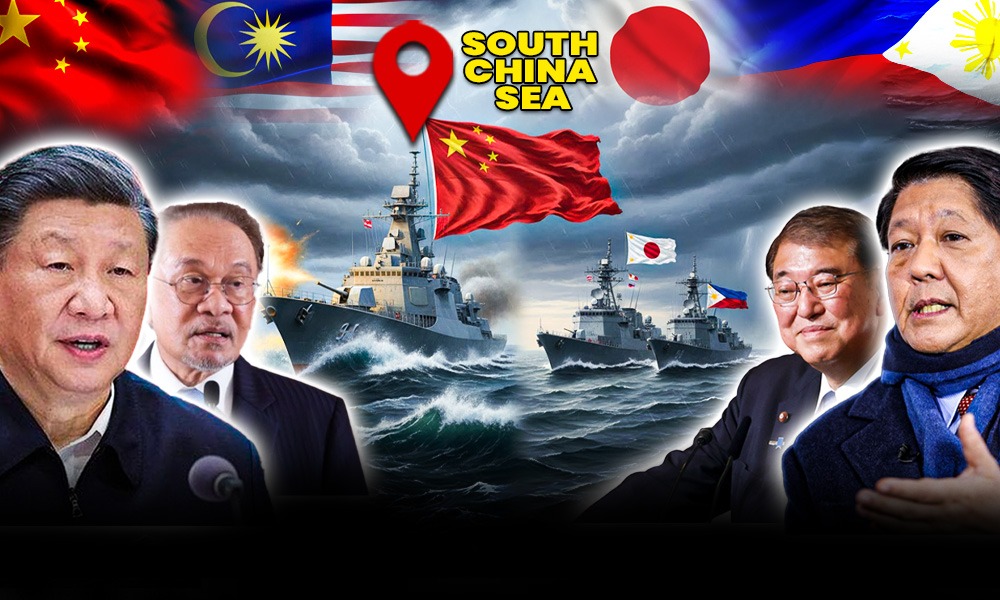
The South China Sea is once again the center of global attention as two major military exercises commence in parallel. The timing of the People’s Liberation Army (PLA) joint drill with Malaysia alongside the Japan-Philippines military exercise is no mere coincidence. It is a powerful snapshot of an Indo-Pacific region increasingly defined by competing superpowers and starkly different visions for security and sovereignty. These simultaneous maneuvers highlight a deepening geopolitical divide, pitting China’s campaign of bilateral influence against a tightening network of US-aligned allies committed to a rules-based international order. This is more than regional rivalry; it is a systemic contest over how power is projected and governed in the world’s most critical maritime corridor.
The stakes for global stability and the world economy are immense. As a vital artery of global trade, an estimated $3.36 to $5.3 trillion in goods transits the South China Sea annually, accounting for nearly one-third of all maritime commerce. Beneath its waves lie rich reserves of oil, natural gas, and fisheries that fuel Southeast Asian economies. Any conflict in these contested waters—whether from deliberate provocation or tragic miscalculation—would trigger a global shockwave, spiking energy costs, crippling supply chains, and testing the crisis management of the world’s leading nations. The security of this region is not just an Asian concern; it is a frontline issue for worldwide economic continuity.
China-Malaysia Vs. Japan-Philippines Drills Expose Deepening Rivalries in South China Sea
China-Malaysia Drill: Cooperation with an Edge
The China-Malaysia joint military exercise, scheduled for mid-October 2025, is officially framed around themes of “cooperation, disaster response, and maritime security.” This bilateral drill involves over 1,000 personnel and a display of naval assets, aiming to project an image of constructive partnership and regional goodwill. By inviting observers from other ASEAN nations, China enhances the optics of inclusive, multilateral cooperation.
However, a layer of strategic tension lies beneath this veneer of partnership. The two nations hold overlapping maritime claims, particularly near the Luconia Shoals within Malaysia’s Exclusive Economic Zone (EEZ)—an area also claimed by Beijing under its controversial “nine-dash line.” This contradiction was starkly revealed in 2021 when Malaysia publicly decried an incursion by 16 Chinese military aircraft as a “serious threat to national security.”
This joint exercise embodies the central paradox of Southeast Asia’s relationship with Beijing: cooperation tempered by profound caution. It allows Malaysia to maintain crucial economic ties with its largest trading partner while China uses the drill to normalize its military presence and frame its influence as benign, even as its other vessels press territorial boundaries elsewhere.
Japan-Philippines Exercise: A Unified Front for Deterrence
In stark contrast, the Japan-Philippines military exercise represents a rapidly maturing alliance built on collective defense and a shared commitment to international law. Evolving from basic humanitarian drills into complex strategic operations, these exercises are a cornerstone of regional deterrence. The 2025 Balikatan exercise marks Japan’s most significant participation yet, featuring integrated training in amphibious operations and air defense with Philippine and US troops.
This deepening cooperation is cemented by the Reciprocal Access Agreement (RAA), a pivotal pact that facilitates mutual troop deployments and joint training. Japan further bolsters the Philippines’ capabilities through its Official Security Assistance (OSA) initiative, having already supplied patrol vessels, coastal radar systems, and extensive technical aid.
The strategic calculus is clear: to counterbalance China’s maritime assertiveness and gray-zone tactics. Joint patrols conducted off the coast of Luzon reinforce freedom of navigation and demonstrate a unified resolve to uphold the status quo. Japan’s consistent endorsement of the 2016 Arbitral Tribunal ruling—which invalidated China’s nine-dash line claim—provides crucial diplomatic and legal weight to the Philippines’ position. This partnership is not based on aggression, but on a shared conviction that stability must be defended through deterrence and an unwavering commitment to a rules-based order.
Philippines Defense Chief Condemns Latest Chinese Escalation at Ayungin Shoal
Broader Implications: Global Trade and the Risk of Escalation
The geopolitical maneuvering in the South China Sea has direct and severe consequences for the global economy. China’s militarization of disputed features—outfitting them with runways, radars, and missile systems—has created a string of potent forward outposts. This is paired with relentless gray-zone pressure, where Chinese Coast Guard and militia vessels regularly harass Philippine resupply missions, resulting in damaged ships and injured crewmen.
The economic impact is already being felt. As tensions escalated in 2024, freight rates on key Asian shipping routes more than doubled, reflecting rising insurance premiums and systemic risk. When a third of global maritime trade passes through these waters, every incident sends a shock through supply chains, ultimately impacting consumer prices worldwide.
In response, the coalition of like-minded nations is expanding. Exercises like Balikatan now integrate forces from the US, Australia, Japan, South Korea, and the UK, focusing on high-end interoperability to ensure sea lanes remain open. The goal is clear: to make coercion too costly through a demonstrated capacity for collective defense. While Beijing condemns these actions as destabilizing, the growing coalition signals that the region will not be split by bilateral pressure, tying collective security directly to collective prosperity.
Philippines’ Balabac Island to Light Up with 102kWh Solar Energy
Conclusion: A Contested Future of Vigilance
The simultaneous drills offer a clear portrait of the dual-track reality shaping the South China Sea. China pursues a strategy of selective bilateral engagement to project influence, while a US-aligned coalition strengthens its collective defense architecture to deter unilateral action