China’s Dangerous Escalation: H-6 Bombers Deployed Near Scarborough Shoal
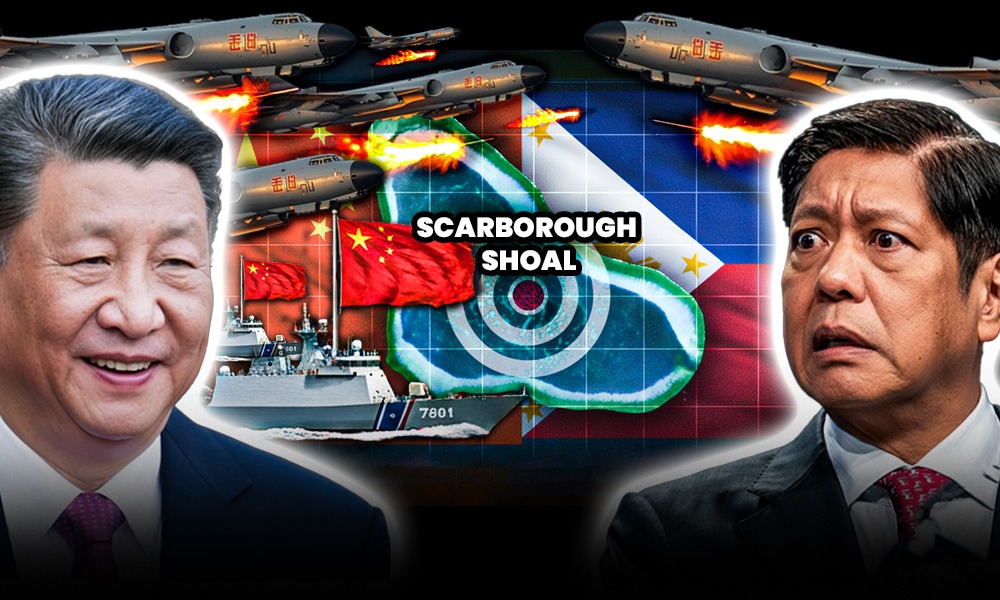
In late 2025, the South China Sea crisis 2025 reached a critical breaking point as satellite intelligence confirmed the deployment of China H-6 bombers Scarborough Shoal armed with YJ-12 supersonic anti-ship missiles near Scarborough Shoal (Bajo de Masinloc). This provocative military move, timed to coincide with China’s National Day on October 1, 2025, marked the first time Beijing stationed high-intensity strike platforms within the Philippines’ Exclusive Economic Zone (EEZ).
Accompanied by Type 054A frigates and J-16 multirole fighters, this deployment transformed a symbolic holiday into a calculated demonstration of military force. With the YJ-12 missiles Philippines threat featuring a 500-kilometer strike range, the entire island of Luzon—including critical military installations like Clark Air Base and Subic Bay—fell within striking distance, signaling China’s shift from gray-zone tactics to overt military posturing in the ongoing Philippines China military conflict.
Strategic Shift: From Coercion to Military Deployment
This Scarborough Shoal military escalation represents a decisive strategic rupture in China’s South China Sea playbook. For over a decade, Beijing relied on the China Coast Guard (CCG) and Chinese Maritime Militia (CMM) to enforce maritime claims through non-military means. The introduction of PLA Navy (PLAN) and Air Force (PLAAF) assets into contested waters signifies a new phase of militarization and the establishment of an Anti-Access/Area Denial China (A2/AD) zone.
This transition from hybrid coercion to military deployment has raised regional risk thresholds and narrowed margins for de-escalation. China’s clear aim: assert control over Scarborough Shoal not through lawfare and patrols, but through credible strike capability and sustained military presence amid growing China militarization South China Sea.
Philippines Draws the Line: Red Lines and Alliance Strengthening
For the Philippines, this deployment has become a geopolitical breaking point in the Philippine sovereignty dispute. President Ferdinand Marcos Jr. has declared that any deliberate killing of Filipino personnel in the West Philippine Sea would constitute a “red line” triggering the Philippines Mutual Defense Treaty with the United States—an unambiguous warning of potential escalation under Philippines military red lines.
Under General Romeo Brawner Jr., the Armed Forces of the Philippines (AFP) has adopted new inter-agency protocols to manage “gray-zone encounters” with coordinated firmness. Manila’s Assertive Transparency Initiative, launched in 2023, has redefined response strategy by publicizing Chinese aggression through verified footage to rally international condemnation.
This approach has yielded results: the G7 Foreign Ministers formally condemned China’s “illicit, coercive, and dangerous actions” in early 2025, highlighting Indo-Pacific security tensions.
Pentagon’s $975K Project at Oyster Bay Sends a Warning to China
Strengthening Alliances: Philippines Builds Coalition Against Chinese Aggression
The Philippines is reinforcing alliances to transform exposure into deterrence through the US Philippines alliance South China Sea. The Expanded Enhanced Defense Cooperation Agreement (EDCA) with the United States has added new rotational bases across Luzon, enhancing interoperability and rapid deployment capacity.
The Japan-Philippines Reciprocal Access Agreement (RAA), finalized in 2025, now allows joint exercises and mutual logistical support. These bilateral efforts are complemented by multilateral military drills such as the August 2025 naval and air exercises near Scarborough Shoal, involving the Philippines, U.S., Australia, and Canada—highlighting a coordinated allied effort to check China’s growing power projection within the regional security alliance network.
Path to Escalation: Dangerous Incidents Test Regional Stability
The path to escalation from August to October 2025 was marked by high-risk incidents testing limits of restraint in the ASEAN South China Sea conflict:
- August 11: Collision between Chinese Type 052D destroyer and CCG cutter while pursuing BRP Suluan
- September: Water cannon assault by CCG injured Philippine sailor amid China Coast Guard aggression
- Late September: Discovery of Chinese autonomous underwater vehicle (AUV) in Philippine waters
These incidents reveal Beijing’s increasing risk tolerance and determination to normalize military operations in contested areas, fueling Chinese naval expansion.
China’s Justification vs. Manila’s Legal Rejection
Following the H-6 bomber deployment, both Beijing and Manila have entrenched opposing positions in the Scarborough Shoal confrontation:
China’s Legal Manipulation
In September 2025, China’s State Council announced a 3,523-hectare “National Nature Reserve” at Scarborough Shoal. Framed as environmental protection, this move was immediately followed by intensified “law enforcement operations” and “combat readiness patrols”.
This represents China’s use of China lawfare strategy—strategic deployment of domestic legislation to reinforce territorial claims and normalize presence while restricting Philippine access to traditional fishing grounds.
Philippines’ Legal Counter-Argument
National Security Advisor Eduardo Año dismissed the “Nature Reserve” designation as “less about protecting the environment and more about justifying [China’s] control”. Philippine officials highlighted the hypocrisy of environmental claims given massive coral destruction at Mischief Reef and Fiery Cross Reef, pointing to a clear 2016 Arbitral Ruling violation.
Strategic Counter-Measures: Red Lines and Alliance Deterrence
Philippines Defines Clear Red Lines
President Ferdinand Marcos Jr. has publicly defined a “red line”: deliberate killing of Filipino personnel by Chinese forces would be considered “very close to an act of war” and trigger the 1951 MDT—potentially internationalizing the conflict.
AFP’s Institutional Adaptation
General Romeo Brawner Jr. described the PLAN deployment as an “escalatory change in China’s tactics”. The AFP is crafting new internal protocols to coordinate across government agencies—DND, PCG, and NSC—to enhance crisis management and ensure unified responses through Philippine Coast Guard operations.
Assertive Transparency Initiative
The 2023 Assertive Transparency Initiative has proven remarkably effective. By publicizing aggression through high-definition videos and images, the Philippines has galvanized international attention and transformed moral outrage into diplomatic pressure.
Alliance Strengthening
- EDCA expansion: Additional rotational sites across Luzon
- Japan-Philippines RAA: Joint training and interoperability
- Multilateral exercises: August 2025 drills with U.S., Australia, Canada near Scarborough Shoal
Analysis and Outlook: Managed Confrontation Era
The situation has entered an era of managed confrontation. China’s integration of civilian and military forces creates a seamless coercive apparatus, while Manila’s rules-based defiance has raised stakes and narrowed de-escalation space.
Scarborough Shoal: The Epicenter of Maritime Confrontation
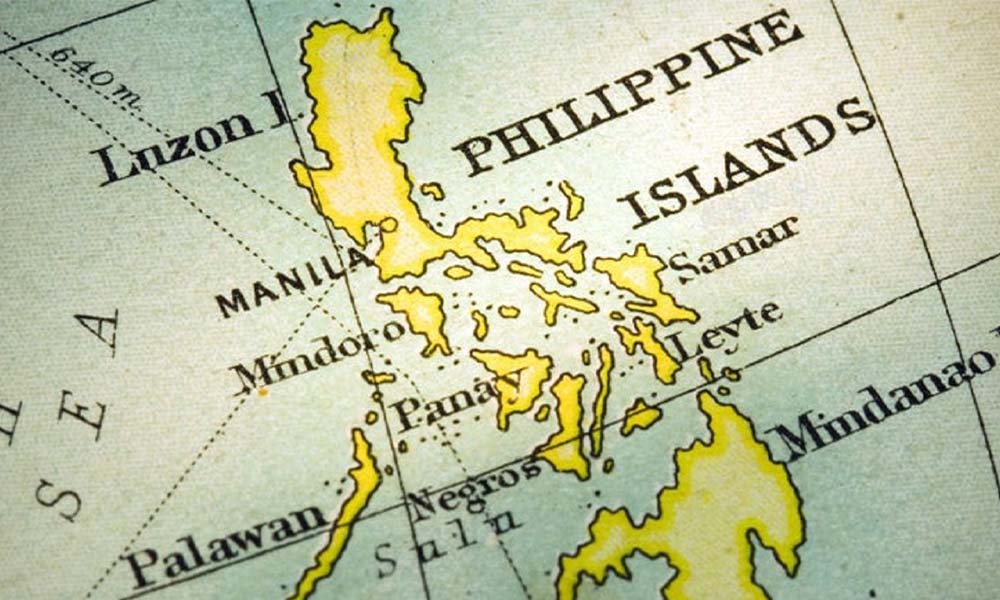
Located just 120 nautical miles from Luzon, Scarborough Shoal serves as:
- Gateway to Philippine mainland
- Vital traditional fishing ground
- Strategic anchor for China’s northern flank
- Sovereign right under 2016 PCA ruling
Future Outlook: Sustained Volatility
The region faces:
- Continued low-level armed confrontations
- Ramming incidents
- Water cannon strikes
- Laser blinding
- Aerial intimidation
Any fatal incident could activate the MDT and internationalize the conflict.
Will China Agree to the Philippines proposed Code of Conduct for the SCS
Conclusion: Defining Moment for Indo-Pacific Security
The transition from gray-zone coercion to overt military deployment at Scarborough Shoal marks a defining inflection point in the West Philippine Sea. It has ended Manila’s strategic ambiguity, compelling the Philippines to adopt a robust, internationally supported defense posture.
Scarborough Shoal has become the litmus test for:
- Effectiveness of international law
- Alliance-based deterrence
- Collective resistance to revisionist claims
Whether this test ends in deterrence or disaster will define not only Philippine sovereignty but also the stability of the entire maritime order in Asia.