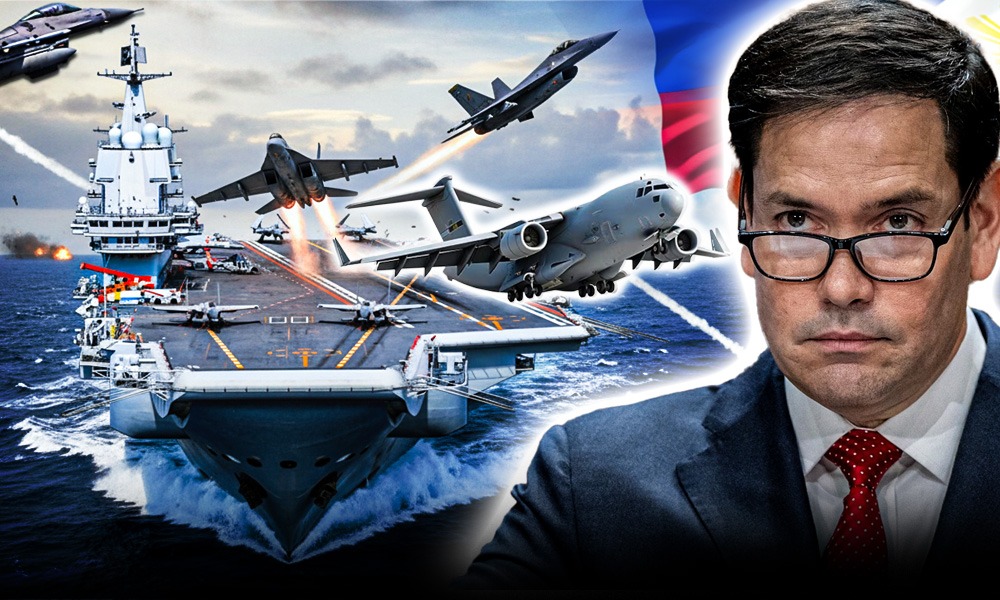
U.S. Senator Marco Rubio is betting that flooding the Philippines with cutting-edge American weapons and security assistance is the surest way to stop Beijing’s creeping expansion in the South China Sea. His proposed “flood” strategy is an ambitious, multi-layered plan to rapidly arm and equip the Philippines, giving Manila the capacity to enforce its sovereignty and hit back decisively at every incursion so that China’s gray-zone tactics lose their low-risk appeal.
At its heart is credible deterrence built on an ironclad U.S.–Philippines Mutual Defense Treaty, now clarified to cover attacks on public vessels anywhere in the South China Sea. The strategy couples massive Foreign Military Financing, $463 million delivered since 2015 and $500 million more approved, with direct Coast Guard support and Enhanced Defense Cooperation Agreement (EDCA) base upgrades, ensuring frontline outposts are hardened for any crisis. Rubio also highlights coastal missile batteries, maritime domain awareness tools, and stronger Navy and Coast Guard ships as essential to deny China its current advantage.
Yet Beijing’s naval ambitions and aggressive “salami slicing” remain the core threat. China now fields over 350 battle-force ships and has militarized artificial islands while testing uncrewed underwater vehicles, all aimed at dominating vital sea lanes that carry more than $3 trillion in global trade annually. Repeated clashes at Scarborough and Second Thomas Shoals, including water-cannon attacks and near collisions, illustrate the daily friction that Rubio wants to deter.
The risks are real. China has condemned Rubio’s plan as U.S. meddling, and every new ship or missile raises the chance of a miscalculation that could trigger the Mutual Defense Treaty. At home, critics warn of over-dependence on U.S. firepower, while in the region ASEAN unity could fray as some members side with Beijing and others with Washington.
Still, Rubio’s wager is clear. By sending advanced arms, deepening base access, and hardening Philippine defenses, he aims to make the cost of Chinese coercion too high to bear, proving that the U.S. commitment to its Philippine ally and to a rules-based maritime order is non-negotiable. Whether this flood of support deters conflict or drives new tensions will shape not only the future of the Philippines but also the balance of power across the Indo-Pacific.
China’s Naval Ambitions and the Threat to the Philippines
China is executing a far-reaching maritime strategy designed to dominate the South China Sea and push its naval presence deep into the Pacific, challenging both regional neighbors and U.S. allies. At the core of this effort is the People’s Liberation Army Navy (PLAN), which now fields over 350 battle-force ships, compared to roughly 290 for the U.S. Navy, making it the largest naval fleet in the world. These include advanced destroyers, frigates, and submarines capable of long-range operations. Yet, sheer numbers only hint at the scale of Beijing’s ambitions. Rather than risk a direct clash with the United States or its allies, China employs sophisticated “gray-zone” tactics, actions that remain below the threshold of open warfare but steadily expand its control.
Gray-zone operations are central to Beijing’s playbook. The China Coast Guard (CCG) and People’s Armed Forces Maritime Militia (PAFMM) are the front-line tools for these operations. Civilian fishing trawlers, secretly trained and coordinated by the Chinese military, routinely swarm and block foreign vessels, creating the appearance of law enforcement or commercial activity while coercing neighbors without firing a shot. In parallel, China has systematically fortified reefs and shoals across the Spratly and Paracel Islands. Features that once barely broke the surface, such as Fiery Cross, Subi, and Mischief Reefs, are now man-made military outposts, complete with long runways for fighter jets, radar arrays, deep-water ports, and advanced missile systems. These fortified outposts act as unsinkable aircraft carriers, enabling the PLAN to monitor and, if necessary, disrupt shipping across one of the world’s most vital trade corridors.
Cutting-edge technology amplifies this advantage. In 2025, China secretly tested two extra-large uncrewed underwater vehicles (UUVs) in the South China Sea, autonomous platforms designed for intelligence gathering, mine-laying, or tracking submarines. These trials point to a future where China can dominate not just the surface and air but the undersea domain as well, complicating the ability of rival navies to operate safely and detect threats in contested waters.
For the Philippines, these are not distant threats but daily realities. The best-known flashpoint is Scarborough Shoal (Bajo de Masinloc), just 120 nautical miles from Luzon and well within the Philippines’ Exclusive Economic Zone (EEZ). After a 2012 standoff, China established de facto control, blocking many Filipino fishermen from traditional grounds. Tensions have escalated sharply: in September 2025, Chinese coast guard ships fired high-powered water cannons at a Philippine fisheries vessel, causing significant damage and injuring a crew member. Soon after, Beijing proposed turning the shoal into a “national nature reserve” a move denounced by U.S. Senator Marco Rubio as “another coercive attempt to advance sweeping territorial and maritime claims.”
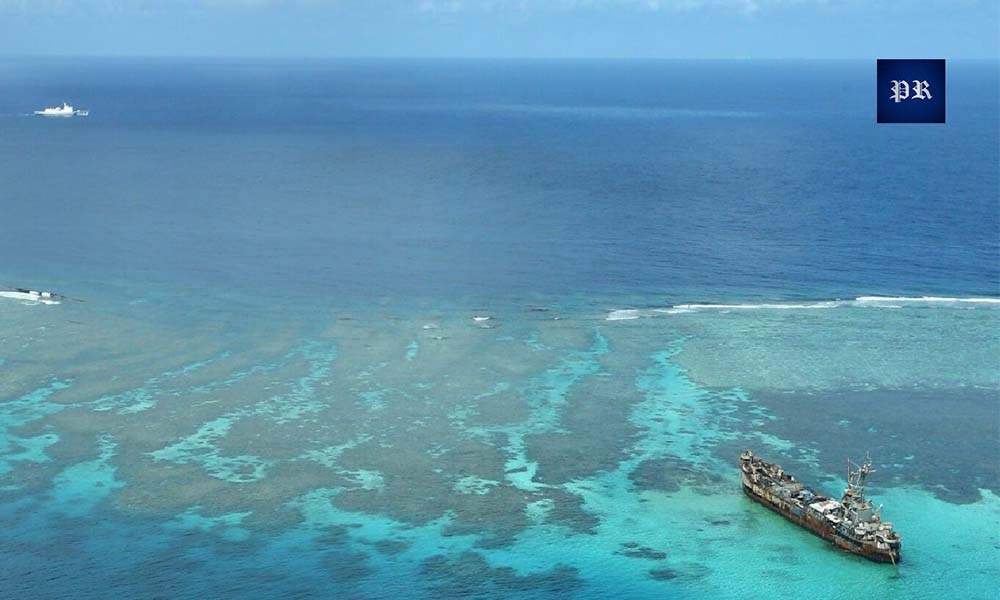
The Second Thomas Shoal (Ayungin Shoal) tells a similar story. Here, a handful of Philippine Marines stationed aboard the grounded BRP Sierra Madre depend on periodic resupply runs, but Chinese coast guard and militia vessels repeatedly block, ram, or shadow Philippine boats, creating constant risk of collision and escalation. Each encounter underscores how gray-zone tactics, deliberate harassment that stops short of open combat, allow Beijing to press its claims while testing the responses of Manila, Washington, and other regional players.
Taken together, China’s massive naval buildup, persistent gray-zone harassment, militarized artificial islands, and rapid technological upgrades form a coherent strategy: to control key maritime choke points, intimidate neighboring states like the Philippines, and ultimately rewrite the balance of power across the Indo-Pacific. For Manila and its allies, these actions are not only a challenge to territorial sovereignty but also a direct threat to international law, freedom of navigation, and the stability of global trade routes that carry over $3 trillion in goods each year.
Senator Rubio’s Proposed “Flood” Strategy
Senator Marco Rubio’s proposed “flood” strategy is an ambitious, multi-layered plan to arm and equip the Philippines at unprecedented speed and scale, a move he believes is essential to blunt China’s rapidly expanding naval power and unrelenting “gray-zone” harassment in the South China Sea.
At its heart is the principle of credible deterrence. Rubio argues that if Manila has the capacity to enforce its sovereignty and to hit back decisively at every incursion, Beijing’s incremental “salami-slicing” tactics will lose their low-risk appeal. This effort is built on the foundation of the 1951 U.S.–Philippines Mutual Defense Treaty (MDT), which, after determined Philippine lobbying, has been explicitly updated to cover armed attacks on public vessels, including coast guard ships, anywhere in the South China Sea. That clarification, Rubio stresses, locks in an ironclad U.S. commitment and closes legal loopholes that China might try to exploit.
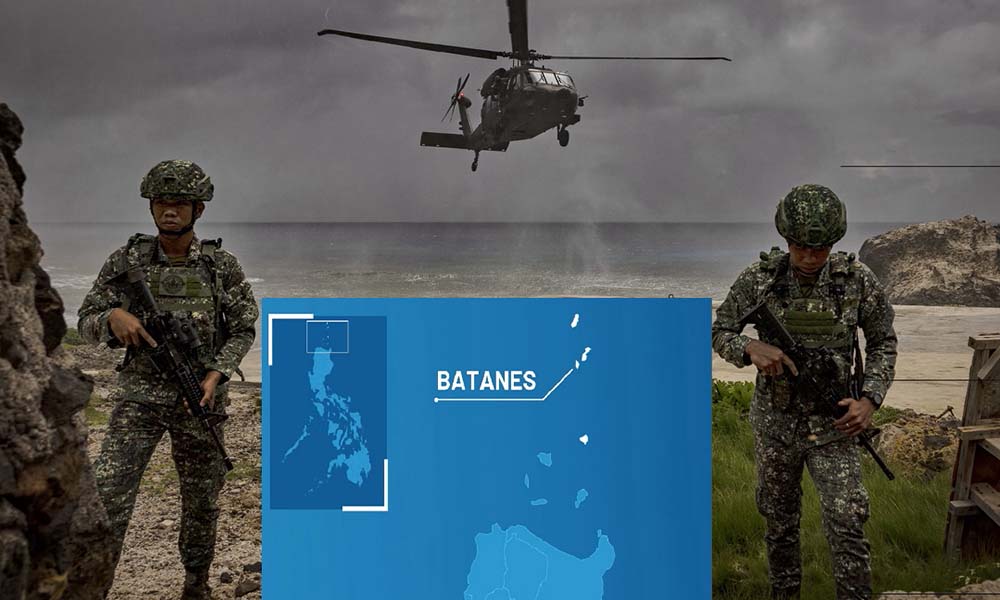
Rubio pairs this strategic logic with unprecedented U.S. security assistance, focusing on three major funding channels. First is Foreign Military Financing (FMF), the main grant program for U.S. military aid, under which the Philippines has already received $463 million since 2015, with another $500 million approved for FY 2024–25. These funds allow Manila to buy modern radar networks, long-endurance surveillance drones, air-defense systems, and coastal anti-ship missiles. Second is direct support for the Philippine Coast Guard (PCG), which bears the brunt of China’s day-to-day harassment. A U.S. House panel recently urged Secretary of State Rubio to safeguard this funding, warning that a “drastically reduced 2026 budget” would “devastate” key programs to help the PCG counter China’s maritime militia. Third is the Enhanced Defense Cooperation Agreement (EDCA), which provides U.S. access to strategically located Philippine bases and the capital to upgrade them. Washington has already invested $109 million in base improvements and set aside another $128 million for FY 2025 to harden runways, build fuel depots, and expand ammunition storage, facilities that would support sustained joint operations if a crisis erupts.
Rubio’s plan also spells out the hardware he wants to see on Philippine shores. High on the list are coastal defense batteries capable of launching BrahMos-class supersonic missiles, powerful enough to deny Chinese warships access to key sea lanes. He also calls for a rapid buildup of Maritime Domain Awareness (MDA) systems, including satellite feeds, over-the-horizon radar, and long-range unmanned aerial vehicles, to create a live, persistent picture of every Chinese vessel operating inside the Philippine Exclusive Economic Zone (EEZ). And he emphasizes the modernization of PCG and Navy ships with reinforced hulls, advanced electronic countermeasures, and heavier deck guns, ensuring they can withstand water-cannon blasts, ramming attempts, and other aggressive tactics that have become routine near Scarborough and Second Thomas Shoals.
In Rubio’s view, this “flood” of arms, surveillance technology, and hardened infrastructure will transform the Philippines into a frontline bulwark, forcing Beijing to factor in immediate, high-cost consequences for every hostile act. Supporters see it as a decisive investment in regional stability and in keeping vital sea lanes, through which over $3 trillion of global trade flows each year, open and free. Critics worry it could accelerate an arms race or entrench the Philippines in great-power rivalry, but Rubio insists that only a well-armed ally can prevent a wider war. By combining massive grant funding, coast guard modernization, base upgrades under EDCA, and advanced strike and surveillance systems, the “flood” strategy aims to deny China the gray-zone advantage it now enjoys and to secure freedom of navigation for decades to come.
Panatag Shoal Sparks Controversy as China Releases New Maritime Baselines
Counterarguments and Risks
While Senator Marco Rubio presents his “flood” strategy as a way to secure peace through strength, diplomats and security analysts warn that it could just as easily fuel instability, invite Chinese retaliation, and strain regional politics.
Escalation and Instability
The biggest concern is that China will counter an American arms surge with its own military buildup, increasing the risk of a dangerous standoff. Beijing has already condemned Rubio’s proposal, with the Chinese Foreign Ministry accusing Washington of “repeatedly meddling and bringing in other countries to sow discord and fear.” Chinese state media have gone further, warning that a larger U.S. footprint in the Philippines will make the South China Sea “even more volatile.” The danger is not just rhetoric. The region has already seen near-collisions and violent confrontations, such as the September 2025 water-cannon attack that injured a Philippine fisheries crew member and repeated ramming incidents at Second Thomas Shoal. Security experts caution that adding more powerful weapons and ships to this already tense environment increases the chances of a fatal miscalculation. Under the 1951 U.S.–Philippines Mutual Defense Treaty (MDT), which now explicitly includes attacks on Philippine public vessels anywhere in the South China Sea, even a single death or the sinking of a ship could trigger an automatic U.S. military response, potentially sparking a wider conflict neither side may intend.
Domestic and Regional Concerns
Inside the Philippines, questions of sovereignty and balance complicate enthusiasm for a massive U.S. arms buildup. While President Ferdinand Marcos Jr. has welcomed Washington’s renewed commitment, critics warn that heavy dependence on American military aid could limit Manila’s freedom to chart an independent foreign policy, especially in trade and investment with China, one of its largest markets. Opposition lawmakers and civil society groups have called for greater transparency and strict oversight of foreign defense agreements to ensure that U.S. military presence remains temporary and does not compromise democratic control of the armed forces.
The strategy could also exacerbate divisions within the Association of Southeast Asian Nations (ASEAN), an organization that prizes unity and neutrality. Countries like Vietnam and Malaysia may quietly approve of a stronger Philippine deterrent, but others such as Cambodia and Laos fear that a more militarized South China Sea will disrupt their economic relationships with China and undermine ASEAN’s ability to mediate disputes. Such fragmentation weakens one of the few regional mechanisms capable of cooling tensions and crafting collective security norms.
In sum, while Rubio’s “flood” strategy is meant to deter China and protect freedom of navigation, it raises the stakes of every maritime encounter and risks drawing the Philippines, the United States, and China closer to an unintended confrontation, while testing Manila’s political independence and ASEAN’s regional cohesion. The challenge for policymakers will be to balance stronger deterrence with careful diplomacy to prevent the very conflict they hope to avoid.
1 Philippine Navy Vessel Against 22 Chinese Ships at Scarborough Shoal
Conclusion: Assessing the Bet
Senator Marco Rubio’s “flood” strategy is a high-stakes wager on deterrence. By channeling massive U.S. military aid, base upgrades, and cutting-edge surveillance and strike systems into the Philippines, the plan aims to strengthen Manila’s capacity for self-defense and maritime law enforcement while leveraging the long-standing U.S.–Philippines alliance. The logic is straightforward: a better-armed Philippines will make China think twice before pressing its sweeping maritime claims or using coercive gray-zone tactics.
The long-term success of this strategy, however, rests on three pillars. First, sustained U.S. funding and political will are essential to keep weapons deliveries and base improvements on schedule. Second, the Philippines must effectively integrate and maintain new systems, ensuring they become a real operational deterrent rather than expensive showpieces. And third, China must calculate that the rising cost of coercion outweighs the potential gains of territorial expansion, a judgment that could shift as regional dynamics evolve.
Ultimately, the “flood” is about more than hardware. As Rubio and U.S. officials frame it, “The influx of arms is not just about firepower; it is about sending a clear signal that the U.S. commitment to the ironclad alliance and a rules-based order in the South China Sea is non-negotiable.” Whether this bold bet prevents conflict or risks new tensions will define not just the future of the Philippines’ maritime sovereignty, but also the credibility of U.S. commitments across the Indo-Pacific.