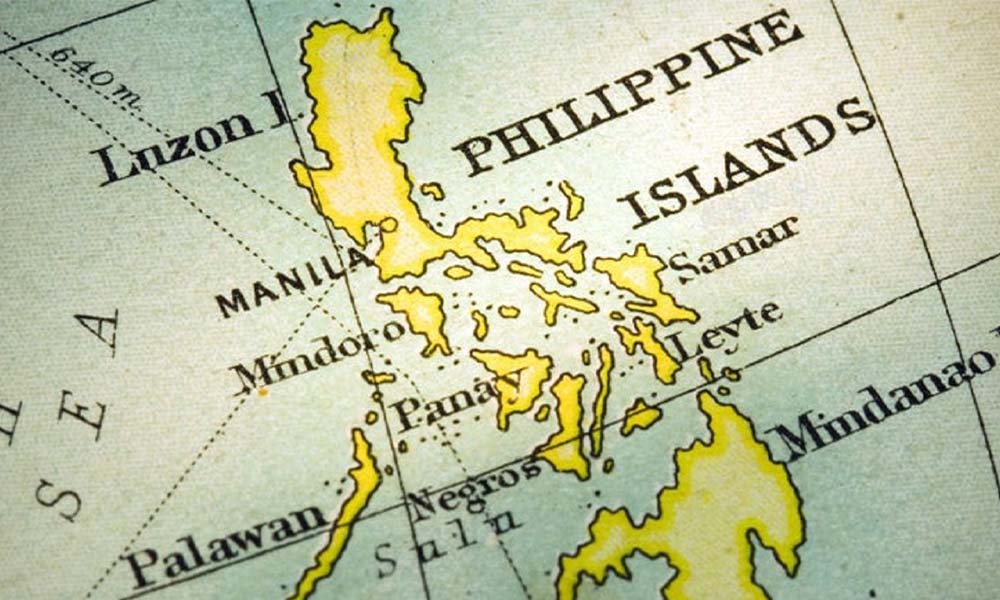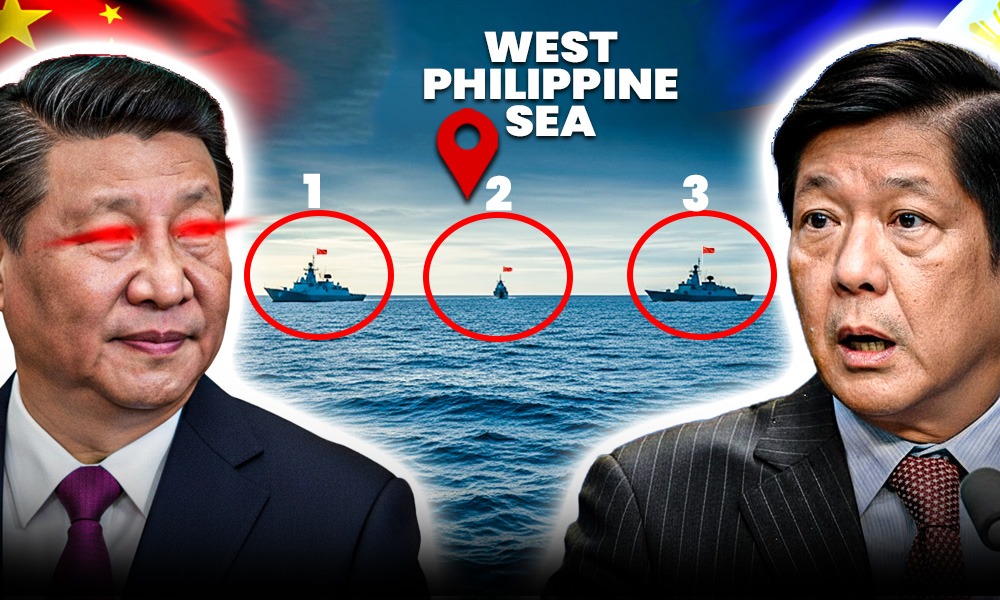
Just weeks after the September 2025 collision near Scarborough Shoal, three Chinese warships have now entered Philippine waters, setting off alarm bells in Manila and Washington. The latest incursion of three Chinese warships into Philippine waters did not happen in a vacuum. The Philippine government has reacted swiftly and forcefully to the presence of Chinese warships inside its Exclusive Economic Zone. The late summer of 2025 marked a sharp escalation in the maritime face-off between China and the Philippines. China’s latest naval incursions into the Philippines’ EEZ are a textbook example of “gray-zone” tactics. The recent entry of Chinese warships into the Philippine EEZ has ignited debate over whether Beijing is actively preparing for armed conflict. Looking ahead, experts predict “more of the same, possibly worse” for the South China Sea as 2025 draws to a close and beyond. China’s recent deployment of warships inside the Philippines’ Exclusive Economic Zone underscores the central thesis of this report. Together, these opening signals frame a single urgent reality: the Philippines now stands at the epicenter of a calculated Chinese push to redraw maritime boundaries, testing international law and U.S. alliance commitments while bringing the world’s busiest sea lane closer to open conflict.
Chinese Ships Enter Philippine Waters
The entry of three Chinese warships into Philippine waters in late September 2025 represents the sharpest escalation yet in a series of confrontations that have steadily grown more serious over the past year. What once involved coast guard cutters and shadowy maritime militia now includes frontline People’s Liberation Army Navy (PLAN) vessels, a clear sign that Beijing is willing to deploy heavier naval assets inside the Philippines’ Exclusive Economic Zone (EEZ).
A key early indicator came in July 2025, when the Chinese Navy’s Tianwangxing, a sophisticated electronic-intelligence and spy ship, was detected well within Philippine waters near northern Palawan. The Philippine Coast Guard (PCG) deployed the BRP Teresa Magbanua to intercept it, challenging the intruder’s presence. Before long, the Tianwangxing was joined by a Chinese Coast Guard cutter and a guided-missile destroyer, which effectively shielded the spy ship until the group withdrew. The coordinated maneuver, an intelligence vessel backed by combat-ready escorts, exposed how Beijing can quickly layer civilian, paramilitary, and military elements to test Manila’s response while demonstrating rapid-reinforcement capabilities.
Tensions escalated further in August 2025, when a Chinese warship and a coast guard vessel collided with a Philippine patrol ship near Scarborough Shoal. Witness accounts and maritime tracking data suggested that the Chinese vessels had engaged in high-speed blocking maneuvers before the impact. Though no lives were lost, the incident highlighted how “routine” cat-and-mouse encounters can tip into dangerous accidents, carrying the potential to spark a wider crisis.
The danger became more tangible on September 16, 2025, when two Chinese coast guard ships used high-pressure water cannons against the BRP Datu Gumbay Piang, a Filipino fisheries protection vessel operating inside the Philippine EEZ. The blasts damaged key equipment and injured at least one crew member, according to official PCG reports. This marked one of the most violent gray-zone encounters to date, targeting a civilian-support mission rather than a purely military patrol.
These flashpoints set the stage for the latest and most alarming development: the confirmed presence of three PLAN warships inside Philippine waters. While Chinese coast guard and militia incursions have become almost routine, the deployment of actual warships represents a qualitative shift. PLAN destroyers and frigates carry advanced missile systems, anti-submarine capabilities, and long-range sensors, giving China far greater coercive leverage and signaling its willingness to operate in combat-ready posture inside another nation’s EEZ.
Taken together, the July spy-ship interception, the August collision, the September water-cannon assault, and now the direct entry of three PLAN warships reveal a deliberate, incremental strategy. Beijing is testing the boundaries of Philippine patience and U.S. alliance commitments, creating new “facts at sea” that normalize Chinese military presence. These moves fit the pattern of a gray-zone campaign, provocative enough to shift the balance of power, yet calibrated to stop short of open war. For Manila and its allies, each incident underscores how quickly the South China Sea dispute can slide from maritime harassment into a potential shooting conflict, and how urgently they must reinforce deterrence and crisis-management mechanisms.
The Philippines’ Response to Chinese Ships in its EEZ
The Philippine government has reacted swiftly and forcefully to the presence of Chinese warships inside its Exclusive Economic Zone (EEZ), framing the latest incidents as a dangerous escalation that demands both diplomatic and operational countermeasures. Jonathan Malaya, spokesperson for the National Security Council, publicly described the Chinese deployments as an “escalation” that tests Philippine sovereignty and regional peace, underscoring that Beijing’s actions are “not mere accidents but deliberate provocations.” His remarks echoed a broader sentiment within the administration of President Ferdinand Marcos Jr. that China is now using military-grade pressure to challenge Manila’s rights under international law.
Diplomacy remains the Philippines’ first line of defense, but it has been relentless and voluminous. Since mid-2022, the Department of Foreign Affairs has lodged nearly 200 formal diplomatic protests over Chinese incursions, from harassment of fishing boats to the more recent warship entries. Each protest reinforces the 2016 Hague arbitral ruling that invalidated China’s sweeping claims, and Manila has made a point of publicizing these filings to ensure international visibility and support.
On the operational side, the Philippine Coast Guard (PCG) has adopted what officials call a “proactive response.” PCG ships are now intercepting and shadowing Chinese vessels more frequently and escorting Filipino fishermen to ensure they can work safely within the EEZ. This is a shift from earlier years, when Philippine patrols were more sporadic and largely defensive. The Navy has also stepped up joint drills with U.S. and Australian forces, signaling that deterrence will include hard military capabilities as well as diplomacy.
Public opinion is moving in the same direction. Support for a tougher stance is growing, with calls for arming more coast guard ships and adopting a clearly defined response protocol to deter repeat incursions. Social media, civic groups, and fisherfolk associations have all amplified demands for greater government visibility and faster maritime response.
Together, these government, military, and grassroots efforts show that the Philippines is far from passive. By filing protests, enhancing patrols, and mobilizing public support, Manila is working to defend its EEZ rights while rallying allies and shaping global opinion, ensuring that each Chinese move is met with a calibrated but unmistakably firm response.
What’s Behind China’s WARNING to Philippines on Huangyan Island?
August–September China Tussle with Philippines in its EEZ
The late summer of 2025 marked a sharp escalation in the maritime face-off between China and the Philippines, with a series of incidents that displayed a clear, deliberate pattern of intensifying pressure inside the Philippines’ Exclusive Economic Zone (EEZ). In August 2025, tensions flared when two Chinese vessels, a warship and a coast guard cutter, collided near Scarborough Shoal while harassing a Philippine patrol ship. Philippine officials reported that the Chinese ships had been making aggressive blocking maneuvers when the collision occurred, forcing the BRP Teresa Magbanua and accompanying vessels to take evasive action. The incident was widely interpreted as a signal that Beijing was ready to deploy hard-power assets in contested waters rather than rely solely on coast guard or militia forces.
The confrontations grew even more dangerous in September 2025. On September 16, two Chinese coast guard ships blasted the BRP Datu Gumbay Piang with high-pressure water cannons for nearly 30 minutes, long enough to short-circuit the vessel’s electrical systems and injure a crew member. At the time, more than 10 Philippine government and support vessels were operating nearby, underscoring the scale of the mission and the potential for a multi-ship incident to spiral out of control. Shortly afterward, a Chinese warship transmitted a radio notice declaring “live-fire exercises” in the Scarborough area, a move Philippine officials denounced as psychological intimidation aimed at discouraging further patrols.
These clashes followed China’s early-September announcement of plans to designate parts of Scarborough Shoal as a “national nature reserve.” Experts in Manila and abroad viewed that declaration as a deliberate probe of Philippine resolve, providing a civilian-sounding pretext for more forceful Chinese activity. By coupling an administrative claim with aggressive maritime actions, Beijing demonstrated how policy and power projection work hand in hand to create new “facts at sea.”
Taken together, the August collision, the prolonged September water-cannon attack, and the provocative live-fire broadcast reveal a calculated escalation strategy. Each step raised the stakes, gradually shifting the contest from coast guard skirmishes to naval brinkmanship, and testing how far the Philippines and its treaty allies, are prepared to go to defend internationally recognized EEZ rights.
Geopolitical and Strategic Meaning of the Incursions
China’s latest naval incursions into the Philippines’ Exclusive Economic Zone (EEZ) are a textbook example of “gray-zone” tactics, a blend of coercive actions that deliberately stop short of open armed conflict. By dispatching spy ships, coast guard cutters, and now full-fledged warships, Beijing seeks to normalize its presence in contested waters and to change the status quo without firing a shot. This incremental approach allows China to chip away at Philippine sovereignty while avoiding the kind of direct military confrontation that could trigger a U.S. or allied response under formal defense agreements.
The South China Sea (SCS) itself explains why such tactics matter so much. As one of the world’s most critical maritime arteries, it carries roughly one-third of all global shipping, valued at more than $5 trillion in annual trade. Control over key features, like Scarborough Shoal, means leverage over energy flows, raw materials, and supply chains linking Asia, Europe, and North America. By steadily increasing its footprint, China is working to secure these strategic choke points, ensuring both economic security and a forward platform for power projection deeper into the Pacific.
Equally significant is the way these moves test the strength of alliances, especially the 1951 U.S.–Philippines Mutual Defense Treaty. Every collision, water-cannon attack, or warship entry forces Washington to clarify whether and how, it will back its Southeast Asian ally. U.S. Secretary of State Marco Rubio captured the concern when he described the Chinese maneuvers as “yet another coercive move to advance sweeping territorial and maritime claims.” His statement signals not only American disapproval but also a reminder that continued Chinese pressure could activate treaty obligations and draw in regional partners.
Viewed together, these incursions are far more than isolated provocations. They are calculated probes of international law and alliance credibility, designed to secure long-term strategic advantages while keeping the risks of outright war carefully managed.
China WARNS Philippines as U.S. Japan Enters South China Sea
Does This Signal China’s Preparation for Conflict with the Philippines?
The recent entry of Chinese warships into the Philippine Exclusive Economic Zone (EEZ) has ignited debate over whether Beijing is actively preparing for armed conflict or merely intensifying pressure to achieve its aims without war. Analysts are divided, and their perspectives reveal the high-stakes ambiguity at the heart of China’s strategy.
Those who see a path toward conflict point to a decade of military buildup and increasingly aggressive behavior across the South China Sea. From the 3,200-plus acres of reclaimed reefs now bristling with runways and missile systems to live-fire drills near Philippine waters, they argue these actions are designed to create a “China-dominated western Pacific.” The latest deployment of frontline naval warships, once a domain reserved for coast guard or militia, represents a qualitative shift. By putting heavily armed combat ships into disputed areas, China sends a signal that it is prepared to back territorial claims with hard military power if necessary.
Yet other experts caution against assuming imminent conflict. They note that Beijing has consistently favored diplomatic, legal, and economic levers, backed by military pressure but not outright war, to advance its claims. This approach, sometimes dubbed “wolf warrior diplomacy,” lets China maintain strategic ambiguity: forceful enough to intimidate, flexible enough to avoid the catastrophic costs of open confrontation. In their view, the warship deployments may be coercive bargaining chips, not preludes to battle.
Still, certain key indicators raise red flags. The replacement of coast guard cutters with naval warships, the 30-minute water-cannon assault on the BRP Datu Gumbay Piang, and radio notices about live-fire exercises all point to a readiness to escalate quickly if challenged. These moves blur the line between peace and war, creating a permanent state of tension where the risk of miscalculation or accidental clashes is high.
In the end, whether China is truly preparing for outright conflict or simply waging a long, calculated gray-zone campaign, its recent actions undeniably raise the stakes. For Manila and its allies, the task is to strengthen deterrence and crisis management, ensuring that each provocation is met with a response strong enough to prevent miscalculation, but measured enough to keep a dangerous standoff from tipping into war.
What the Future Holds for the South China Sea?
Looking ahead, experts predict “more of the same, possibly worse” for the South China Sea as 2025 draws to a close and beyond. The pattern of ramming incidents, water-cannon attacks, and aggressive naval maneuvers is likely to continue, if not intensify, as Beijing presses its maritime claims and regional players push back. Far from showing restraint, China is expanding the scale and sophistication of its operations, making future confrontations almost inevitable.
One major factor tilting the balance is the size and strength of China’s naval fleet. With well over 350 active warships, the People’s Liberation Army Navy (PLAN) now outnumbers the U.S. Navy’s roughly 230 deployable vessels. This growing advantage in sheer numbers allows China to contest American and allied power across a wider swath of the Indo-Pacific, from the Taiwan Strait to the deep waters of the Philippine EEZ. Analysts warn that this imbalance could embolden Beijing to maintain a constant presence at key choke points, making it harder for U.S. and regional navies to deter coercion.
Meanwhile, other nations are stepping up their involvement, signaling that the dispute is becoming a truly international flashpoint. The United States has adopted a sharper, more confrontational stance, conducting joint naval operations with the Philippines, Japan, and Australia to underline its commitment to freedom of navigation. In a sign of broadening alliances, India and the Philippines held their first-ever joint naval exercises in August 2025, a move that was shadowed by two Chinese naval ships, highlighting Beijing’s vigilance and unease over new security partnerships.
Taken together, these trends point to a South China Sea that will remain volatile and heavily militarized, with frequent close encounters that risk accidental clashes. As China doubles down on expansion and other nations close ranks in response, the region is poised to become one of the world’s most dangerous maritime flashpoints, where global trade routes, strategic rivalries, and national pride converge.
Conclusion
China’s recent deployment of warships inside the Philippines’ Exclusive Economic Zone underscores the central thesis of this report: these are not isolated provocations but part of a deliberate gray-zone strategy to assert control over the South China Sea without triggering open war. From the July spy-ship interception to the August collision, the September water-cannon assault, and the latest naval incursions, each episode illustrates escalating pressure on Philippine sovereignty and a calculated test of U.S. alliance commitments.
The evidence is clear. China’s naval build-up now exceeds 350 active warships, giving it the capacity to sustain constant patrols and contest American and allied presence. The Philippines, in turn, has lodged nearly 200 diplomatic protests, strengthened joint patrols, and deepened defense partnerships with the United States, Japan, Australia, and India. The wider region is also responding, with new naval exercises and coordinated freedom-of-navigation operations, signaling that the international community is unwilling to accept unilateral control of one of the world’s busiest trade arteries.
Yet the stakes are only rising. The South China Sea carries one-third of global maritime trade, and every collision or close encounter risks a conflict that would ripple through global supply chains and energy flows. Continued vigilance, sustained diplomacy, and collective action among regional powers and global partners are therefore essential. Only a firm, united commitment to international law and freedom of navigation can keep this vital waterway stable in the face of China’s growing power and increasingly assertive tactics.