The South China Sea, a vital artery of global trade, has once again become the stage for a dangerous confrontation. In August 2025, the unprecedented collision between a Chinese naval destroyer and a China Coast Guard vessel while attempting to block a Philippine ship turned a simmering dispute into a geopolitical powder keg. The Philippine mission was civilian-led, with the BRP Suluan dispatched to Scarborough Shoal to assert sovereign rights and supply Filipino fishermen. What followed was a dramatic showdown, with Chinese ships employing reckless blocking maneuvers and water cannons, culminating in the stunning collision of China’s own vessels. The aftermath exposed the inherent dangers of Beijing’s “gray-zone” tactics and the high-stakes environment in which even missteps can escalate into international crises.
The numbers only sharpen the picture. The clash occurred just 10.5 nautical miles from Scarborough Shoal, well within the Philippines’ 200-nautical-mile EEZ as affirmed by the 2016 Hague ruling. Chinese pressure is rising too, in June 2025, a record 49 Chinese vessels operated in three disputed areas, the highest monthly total of the year. With $5.3 trillion in annual trade flowing through the South China Sea, every collision and blockade reverberates far beyond Manila and Beijing. Experts warn that China’s reckless behavior could spiral out of control, triggering wider crises, while Philippine officials have made their stance clear: amidst coercion and escalation, they “will not back down.”
The ripple effects are already reshaping alliances and strategies. The Scarborough incident directly tested the U.S.-Philippines Mutual Defense Treaty, and Washington responded swiftly with U.S. Navy warships conducting Freedom of Navigation Operations near the shoal. Yet reassurance comes with risk, closer alliances also mean thinner margins for error. Instead of retreating after humiliation, China doubled down, swarming Second Thomas Shoal with coast guard, naval, and militia forces, hardening an escalation cycle that drags the region closer to the brink. Legally and diplomatically, however, the Philippines has gained ground: every clash reaffirms the 2016 Hague ruling, giving Manila leverage to rally allies like the U.S., Japan, and Australia against Chinese coercion. Scarborough is no longer just a reef, it is evidence.
The August 2025 standoff at Scarborough Shoal is a microcosm of the entire South China Sea dispute: reckless gray-zone tactics, a test of international law, and a contest of wills between an underdog nation and a rising superpower. The path forward is fraught. China will likely seek to reassert dominance and “save face,” while Manila, backed by its allies, presses forward with assertive, civilian-led missions. The risk of miscalculation remains dangerously high. The South China Sea showdown is now a high-stakes game of chicken with global consequences, and the world is watching: will international law and collective resolve hold the line, or will coercion and unchecked ambition dictate the future of the Indo-Pacific?
The Incident: A Detailed Account of the Standoff (August 2025)
The August 2025 Scarborough Shoal standoff began not with warships, but with a mission of civilians. The Philippines dispatched the BRP Suluan, a Philippine Coast Guard cutter, as the lead escort for a “Kadiwa ng Bagong Bayaning Mangingisda (KBBM)” mission, a supply and solidarity run meant to bring food, fuel, and essentials to Filipino fishermen working inside the country’s Exclusive Economic Zone. But this was more than charity. It was part of Manila’s bold new strategy: not just to endure China’s harassment, but to document and publicize it for the world to see. The fishermen aboard weren’t just receiving rice and fuel, they were carrying a message of sovereignty.
What awaited them at Scarborough was a wall of steel. Multiple China Coast Guard (CCG) cutters were already on station, shadowed by a People’s Liberation Army Navy (PLAN) destroyer, the PLAN Guilin. The coordinated presence of China’s coast guard and navy was no accident. It’s a signature of Beijing’s “gray-zone” tactics, a deliberate blurring of civilian law enforcement and military force, designed to intimidate while avoiding a formal declaration of war. Against the single Philippine cutter, China brought an armada.
The harassment began almost immediately. Chinese vessels performed high-speed blocking maneuvers, swerving dangerously close to the BRP Suluan in what sailors call “shouldering” and “crossing the bow”, tactics meant to intimidate and force a smaller vessel off course. Then came the familiar but dangerous weapon: a high-pressure water cannon, blasting the Philippine cutter as it attempted to hold its line. The tension on deck was visible, every move filmed by PCG cameras as part of Manila’s “assertive transparency” campaign. But then came the twist that shocked the world.
In the chaos of repeated blocking attempts, the PLAN Guilin and one of the Chinese Coast Guard cutters, hull number 3104, both maneuvering aggressively to box in the BRP Suluan, collided with each other. The crash was caught in full view of PCG cameras, two massive Chinese vessels slamming together in their own attempt at intimidation. The Coast Guard later called it a moment of “fratricidal collision”, an accident born of recklessness and poor seamanship. And while the Philippine cutter managed to escape unscathed, the Chinese ships were not so lucky.
The aftermath was striking. The CCG cutter 3104 suffered serious bow damage, left “unseaworthy” according to Philippine reports. Even more disturbing, PCG observers noted seeing four Chinese crew members on deck moments before impact, men who vanished after the collision, raising fears of casualties. Meanwhile, the PLAN destroyer, though also heavily damaged, made no attempt to render assistance to its stricken coast guard counterpart. To naval experts, this was more than negligence, it was a violation of centuries-old maritime tradition and a breach of international humanitarian norms. The world saw not a show of strength, but a breakdown of discipline.
As footage of the collision spread, the narratives diverged sharply. The Philippines seized the moment, framing it as proof of both Chinese aggression and Chinese incompetence. PCG Spokesperson Commodore Jay Tarriela took to the podium, calling it a case of “poor seamanship” by Chinese crews and praising the Suluan’s skilled maneuvering. He highlighted that, despite being the target of harassment, the Filipino crew had offered assistance to the damaged Chinese vessel, an offer ignored. For Manila, the story became a powerful propaganda victory, flipping Beijing’s intimidation into a humiliation.
China, on the other hand, went silent. For four days, there was no official word, no acknowledgment of the footage flooding social media and news networks. Finally, Beijing’s defense ministry broke its silence, not to admit the collision, but to accuse the Philippine vessel of “dangerous maneuvering” and “illegally entering Chinese waters.” Crucially, the statement never mentioned the crash between the PLAN destroyer and the CCG cutter, a glaring omission that revealed how sensitive Beijing was to the global perception of clumsiness and incompetence. For a country obsessed with projecting strength and control, the sight of its own ships colliding was a humiliation too big to admit.
Statistical and Factual Analysis
The August 2025 Scarborough Shoal standoff didn’t happen in a gray, ambiguous patch of sea, it happened just 10.5 nautical miles from the shoal itself, deep inside the Philippines’ 200-nautical-mile Exclusive Economic Zone (EEZ). Under the 2016 Hague tribunal ruling, that zone was legally affirmed as Philippine territory, invalidating China’s sweeping “nine-dash line.” By any measure of international law, the Chinese vessels that boxed in the BRP Suluan were operating illegally. And that makes the collision between China’s own ships not just a humiliation, but a violation playing out on the wrong side of the law.
This was not an isolated encounter, it is part of a sharp upward trend. In June 2025, the Philippine Navy documented a record 49 Chinese vessels active across three separate disputed zones in just one month, the highest tally so far that year. It was a clear demonstration that Beijing’s gray-zone campaign is expanding in both scope and intensity. Each new flotilla, each new blockade, brings with it a higher risk of confrontation and miscalculation. What used to be occasional standoffs are becoming routine pressure tests, wearing down Manila’s resources and pushing the limits of its patience.
The stakes go far beyond Philippine sovereignty. The South China Sea is the lifeline of global commerce, carrying an estimated $5.3 trillion worth of trade every year. Tankers carrying oil from the Middle East, container ships bound for Japan, Korea, and the U.S., fishing fleets supplying protein for millions, all pass through these waters. Every clash, every water cannon blast, every collision forces insurers to raise premiums, compels captains to alter routes, and sends shivers through already fragile supply chains. In other words, when a Chinese destroyer and a Chinese coast guard vessel collide trying to block a Filipino cutter, it’s not just Manila that pays the price, the world economy feels the shock.
Experts warn this is the shape of danger in the Indo-Pacific: not open war, but a thousand reckless acts that could trigger one. As M. Reece Breaux wrote in The Diplomat, “This incident underscores how China’s aggressive, unprofessional, and destabilizing approach to securing its illegal maritime claims could quickly spiral out of control.” Singaporean scholar Collin Koh of RSIS added bluntly, “It shows how close we are to an incident that triggers a wider diplomatic and military crisis.” These aren’t exaggerations, they’re warnings based on years of watching the gray zone turn darker by the month.
And yet, in the middle of this storm, Manila has been unflinching. A senior Philippine security official reminded the public of President Marcos Jr.’s marching orders: “Amidst all these coercive and aggressive actions, the guidance from the commander in chief is very clear: We will not back down.” That resolve is now part of the Philippines’ national posture, a message to both its own people and to the world: sovereignty is not negotiable, even when challenged by a superpower.
Diokno Pushes Philippines to Rejoin ICC Amid Escalating South China Sea Aggression by China
The Ripple Effect: How the Incident Impacts Now and in the Future
The August 2025 Scarborough Shoal collision was not simply a maritime mishap, it was a geopolitical shockwave reverberating across the Indo-Pacific. At its heart, the crash tested one of the most important pillars of regional security: the U.S.-Philippines Mutual Defense Treaty of 1951. The question was blunt, if Chinese aggression escalated beyond water cannons and blocking maneuvers, would Washington stand shoulder-to-shoulder with Manila? The answer came within days. The U.S. Navy dispatched two warships to conduct a Freedom of Navigation Operation (FONOP) near Scarborough. It was a deliberate act, a physical manifestation of America’s oft-repeated “ironclad” pledge to defend the Philippines. But reassurance comes with risk. For every U.S. vessel that sails alongside the PCG, the margin for miscalculation narrows. A single collision or misread maneuver no longer just risks Manila and Beijing, it could drag two superpowers into direct confrontation.
A-10 Thunderbolts in Philippines Clark Air Base a Game Changer Against China
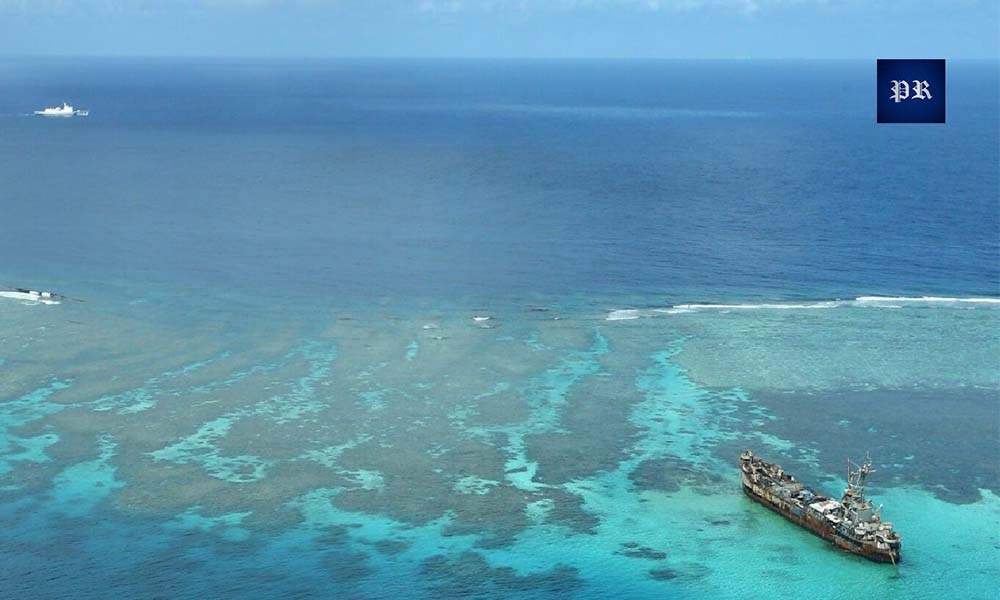
Rather than tamping down tensions, the Scarborough clash only hardened them. In the weeks following the collision, Beijing doubled down on its gray-zone strategy, flooding Second Thomas Shoal with a swarm of coast guard, naval, and militia ships. This was no routine patrol, it was a calculated move to remind Manila that humiliation at Scarborough would not force China to retreat. Filipino marines stationed aboard the rusting BRP Sierra Madre suddenly found themselves facing unprecedented pressure, their supply missions harassed at every turn. Instead of a deterrent, the Scarborough collision became fuel for an escalation cycle, where every push from one side demands a sharper counter from the other, inching the region toward a perilous brink. Each skirmish, each blockade, each ramming attempt brings with it the risk that an accident could spiral into a conflict no one intended.
On the legal and diplomatic battlefield, however, the Philippines found an unexpected advantage. The collision underscored what the 2016 Hague tribunal ruling had already declared: Scarborough Shoal lies inside the Philippine Exclusive Economic Zone, and China’s sweeping “nine-dash line” has no standing in international law. By filming and publicizing the collision, Manila effectively weaponized the tribunal’s decision. The footage was not just evidence of reckless behavior, it was proof that China is willing to defy the very rules of the sea. Every time a Chinese ship fires a water cannon, shines a military-grade laser, or even collides with its own counterpart in reckless maneuvers, it becomes easier for allies and partners to condemn Beijing’s actions as violations of the rules-based order. In this sense, Scarborough is no longer just a reef, it has become a courtroom, a stage, and a symbol.
And the diplomatic tide is widening. In the wake of the August 2025 incident, Australia finalized a new defense pact with Manila, committing to expanded joint patrols, shared training, and logistical cooperation. Japan, already one of the strongest backers of the Philippine Coast Guard, announced it would step up military exercises in Philippine waters and provide greater technical and equipment support. Even beyond traditional allies, countries like Canada, France, and the UK voiced sharper condemnations of Beijing’s conduct. What was once a lonely battle between a small archipelagic nation and a superpower is now coalescing into a coalition of resistance. Scarborough Shoal, once just a fishing ground, has transformed into a rallying point for nations determined to resist coercion and preserve freedom of navigation.
For Beijing, the irony is cutting. Each aggressive maneuver it launches against the Philippines may win a moment of control at sea, but it simultaneously deepens Manila’s alliances and strengthens the very coalition China has long sought to prevent. The more it pushes at Scarborough, the more it ties the Philippines into the web of regional security partnerships, making the shoal not just a site of contestation, but a flashpoint where Beijing’s strategy risks backfiring. Scarborough, in short, has become the reef that builds alliances.
Conclusion: The Path Forward
The August 2025 standoff at Scarborough Shoal, ending in the surreal collision of two Chinese ships, is more than a headline, it’s a snapshot of the broader South China Sea struggle. On one side is the Philippines, leveraging its strategy of documenting and publicizing every act of harassment, turning transparency into a weapon of diplomacy. On the other side is China, wielding its “gray-zone” tactics of intimidation and escalation, only to expose the recklessness and fragility of its own approach. The incident has proven that Manila’s cameras and civilian-led missions can pierce Beijing’s narrative and put the spotlight of international law firmly back on China’s actions.
Looking ahead, the trajectory is dangerous but predictable. China, humiliated by the Scarborough collision, will almost certainly seek to reassert dominance, whether by deploying larger forces, swarming other contested shoals, or expanding its maritime militia. The Philippines, emboldened by both domestic resolve and allied support, will push forward with its assertive, civilian-backed resupply missions, refusing to yield even under pressure. And caught between these strategies is the constant risk that another miscalculation, a ramming, a collision, or even a live-fire exchange, could spark a wider confrontation that drags in regional and global powers. The spiral of escalation is already visible.
In the end, the South China Sea has become a high-stakes game of chicken, played not only for reefs and fishing grounds but for the credibility of the international system itself. The world is watching: will China’s disregard for international law and pursuit of sweeping, ahistorical claims be met with a sustained and unified pushback? Or will the region continue to live under the shadow of coercion, where peace is held hostage by a great power’s ambition? The answer will shape not just the fate of the Philippines or the waters of Scarborough, but the stability of the entire Indo-Pacific and perhaps the future of global order itself.