The South China Sea, long a hotbed of geopolitical tension, is now witnessing a dramatic shift in power. To understand why, we need to step back into the bigger picture of the dispute that has shaped our region for decades. And then, boom, the numbers hit you: a historic fleet expansion, the kind of transformation the Philippine Coast Guard has never seen before. So what does it mean today, in real terms, for our sovereignty, our fishermen, and our allies? Let’s bring it full circle: what began as a David versus Goliath struggle is evolving into something entirely new.
If you remember our last video on the tense Scarborough Shoal standoff, when Chinese coast guard ships boxed in our vessels, then you know how high the stakes are. But this time, the story takes a different turn. The Philippine Coast Guard isn’t just holding the line anymore, it’s leveling up. Just last week, the BRP Teresa Magbanua intercepted a Chinese surveillance ship inside our own Exclusive Economic Zone, a bold move that made global headlines. And here’s the real game-changer: Manila is rolling out its biggest modernization in history. We’re talking forty brand-new OCEA fast patrol boats from France, the single largest purchase ever for the PCG. These 35-meter speed demons will patrol every corner of our seas and be first on scene when gray-zone tactics flare up. Add to that Japan’s ongoing support with powerful Multi-Role Response Vessels like the BRP Melchora Aquino, and suddenly the PCG isn’t just reacting, it’s projecting strength with confidence. And the future? Even bigger. Talks are underway for Indian-built offshore patrol vessels, massive, 3,000-ton ships with AI-driven systems, drone hangars, electronic warfare suites, and helicopter decks. These are vessels designed to stay at sea for weeks, not days. For Filipino fishermen, that means safer waters. For allies like the U.S. and Japan, it means a stronger partner in defending the Indo-Pacific. And for Beijing, it means one thing: the Philippines is no longer the underdog in the West Philippine Sea. Imagine the pride of watching our flag fly high on ships that can finally go toe-to-toe with China’s so-called monster coast guard vessels. This is the dawn of a new era for the PCG, and it’s only just beginning. The Philippines is stepping up.
Background: History of the South China Sea Dispute and the PCG’s Role
To really understand why this fleet expansion is such a big deal, we need to step back and look at the bigger picture of the South China Sea dispute. For decades, Beijing has clung to its so-called Nine-Dash Line, a sweeping claim that covers almost the entire South China Sea, overlapping with the Philippines’ Exclusive Economic Zone. In 2016, an international arbitral tribunal in The Hague ruled that China’s claims were baseless, completely invalid under international law. But here’s the kicker: Beijing flatly refused to recognize the decision, choosing instead to double down on its aggressive presence. And for years, our own Philippine Coast Guard wasn’t really built for this kind of fight. The PCG was more about law enforcement, search and rescue, and humanitarian missions, brave, yes, but chronically underfunded, under-equipped, and simply not designed for sovereignty patrols against one of the world’s biggest maritime forces.
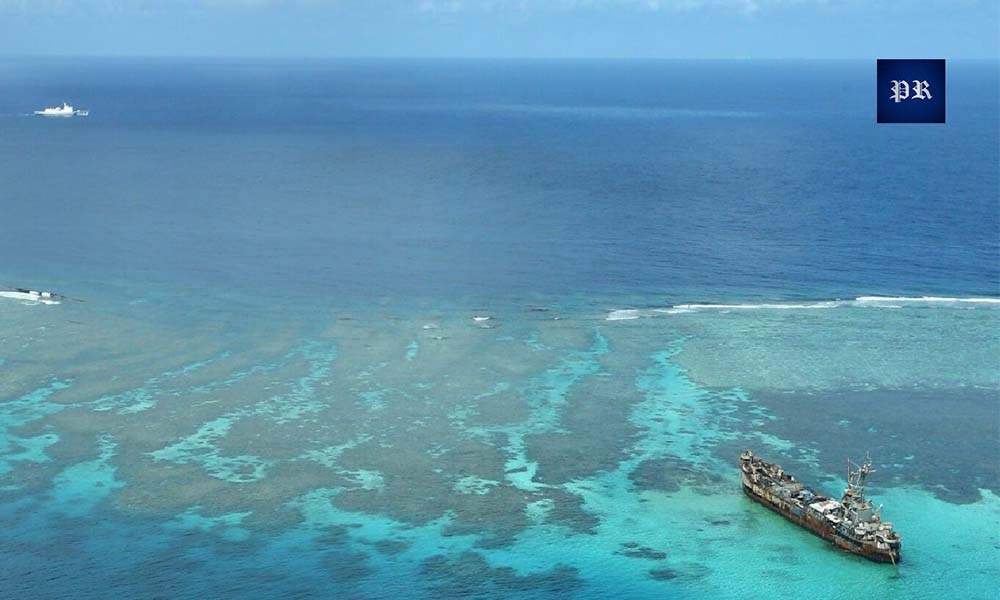
That all changed as China’s tactics got darker, more aggressive, and undeniably more dangerous. The days of quiet patrols and silent shadowing gave way to open harassment. Remember the infamous “water cannon” incidents? Enormous China Coast Guard vessels—so large they dwarfed our ships, blasting high-pressure streams at Filipino vessels, as if trying to physically erase us from our own waters. These weren’t random acts; they were carefully calculated shows of power, meant to intimidate and humiliate, meant to stop us from resupplying our brave marines stationed on the rusty but defiant BRP Sierra Madre at Second Thomas Shoal. Each blast wasn’t just water, it was a message: ‘You don’t belong here.’ But the PCG kept coming back, battered but unbowed.
Then came the Scarborough Shoal standoff, a saga etched into the memory of every Filipino fisherman. For generations, Scarborough was their traditional fishing ground, a lifeline for families and communities. Yet China’s vessels built a blockade, harassing and driving them out, ignoring not just the 2016 international tribunal ruling but also the basic decency of allowing ordinary people to earn their livelihood. Families on the shore watched fathers and brothers return with empty nets, not because the sea had nothing to give, but because foreign ships told them they had no right to cast their lines. That standoff wasn’t just about territory, it was about dignity, about survival.
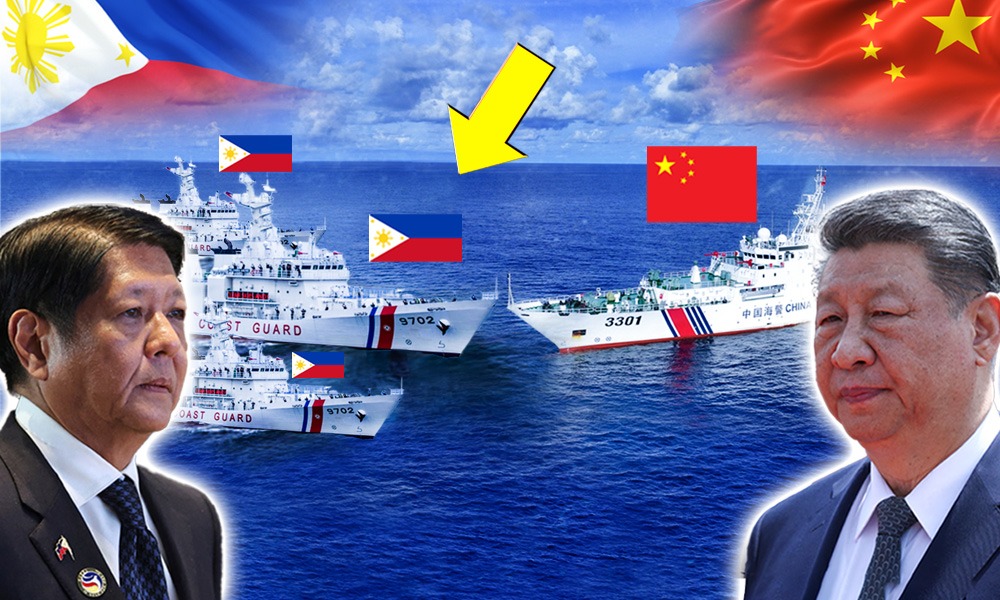
And then came August 2025, a moment that will be remembered for years. Picture this: a chaotic pursuit near Scarborough Shoal. A Chinese navy destroyer, bristling with power, joined forces with a massive China Coast Guard ship to corner the BRP Suluan, one of our smaller patrol vessels. It looked like David against two Goliaths but something completely unexpected happened. In their desperation to intimidate and overwhelm, the Chinese ships collided with each other. Yes, you heard that right, a navy destroyer and a coast guard vessel, crashing together in front of the whole world. And there, in the middle of it all, the tiny BRP Suluan slipped away unharmed. The footage went viral, shared, replayed, analyzed. Experts called it a major ‘loss of face’ for Beijing, a humiliation of their own making. But for Filipinos, it was something far greater: a moment of pride. Proof that even when outnumbered, outgunned, and out-sized, our Coast Guard has the courage, skill, and determination to stand its ground and defend our waters.
The PCG Fleet Expansion: Facts, Figures, and New Capabilities
Now let’s get into the numbers, because the scale of this transformation is jaw-dropping. The Philippine Coast Guard is set to acquire 49 new ships by 2028, yes, 49. Leading the charge are 40 brand-new fast patrol craft, funded by a ₱25.8 billion loan from France. These 35-meter speedsters will give the PCG the ability to swarm contested areas, respond faster to incidents, and cover our 36,000-kilometer coastline like never before. And that’s just the start. Japan, our long-time maritime partner, is stepping in with another massive boost: five brand-new 97-meter Multi-Role Response Vessels worth $413 million. These aren’t just bigger ships; they come loaded with advanced sensors, modern surveillance systems, and enhanced endurance, real game-changers for patrolling contested waters. To put it simply, these ships don’t just patrol, they watch, they listen, and they project presence.
And this expansion isn’t happening in isolation. Japan has been the backbone of the PCG for years, supplying ten 44-meter and two 97-meter vessels, so this new deal cements a trusted alliance. France’s loan, meanwhile, marks a new chapter, described by many as the “game changer” that finally lets the Philippines scale up its fleet at speed. And let’s not forget our allies across the Pacific. The United States and Australia aren’t just cheering from the sidelines, they’re providing critical training, logistics, and even funds for maintenance and repairs. Together, this network of support shows that defending the West Philippine Sea is no longer Manila’s fight alone, it’s part of a much bigger Indo-Pacific strategy to counter Beijing’s influence.
U.S. Deployed Two Warships in Scarborough Shoal After Destructive Collision of Chinese Vessels
As Admiral Ronnie Gil L. Gavan, the PCG Commandant, proudly declared: “This is a game changer for us because this will enable the coast guard to hold the position as the youngest fleet in Southeast Asia. In five years’ time, we foresee that we will become the most respected and the most able coast guard.” Strong words from a leader who knows his men are on the front lines of history. Raymond M. Powell, a fellow at Stanford’s Gordian Knot Center, put it even more bluntly: “The decision by international partners like France and Japan to assist the Philippines was motivated by the compelling visual evidence their governments saw after Manila showed it to the world.” In other words, when the world saw the footage of Chinese ships blasting water cannons and colliding with our tiny patrol boats, it wasn’t just outrage, it was a wake-up call. And now, that wake-up call is turning into steel, engines, and firepower for the Philippine Coast Guard.
The Impact: How This Affects the Present and Future
So what does all of this mean, right now, in the present day? First, deterrence. With these new ships, the Philippine Coast Guard can finally practice what experts call “deterrence by denial.” That means instead of being pushed around, swarmed, or boxed in, our vessels can now hold the line and make it much harder for Chinese ships to simply muscle their way through our waters. The sheer size, speed, and number of patrol craft we’re acquiring shifts the equation. Imagine a PCG squadron arriving fast, documenting everything, and standing firm, the kind of presence that makes Beijing think twice before deploying another water cannon. Second, this fleet expansion supercharges our “assertive transparency campaign.” You’ve seen those viral videos, Chinese water cannons pounding supply boats, Chinese ships dangerously cutting across the bow of our Coast Guard. Those clips didn’t just stir anger; they changed policy. By shining a global spotlight on China’s gray-zone tactics, Manila brought international partners to the table. With more advanced vessels and better tech, the PCG can now document and broadcast these acts with even greater credibility and reach. Third, though, comes the risk. The stronger the PCG becomes, the more often it will directly confront Chinese ships and with China deploying not just coast guard but naval destroyers in gray-zone operations, the potential for miscalculation rises. Already, Chinese state media like the Global Times accuses the Philippines of “deliberately” staging incidents to gain sympathy. That narrative sets the stage for Beijing to justify even harsher tactics in the future.
But the real story isn’t just about today, it’s about where this leads. First, the Philippines is building a model that others may follow. Vietnam, Malaysia, and even Indonesia are watching closely. For years, these countries faced the same bullying from Chinese vessels but lacked the resources to resist. Now they see Manila turning international outrage into ships, alliances, and a credible maritime strategy. That could inspire a broader shift across Southeast Asia, one that forces Beijing to deal with not just one assertive coast guard, but a coalition of them. Second, think about Taiwan. In the event of a crisis, the Philippines’ geography makes it one of the most important locations for U.S. forces. A modernized PCG doesn’t just protect fishermen, it becomes part of a wider U.S.-Philippines security architecture, one that complicates China’s military planning across the region. Third, and perhaps most important, this is about redefining the gray zone itself. For years, China has owned this space, deploying “white hull” coast guard ships and “blue hull” fishing militias to intimidate without triggering open war. But now, the Philippines is answering gray zone with gray zone. Instead of David always being dwarfed by Goliath, the PCG is building a fleet that can meet China on something closer to equal terms. That sets the stage for a new phase of tactical cat-and-mouse, one where China no longer has uncontested dominance. And finally, there’s the power of narrative. For too long, the Philippines was painted as the helpless victim in the South China Sea drama, outgunned, ignored, pleading for justice. But that story is changing. Each new patrol boat, each new alliance, each new video released to the world says something different: the Philippines is no longer begging, it’s standing. It’s no longer isolated, it’s backed by a coalition of like-minded nations. And it’s no longer defined by loss, but by resolve. That shift in narrative may prove just as powerful as any new patrol vessel because once the world sees you as determined and capable, the pressure on your adversary grows, and the balance of power begins to tilt.
Why Malaysia Thinks Philippines is the Most Dangerous Country
Conclusion: From “David and Goliath” to a New Balance
So let’s bring this full circle. What started as a story of David and Goliath, the Philippines standing almost defenseless against China’s giant coast guard, has now become something entirely new. The PCG’s fleet expansion, born out of necessity and powered by international partnerships, is rewriting the rules in the South China Sea. Forty French fast patrol craft, five massive Japanese-built MRRVs, and the prospect of even larger offshore patrol vessels from India, all of it adds up to a fleet that is younger, faster, and more capable than ever before. And these ships aren’t just steel and engines; they are platforms for transparency, for deterrence, and for protecting the lives of our fishermen and sailors on the frontlines. They are already shifting the dynamics at sea, making it harder for China’s “gray zone” tactics to go unchallenged.
The message is clear: the Philippines will no longer be intimidated. This modernization effort signals to Beijing, to the region, and to the world that Manila is prepared to defend its sovereignty, not with words alone, but with ships, alliances, and resolve. And in doing so, the Philippines is reshaping the broader security landscape of the South China Sea. Our nation’s story is no longer about helplessness; it’s about determination. No longer about weakness; it’s about resilience.
And while no one expects a conventional naval war to erupt tomorrow, let’s be honest, the conflict in the South China Sea is entering a new phase. This is the era of the gray zone versus the gray zone, a complex struggle where presence, persistence, and perception matter as much as firepower. And here’s the takeaway for every Filipino watching: for the first time in a long time, our Coast Guard is not just surviving this fight, it’s starting to shape it. From David and Goliath, we are moving toward a new balance. And that balance could very well decide the future of the Indo-Pacific.