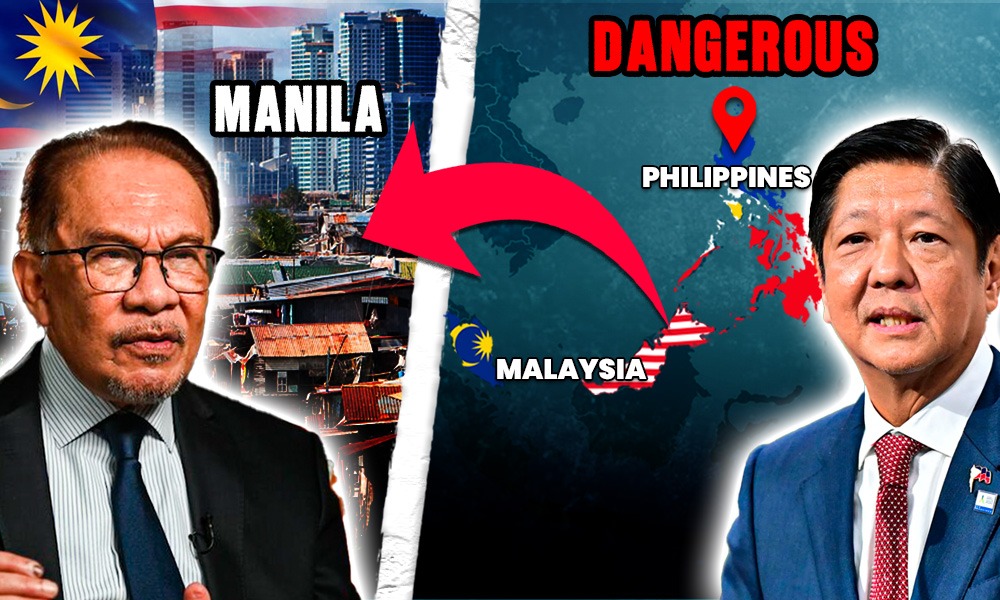
From Manila to LA, San Francisco to Davao, welcome back! Remember in our last video, we talked about how rural farming communities in the Philippines are fighting against land grabs and militarization, and how heartbreaking it was when another Lumad school was forced to close? Well, today’s story takes that same thread but cranks it up to a shocking new level. Because just as the Philippines is proudly hosting a big regional summit on International Humanitarian Law, basically a conference where officials stand on stage and talk about peace, rights, and justice, Malaysia, through the group PAN Asia Pacific, has dropped a bombshell: they’ve named the Philippines the most dangerous country in all of Asia for farmers, Indigenous peoples, and land activists.
Let that sink in. While our leaders pose for cameras and give speeches about protecting human rights, the numbers on the ground are telling a very different story. According to PANAP, in 2024 there were six land-related killings in the Philippines, claiming nine victims. On top of that, they documented ten cases of arrests and legal harassment involving forty-one people, and nine separate incidents of threats and physical assault that left eleven more victims living in fear. These aren’t abstract statistics, these are fathers, mothers, community leaders, and farmers who simply wanted to protect their land and livelihood.
One case that really cuts deep is that of Juan Sumilhig, a Maranao farmer and former political detainee, who was reportedly killed by soldiers from the Philippine Army’s 4th Infantry Battalion in San Jose. Imagine that: a man who should have been safeguarded under international humanitarian law became another casualty, his name added to a growing list of silenced voices. And yet here we are, listening to official speeches that paint the Philippines as a champion of human rights, while communities on the ground are left vulnerable, harassed, and grieving.
This is the regional irony Malaysia is pointing out. It’s not just about calling out the Philippines on the global stage, it’s about holding a mirror to the contradiction between polished rhetoric and brutal realities. And for us, whether you’re watching in Quezon City or New York, this hits close to home. Because these aren’t faceless numbers, they’re our kababayans, our relatives in Mindanao, our Indigenous brothers and sisters, our farmers who put food on the table. So today, we’re going to unpack why Malaysia and groups like PANAP are sounding the alarm, what it says about the Philippines’s credibility when it comes to human rights, and most importantly, why we can’t afford to ignore these stories. Stay tuned, because this is not just a headline, this is a wake-up call.
Malaysia’s Concern Over Human Rights in the Philippines
After we set the stage with that shocking irony, the Philippines hosting a regional human rights summit while being called out as Asia’s most dangerous place for farmers and Indigenous peoples, let’s dive deeper into why Malaysia is raising the alarm.
Through the Malaysia-based NGO PAN Asia Pacific, or PANAP, the numbers paint a disturbing picture of reality in the Philippines. In just 2024, six violent incidents tied to land conflicts left nine people dead. That statistic alone is chilling, but when you zoom out, it gets even more alarming: the Philippines now ranks second in the entire world for land defender killings, right behind Mexico. Imagine that, for a country that prides itself on democratic values, it is being counted among the deadliest nations for those who simply want to protect their homes and their land.
But killings are not the whole story. PANAP recorded 41 individuals who faced arrest or detention because of their role in land struggles. These are people dragged through the legal system, often on trumped-up charges, just because they dared to resist displacement or defend ancestral land. On top of that, another 11 victims were documented as targets of harassment, threats, or outright physical assault. Each one of those numbers represents a human being, a mother, a father, a young activist, whose life has been disrupted or destroyed.
And then there’s the story PANAP chose to highlight as a case study: Juan Sumilhig, an Indigenous Maranao farmer. He wasn’t just tilling the soil for his family’s survival, he was also a man who had already endured political detention in the past. According to reports, he was allegedly killed by soldiers from the Philippine Army’s 4th Infantry Battalion in San Jose. Think about that: someone who should have been protected under international humanitarian law instead became another casualty of militarization. His death isn’t just one statistic in PANAP’s report; it’s a symbol of how vulnerable rural and Indigenous communities are when caught between state forces and land disputes.
Malaysia’s concern here isn’t only about counting the dead and the detained, it’s about exposing the contradictions. PANAP’s Deputy Director, Arnold Padilla, didn’t mince words. He warned that the Philippines cannot claim to be a regional human rights leader while allowing these abuses to continue. For him, the hypocrisy is glaring: on one side, government officials host international conferences on peace and law, but on the other, farmers and land defenders are red-tagged, militarized, and criminalized at home.
And this is where Malaysia’s messaging cuts deep. They are framing the Philippines not as a safe place for dialogue and rights, but as a danger zone, a country where standing up for your land can put a literal target on your back. For PANAP and its supporters, the Philippines has become the cautionary tale of how official rhetoric can mask a darker reality, one where rural communities live with fear every day.
Malaysia–Philippines Relations in the Shadow of Rights Abuses
When we talk about Malaysia and the Philippines, we’re not just talking about two neighbors separated by the Sulu Sea, we’re talking about countries bound by history, culture, and sometimes conflict. Both nations carry the scars of colonial legacies, with Indigenous and Muslim communities who have long fought for autonomy and recognition. And of course, there’s the lingering tension over Sabah, a land claim that has often flared up and colored diplomatic ties. Yet despite these disputes, Malaysia has also played a key role as a peace partner, most notably in facilitating the Moro peace talks that brought some hope for Mindanao. In other words, Malaysia has walked a fine line: sometimes standing as a brother in dialogue, sometimes standing as a wary neighbor watching instability spill over its borders.
But here’s where human rights abuses inside the Philippines complicate everything. Malaysia isn’t just looking at these killings of farmers and Indigenous leaders as isolated tragedies. They see them as destabilizing factors that ripple outwards, fueling unrest in Mindanao, threatening to spill across the sea, and stirring unease in places like Sabah. From Malaysia’s perspective, every assassination of a land defender, every militarized crackdown, isn’t just the Philippines’ internal problem, it’s a regional security concern.
And this is where bilateral trust begins to fray. Malaysia wants stability along its border, but when it sees persistent violence in the rural Philippines, that trust takes a hit. Cross-border security has already been tested before, with insurgent groups spilling over into Sabah, sparking deadly standoffs and displacement. Add to that the red-tagging and militarization of Indigenous communities in Mindanao, and Malaysia fears that instability could once again seep across the frontier.
There’s also the ASEAN dimension. Malaysia, like the Philippines, wants to be seen as a credible advocate of humanitarian values on the regional stage. But when Kuala Lumpur highlights the Philippines’ worsening human rights record, it’s essentially saying: “How can you claim leadership in ASEAN human rights initiatives when your own farmers, your own Lumad, your own activists aren’t safe at home?” That kind of messaging adds another layer of pressure, not just government-to-government, but reputation-to-reputation within ASEAN itself.
So in the shadow of rights abuses, Malaysia–Philippines relations remain complicated. They are tied together by history, by shared struggles, and by geographic fate. But every new case of violence against Indigenous peoples and land defenders doesn’t just hurt communities in the Philippines, it strains trust with Malaysia, raises security alarms across borders, and chips away at the credibility both countries want to project in Southeast Asia.
The Philippines’ Contradictory Position
Now here’s where the contradiction really shows itself. Under President Ferdinand Marcos Jr., the Philippines has been working hard to polish its image as a regional champion of human rights. Hosting international conferences on International Humanitarian Law (IHL) is part of that strategy, it’s meant to signal to ASEAN and the world that the country is serious about peace, about law, and about protecting vulnerable communities. On paper, that sounds powerful. But on the ground? Malaysia, through groups like PANAP, is saying something very different.
Because while the speeches are being made in hotel conference halls, rural communities are living through a much harsher reality, bombings, extrajudicial killings, red-tagging, and harassment. These aren’t isolated cases; they’ve become a pattern. Malaysia points to this gap between glossy rhetoric and brutal reality and says: this isn’t just a domestic issue, it’s a regional concern. For them, it’s not only about human rights, it’s about credibility.
And that credibility matters deeply in ASEAN. If the Philippines is projecting itself as a leader in humanitarian law while its own Indigenous peoples and farmers are being silenced and killed, it risks dragging down ASEAN’s entire standing in global human rights discussions. After all, how can the bloc push for humanitarian credibility on the world stage if one of its key members is being called out as Asia’s deadliest country for land defenders?
It also complicates regional initiatives that Malaysia, the Philippines, and other ASEAN states often work on together, especially when it comes to indigenous rights, rural advocacy, and cross-border peacebuilding. For Malaysia, the contradiction is not just ironic; it’s dangerous. Because if the Philippines’ message is seen as hollow, it weakens ASEAN’s collective voice and undermines cooperation on the very issues these conferences are supposed to strengthen.
So while Marcos Jr.’s government is eager to be seen as a protector of human rights in Asia, Malaysia is reminding the world of a sobering truth: without real changes on the ground, all those speeches and conferences risk becoming nothing more than political theater.
Malaysia’s Regional Implications and Motives
When Malaysia, through PANAP, shines a spotlight on the Philippines’ human rights abuses, it’s not just about calling out a neighbor, it’s also about positioning itself in the region. By exposing what’s happening on the ground in Mindanao and across rural communities, Malaysia is quietly asserting its own leadership in human rights advocacy within Asia. In many ways, it’s saying: “If the Philippines claims to be a champion of humanitarian law, then why are its Indigenous peoples, farmers, and activists paying with their lives?” That narrative not only weakens the Philippines’ credibility, it creates an opening for Malaysia to step into the role of the region’s more consistent human rights voice.
But Malaysia’s motives aren’t just about prestige, they’re also about pressure. By keeping the Philippines under scrutiny, Malaysia hopes to push the government to deal with the root causes of rural insurgency. Because let’s be honest: the conflict in Mindanao isn’t just about ideology, it’s deeply tied to land struggles, Indigenous rights, and the lack of protection for communities under threat. From Malaysia’s perspective, if these issues aren’t resolved, instability in the southern Philippines will continue to spill across borders. Every case of displacement, every act of militarization, risks becoming a cross-border problem for Sabah and beyond. So this isn’t just moral outrage, it’s also a strategic push to get Manila to clean its own house for the sake of regional stability.
And then there’s the peace dimension. Malaysia has long been a mediator in the Mindanao peace process, hosting and facilitating talks between the Philippine government and Moro rebel groups. That role has earned Malaysia credibility as a neutral broker. But land rights and Indigenous struggles are at the heart of that conflict, so when Malaysia highlights abuses in the Philippines, it’s also reinforcing its own relevance as a mediator. It’s essentially saying: “We’re not just bystanders in this story; we’ve been part of building peace in Mindanao, and we’ll keep holding our neighbor accountable so that peace has a fighting chance.”
So when you connect the dots, Malaysia’s exposure of Philippine abuses works on multiple levels. It asserts leadership, it applies pressure for real reforms, and it strengthens its own hand as a peace broker in a conflict that affects the entire region. For Malaysia, this isn’t just about criticizing the Philippines, it’s about shaping the regional narrative on human rights, stability, and peace.
Trump Sparks Global Trade War with Sweeping Tariffs on Canada, China, and Mexico
Conclusion: A Regional Mirror
And so, when we step back and look at the bigger picture, the Philippines becomes more than just a country struggling with its own land conflicts, it becomes a regional mirror. For Malaysia, it’s a cautionary tale of what happens when land struggles are left unresolved: they turn deadly, they destabilize communities, and sooner or later, they invite international scrutiny.
Think about the irony. On August 17, 2025, as the Philippines proudly hosted a regional human rights conference on International Humanitarian Law, PANAP released its findings branding the country as the deadliest in Asia for farmers, Indigenous peoples, and land activists. Six killings in 2024, nine victims in total. Ten cases of arrests and detentions involving 41 people. Nine incidents of threats, harassment, and physical assault with 11 more victims. And let’s not forget the global ranking—second only to Mexico in land defender killings. These are not just statistics; they are lives lost, families broken, and communities terrorized.
Arnold Padilla, PANAP’s deputy director, put it bluntly: while the Marcos Jr. administration is busy projecting itself as a champion of human rights by hosting conferences, the reality on the ground tells a much darker story. Farmers, farmworkers, Indigenous peoples, and their advocates are being red-tagged, bombed, harassed, and even killed. Padilla warned that international humanitarian law clearly prohibits the bombings, indiscriminate gunfire, and civilian killings that the Philippine military has been accused of carrying out. Yet the red-tagging of activists blurs the line between civilian and combatant, making it easier to justify abuses in the name of counterinsurgency.
For Malaysia, this contradiction is more than just hypocrisy, it’s a regional liability. It undermines ASEAN’s credibility when the Philippines positions itself as a voice for human rights abroad but fails to protect its own people at home. It complicates joint initiatives on Indigenous and rural rights, and it erodes the trust needed for effective regional cooperation.
At the heart of it, this is about image and reality. The image of the Philippines as a democratic, rights-respecting nation versus the reality of farmers and Indigenous leaders living in fear of militarization and persecution. Until those two are reconciled, the Philippines will remain, in Malaysia’s eyes, not a model of leadership, but a warning. A reminder that without justice at home, human rights rhetoric abroad rings hollow. And that’s the hard truth: the Philippines today is being branded not as Asia’s human rights champion, but as Asia’s most dangerous country for those who dare to defend land, life, and dignity.