You could hear the thunder before you saw it. Locals near Subic Bay looked up in shock as a US Air Force C-17 Globemaster III, one of the world’s largest military aircraft, came roaring out of the sky and landed at the former US naval base without any public announcement. It wasn’t part of any large-scale drill, no parade, no ceremony. Just a sudden, deliberate, and powerful arrival, and it sent shockwaves not only through the Philippines but straight into the halls of power in Beijing. Was this just a routine stop? Or a bold message in broad daylight?
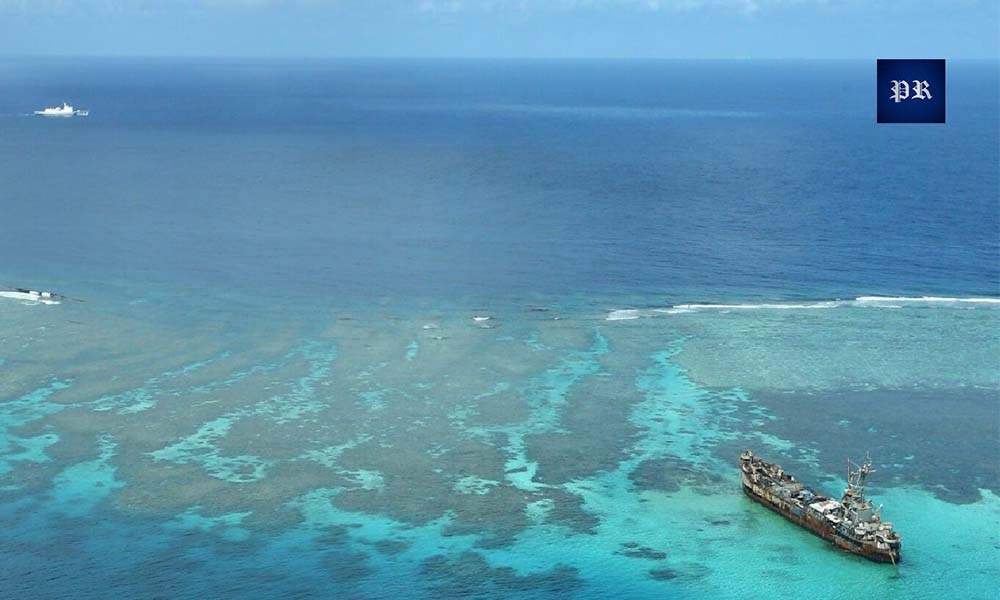
The South China Sea, only a few nautical miles west of Subic, isn’t just water. It’s the most hotly contested maritime zone in the world, where $3.37 trillion worth of global trade flows every year, yes, every single year. China claims almost all of it, through its so-called “Nine-Dash Line”, but guess what? That claim’s been ruled illegal under international law, and both the US and the Philippines have been pushing back harder than ever. This sudden C-17 landing didn’t happen in a vacuum. It happened at a flashpoint and China instantly took notice.
Beijing reportedly placed its South China Sea assets on heightened alert following the incident, according to military sources cited in open-source intelligence channels. Satellite tracking later showed increased drone flights and PLAN (People’s Liberation Army Navy) movements near Scarborough Shoal just 48 hours after the landing. A coincidence? Hardly. Especially since this comes just months after the US and the Philippines expanded their Enhanced Defense Cooperation Agreement (EDCA), giving the US access to 9 key military bases across the country, including sites strategically close to Taiwan and the contested Spratly Islands.
The C-17 isn’t just any plane. It’s a military workhorse capable of delivering tanks, missile systems, and rapid deployment troops. When that aircraft lands, it signals logistics, movement, readiness, not tourism. It can unload in minutes and take off again, fully loaded, in a tight combat zone. The fact that it landed in Subic, a base that once housed tens of thousands of US troops during the Cold War, isn’t just symbolic. It’s strategic muscle memory being reactivated.
Filipinos on the ground had mixed reactions. Some were excited, even proud: “Parang balik na ang tropa!” (“Looks like the troops are back!”) said one local tricycle driver, grinning. Others were wary: “Ayoko ng gulo, pero gusto ko na may kasama tayo.” (“I don’t want war, but I want us to have allies.”) This emotional split runs deep in the Philippines, a country torn between geopolitical pressure and a rising sense of sovereignty and nationalism. But one thing is clear: when American boots touch Philippine soil, the world watches, especially Beijing.
And China’s not just watching, it’s reacting. Recent reports from the Chinese military show increased surveillance flights, warship deployments, and live-fire exercises in the Paracels and Spratlys. State media even released a fiery editorial, warning against “provocative actions from foreign powers using the Philippines as a pawn.” Strong words, but they echo China’s growing anxiety about deepening US-Philippines ties. And make no mistake, that C-17 landing was a message written in steel, fuel, and flight hours.
So, was the Subic Bay C-17 touchdown a random operation? A supply run? Possibly. But in geopolitics, nothing that big happens without meaning. Every movement, especially in contested territory, is interpreted as intention. And when a globally strategic aircraft lands on a historically symbolic base in a region that’s already a powder keg, people take notice. The message is loud and clear: The Philippines is no longer alone. And the US isn’t stepping back, it’s stepping in. Stay tuned for more updates on this unfolding situation because in the Indo-Pacific, even a single landing can change the game.
The “Shock Landing” Incident: A Symbolic Act of Presence
When a US Air Force C-17 Globemaster III touched down at Subic Bay, it wasn’t just about cargo. It was a message, loud, clear, and unmistakable: the U.S. is back in the neighborhood. And not just for sightseeing. The C-17, often called the “beast of burden” in military aviation, is no ordinary aircraft. It’s a flying fortress of logistics. Capable of carrying up to 85 tons of troops, tanks, armored vehicles, or precision equipment, the C-17 is designed for rapid deployment into conflict zones, humanitarian crises, or forward bases, often where other aircraft simply can’t go. Its impressive ability to land on short, rough airstrips makes it the perfect tool for high-stakes missions in tense regions like the South China Sea.
But this isn’t the first time the C-17 has made headlines. Back in 2008, it delivered over 190,000 pounds of relief supplies to China following a devastating earthquake, a stark contrast to today’s scenario where the same aircraft type is now a sign of deterrence, not disaster relief. From helping victims to warning adversaries, it shows just how powerful and flexible this aircraft is, and why its presence in Subic has tongues wagging and radars lighting up in Beijing. This isn’t just about a plane landing, it’s about where it landed, when it landed, and what it means for the region’s most dangerous flashpoint.
Let’s talk about Subic Bay, not just any port, but a place soaked in military history. With its deep natural harbor and prime location near the South China Sea, Subic was once the largest U.S. naval base in Asia, and second only to Pearl Harbor globally before its closure in 1992. From World War II to the Korean and Vietnam Wars, Subic Bay served as a vital launchpad for American military power across the Pacific. And now, in 2025, history is coming full circle. Subic is rising once again, not as a formal U.S. base, but as a critical rotational and logistics hub under the Enhanced Defense Cooperation Agreement (EDCA) between the U.S. and the Philippines.
Under EDCA, American troops and equipment rotate in and out of key Philippine bases, not permanently, but consistently enough to keep a strategic foothold. And Subic’s recent activity, especially the arrival of a heavy C-17, is a prime example of that resurgence. It’s no coincidence. Subic offers quick access to Scarborough Shoal, the Spratlys, and even Taiwan’s southern coast, all areas where tensions are climbing fast. Every landing here is calculated, and the presence of a C-17 means things are being moved, planned, and prepared. If you’re in Beijing and you see a C-17 land in Subic, you’re not thinking about logistics, You’re thinking: ‘What are they bringing? And who’s next?’
Now, let’s clarify the term “shock landing.” Was this a mechanical emergency or crash? No. But the “shock” wasn’t about how it landed, it was about what it symbolized. This wasn’t a pre-announced drill, nor a routine training flight with full media coverage. It was sudden, sharp, and symbolic. The context matters: The Philippines and the U.S. are currently running Balikatan 2025, their largest joint military exercise to date, involving thousands of U.S. and Filipino troops, F-35 stealth fighters, warships, tanks, drones, and heavy-lift aircraft, including the C-17. This massive exercise is a display of force and friendship, a reminder that Manila and Washington are locked in step, shoulder to shoulder.
But that’s not all. In March 2023, a C-17 was also spotted delivering oil-spill response equipment to the Philippines, proof that these aircraft are active in both crisis support and combat readiness. These landings may not always make headlines, but they’re frequent, deliberate, and loaded with geopolitical consequences. For many in the region, it’s not the C-17’s engines that are loud, it’s the signal it sends to anyone watching. To some, it’s just a plane. To China? It’s a loud knock on the South China Sea’s front door.
And that knock has definitely been heard. Chinese state media issued fresh warnings, calling U.S. military movements in the Philippines “provocative” and a threat to “regional stability.” Beijing has since increased PLA Navy patrols, activated early-warning radar systems, and launched combat readiness drills around the Paracels and Spratlys. The tension is no longer creeping, it’s sprinting. And every U.S. aircraft that lands in the Philippines, especially in strategic locations like Subic, adds fuel to that fire.
China’s “High Alert” and Assertive Counter-Strategy
To the average viewer, the landing of a single American plane in the Philippines might seem routine. But to Beijing, it’s far from normal. In fact, every C-17 landing, every joint drill, every U.S. flag flown beside the Filipino one is seen as a direct threat to China’s claim over the South China Sea. It’s no longer about freedom of navigation, it’s about control, and China believes that the Philippines, by deepening ties with Washington, is challenging that control head-on.
And they’re not quiet about it. China has issued seven formal diplomatic protests this year alone, all aimed at blocking U.S. military involvement in the Philippines. Even joint patrols with India were enough to trigger a response from the PLA’s Southern Theatre Command, which placed its forces on “high alert” just days after those drills. China’s state media went even further, accusing Manila of “catering to extraterritorial forces to stir up chaos” in the region, a clear jab at Washington. When China says ‘high alert,’ they don’t just mean words, they mean warships, warplanes, and warning shots.
So what does “high alert” look like from China? A massive, growing military footprint. Right now, China operates an estimated 3,200 hectares of militarized land across the South China Sea, land that didn’t even exist two decades ago. These were once coral reefs. Now? They’re military fortresses. Runways stretch across the horizon. There are 72+ reinforced fighter jet hangars, missile batteries pointed seaward, and deep harbors capable of housing entire fleets of warships.
Satellite imagery from just May 2025 confirmed something even more concerning: two nuclear-capable H-6K bombers parked on Woody Island, deep in the Paracel chain. That’s not defense, that’s power projection. These aircraft have the range to strike anywhere in Southeast Asia, and their presence sends a chilling message: China is ready to go beyond surveillance, it’s preparing for dominance. From invisible islands to nuclear bombers, China’s red lines are no longer just on maps, they’re made of concrete, steel, and missiles.
And that assertiveness isn’t just in the skies. It’s increasingly felt on the water and Filipinos know this all too well. Over the last year, Chinese Coast Guard ships have physically rammed, blocked, and blasted Philippine vessels with high-powered water cannons. In some instances, military-grade lasers were used to temporarily blind Filipino sailors. These aren’t misunderstandings, they’re confrontations. Real ones.
Then came the “monster ship.” In January 2025, China deployed its 165-meter mega-ship, Vessel 5901, to Scarborough Shoal, just 120 nautical miles from Luzon. Locals call it a floating garrison, capable of dominating smaller ships through sheer size and advanced sensors. It’s a floating message: “We own this.”
What’s REALLY Behind China’s Aggressive Moves in the South China Sea?
Meanwhile, the Philippine Coast Guard recently intercepted a Chinese research vessel, Xiang Yang Hong 05, within our EEZ, off Guam. Why was it there? Officially: “marine research.” Unofficially: surveillance. Strategic ocean floor mapping. Resource scanning. It’s part of a broader information warfare campaign, using science as cover for military positioning.
And it doesn’t stop there. The PLA’s Southern Theater Command has also accused Philippine military aircraft, including C-208s and Nomad N-22s, of “illegally intruding” into Chinese-claimed airspace near the Spratlys (Nansha Qundao). China claims to have tracked, warned, and expelled them, but the Philippines rejects these accusations outright. Why? Because these flights were within the Philippines’ own exclusive economic zone, not China’s. China says it’s being provoked. But Filipinos ask: How can we ‘intrude’ into our own backyard?
The result of all this? A region on edge. Every movement by the U.S., even a single aircraft, leads to an aggressive Chinese counter-move. Every Filipino patrol becomes a gamble. And as both powers dig in, the South China Sea, once just a trade route, is now a battleground of pride, power, and presence.
Geopolitical Implications: A Widening Chasm Between East and West
The South China Sea isn’t just a body of water anymore, it’s a chessboard of global power, and each move, whether a landing, a patrol, or a protest, threatens to tip the board. Analysts across Asia and the West now agree: this region is the single most likely flashpoint for a modern war between superpowers. The fragile balance between peace and provocation is thinning, especially with recent U.S. and Philippine military maneuvers occurring in waters that China considers its own backyard. One wrong turn, one misread signal, and a clash could spiral into full-blown confrontation, especially near Taiwan or disputed islands like the Spratlys and Paracels. And while Southeast Asian nations crave peace, many are now walking a tightrope, trying to balance economic ties with China while relying on U.S. support for security. That balancing act is becoming harder by the day. We’re not just watching history happen, we’re standing in the middle of the battlefield before the first shot is fired.
At the heart of America’s playbook in this high-stakes game is something called “Integrated Deterrence.” It’s not just about having more ships or troops, it’s about building a web of firepower across the First Island Chain to hem in China’s naval and air reach. The recent C-17 landing at Subic Bay wasn’t an isolated event; it’s part of a larger strategy to roll out mobile missile platforms, such as HIMARS and the Typhon system, across allied territories like the Philippines, Japan, and Guam. As one defense analyst put it: “This growing network of mobile missile systems, distributed across allied territories, is key to a strategy aimed at boxing in China’s navy within the First Island Chain.” And the U.S. isn’t alone, it’s ramping up joint exercises with allies like Japan, Australia, and India, building an informal alliance to counterbalance China’s rise. It’s not just the U.S. and China anymore, the whole Indo-Pacific is choosing sides, quietly or boldly.
China sees all of this and it’s responding in full spectrum. Not just with ships and jets, but through a “multilayered” counter-strategy involving political pressure, economic initiatives, and massive military investment. Beijing’s recent moves, from expanded naval operations in the Indian Ocean to investments in ports across Oceania, show a nation determined to escape what it calls “strategic encirclement.” Behind the scenes, China is also accelerating military reforms, building long-range missile capabilities, cyber warfare divisions, and next-generation stealth aircraft, all designed to outpace or neutralize Western tech advantages. This isn’t just a game of catch-up. It’s a long-term game of dominance.
And what’s truly driving all of this? Resources. Beneath the waves of the South China Sea lie 11 billion barrels of proven oil reserves, 190 trillion cubic feet of natural gas, and one of the world’s most fertile fishing zones, a lifeline for millions across the Philippines, Vietnam, Malaysia, and beyond. Control over this region isn’t just about military power, it’s about economic survival and national sovereignty. For China, it’s about securing energy independence and projecting power across the Pacific. For Southeast Asian nations, it’s about not being pushed out of their own waters, where livelihoods and food supplies depend on continued access. It’s not just about flags on islands, it’s about oil, gas, food, and the future of Asia’s economy.
So as American planes land, Chinese ships patrol, and alliances form across the Indo-Pacific, the geopolitical fault lines are hardening. This isn’t just competition. It’s a widening chasm, one that risks swallowing regional peace if diplomacy fails. And at the very center of that chasm, standing right between two titans, is the Philippines.
Conclusion: Subic Bay – A Wake-Up Call to the World
The sudden touchdown of a US C-17 Globemaster III at Subic Bay may have looked like just another military maneuver but in truth, it was a symbolic thunderclap, echoing across the Indo-Pacific. This “shock landing” wasn’t just a show of force; it was a signal, a declaration that the U.S.-Philippines alliance is back in full swing, and that Washington is not backing down in the face of growing Chinese assertiveness. Beijing’s immediate military alert, fiery rhetoric, and aggressive maritime pushback make it clear: they saw it too, and they’re responding not with diplomacy, but with deployments. From warships to bombers, China’s counter-strategy is expanding, making the South China Sea feel more like a ticking time bomb than ever before.
This single moment, one aircraft landing on a historic base, has become part of a larger wave of reshaped alliances, defense agreements, and strategic deployments stretching across the Indo-Pacific. It’s not just about the Philippines anymore. It’s about a fundamental shift in regional power dynamics, where smaller nations are being pulled into the orbit of a growing rivalry between superpowers. And as both the U.S. and China dig in, the region becomes more militarized, more volatile, and more vulnerable to a dangerous miscalculation.What started with one plane could end with a flash unless the world listens before it’s too late.”
Looking ahead, the future of this standoff hangs in the balance. Will the U.S.’s strategy of deterrence prevent escalation or provoke more tension? Will China double down on its territorial claims, or step back in favor of diplomacy? One thing is certain: the South China Sea has become ground zero for global power competition, and the Philippines stands right at the center of that storm. If there was ever a moment for world leaders to recommit to international law, open dialogue, and peaceful negotiation, it’s now. Because as Subic Bay just reminded us, a single landing can shake the world.