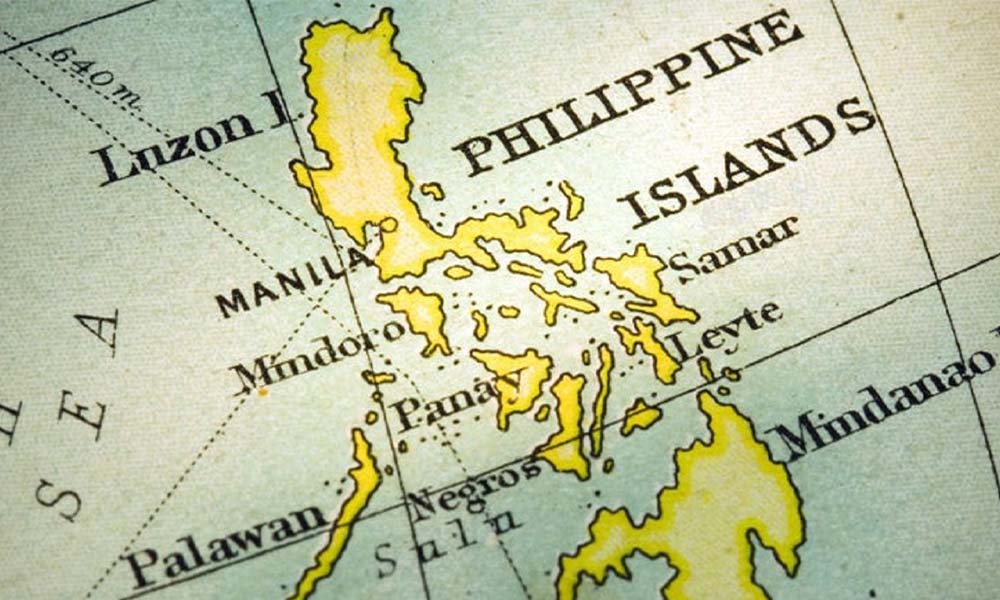
The South China Sea just witnessed one of its most dramatic and lopsided standoffs yet. In what’s now called the “22 Chinese Ships vs. Alone a Wolf” incident, a lone Philippine Navy vessel was surrounded and harassed by 22 Chinese ships near Scarborough Shoal, an area deep inside the Philippines’ Exclusive Economic Zone (EEZ). The Philippine government has answered the Scarborough Shoal showdown with firm resolve, swift diplomacy, and alliance-building. Manila filed fresh protests, rallied allies like the United States, Japan, and Australia, and vowed to keep defending its sovereign waters no matter how overwhelming the Chinese numbers.
The standoff reverberates far beyond a single flashpoint, because it unfolds in the shadow of China’s new “ten-dash line”, a sweeping map that claims almost the entire South China Sea and directly overlaps with the EEZs of several Southeast Asian nations. It also echoes the 2012 Scarborough Shoal crisis, when a much larger Chinese flotilla forced a small Philippine contingent to withdraw, setting a precedent for today’s confrontations and highlighting how asymmetric power can shape outcomes even without a shot fired.
The dispute now carries immediate human and economic costs, threatening Filipino fishermen’s livelihoods and exposing the country to wider risks like a potential 2.5 percent GDP loss if conflict disrupts vital shipping lanes. Ultimately, these incidents are a stark reminder of how volatile and high-stakes the South China Sea has become, pitting international law against raw power in one of the world’s most strategically important waterways.
The Philippines’ Reaction
The Philippine government has answered the Scarborough Shoal showdown with a combination of firm resolve, swift diplomacy, and alliance-building, signaling that it will defend its sovereignty even in the face of overwhelming Chinese numbers. At the political level, President Ferdinand Marcos Jr. delivered a nationally broadcast address that set the tone for Manila’s response. “The Philippines cannot yield. The Philippines cannot waver,” he declared, describing Chinese actions as direct challenges to the country’s sovereignty and food security. This speech was more than symbolism, it was a clear red line, affirming that Philippine naval and coast guard patrols will continue inside its Exclusive Economic Zone (EEZ) regardless of Chinese intimidation.
Backing these words with action, the Department of Foreign Affairs (DFA) immediately filed new diplomatic protests over the 22-ship harassment and related incidents. These join nearly 200 formal complaints lodged since mid-2022, ranging from harassment of Filipino fishermen to dangerous ramming and water-cannon attacks. Each protest is meticulously documented and publicly released, both to affirm the 2016 Hague arbitral ruling and to rally global support. Manila’s careful recordkeeping is intended to build an international legal case and ensure that Beijing’s actions are preserved in the diplomatic record.
The government also intensified international outreach. Within hours of the latest confrontation, the Philippines engaged partners such as the United States, Japan, and Australia, framing the incident as a test of the global rules-based order. Their responses were swift and pointed. U.S. Secretary of State Marco Rubio condemned China’s behavior as “yet another coercive move to advance sweeping territorial and maritime claims,” while Japanese and Australian officials expressed deep concern and support for Philippine sovereignty. These statements amplify diplomatic pressure on Beijing and signal to the Filipino public that they are not standing alone in defending their waters.
On the operational front, the Philippine Coast Guard (PCG) and Navy stepped up joint patrols and military coordination with allies. PCG ships have increased shadowing missions and escorts for Filipino fishermen, ensuring continued access to traditional fishing grounds. Meanwhile, joint naval and air exercises with U.S., Japanese, and Australian forces are becoming larger and more frequent, improving interoperability and demonstrating that any armed attack could draw an allied response.
Public sentiment inside the Philippines has also hardened. Fishermen’s associations, civic groups, and many lawmakers are demanding more assertive measures, including arming additional coast guard vessels and formalizing a rapid-response protocol for Chinese incursions. This groundswell of public support gives the government greater political space to invest in new patrol vessels, radar systems, and stronger defense ties.
Through strong public messaging, persistent legal protests, and deepening security cooperation, the Philippines is proving that strength and strategy can go hand in hand. By uniting domestic resolve with international solidarity, Manila is countering Chinese coercion while making clear that its EEZ and sovereign rights are not negotiable, and that future provocations will meet a coordinated, well-prepared response.
Broader Implications of the Incident
The Scarborough Shoal standoff is more than a dramatic episode at sea, it is a litmus test for the future of maritime order in the Indo-Pacific and beyond. Its importance lies not only in the number of ships involved but also in the larger strategic map that China is redrawing.
At the heart of the dispute is China’s new “ten-dash line,” unveiled in 2023, which added an extra dash east of Taiwan to its already controversial nine-dash map. This subtle cartographic change dramatically broadens Beijing’s maritime claims, effectively encompassing nearly the entire South China Sea. The claimed area overlaps the Exclusive Economic Zones (EEZs) of multiple nations, including the Philippines, Vietnam, Malaysia, and Brunei. Far from being a simple map update, the ten-dash line has become a political and operational blueprint for Chinese coast guard, navy, and maritime militia to justify more frequent and bolder incursions. The 22-ship blockade at Scarborough Shoal fits squarely into this pattern, illustrating how China is using mapmaking as pretext for action.
For the Philippines, the stakes are existential. Its EEZ, enshrined in the United Nations Convention on the Law of the Sea (UNCLOS) and upheld by the landmark 2016 Hague arbitral ruling, is directly challenged by the ten-dash line. International maritime lawyers emphasize that China’s expanded claim has no standing under international law. Yet China continues to act as though its map defines reality, dispatching coast guard cutters and the People’s Armed Forces Maritime Militia (PAFMM) to create “facts on the water.” By maintaining a constant presence, Beijing aims to normalize its control, making it increasingly difficult for other nations to reassert their rights even when those rights are legally indisputable.
This collision between international law and unilateral ambition transforms every encounter, whether it’s water-cannon attacks on Filipino fishing boats or the surrounding of a lone Philippine Navy vessel by 22 Chinese ships, into a larger struggle over global norms. Each time China enforces its ten-dash line, it not only tests the Philippines’ sovereignty but also challenges the credibility of UNCLOS itself, a cornerstone of modern maritime law that governs everything from resource rights to freedom of navigation.
In this sense, the Scarborough Shoal confrontation is far more than a regional spat. It is a high-stakes contest over how maritime disputes will be settled in the 21st century: by recognized legal frameworks respected by all nations, or by the raw application of power by those with the largest fleets. The outcome will shape not only the future of the South China Sea but also the global rules-based order, influencing how the world manages contested waters from the Arctic to the Mediterranean.
China to Turn Scarborough Shoal Into ‘Nature Reserve’? Philippines on Edge
The 2012 Scarborough Shoal Standoff: A Case Study in Asymmetric Conflict
The 2012 Scarborough Shoal standoff stands as a defining moment in the modern South China Sea dispute and a classic case of asymmetric maritime conflict. In April of that year, a handful of Philippine Navy and Coast Guard ships attempted to apprehend Chinese fishing vessels operating inside waters the Philippines regards as part of its Exclusive Economic Zone (EEZ). China responded with a much larger flotilla of maritime surveillance and fishing vessels, quickly encircling the shoal and blocking Philippine access.
For weeks, the situation remained tense. Chinese ships used blocking maneuvers and sheer numbers to keep Philippine vessels at bay, while both governments traded diplomatic protests. Despite international attention, the Philippines could not match China’s persistent presence. Eventually, after a typhoon provided a window for disengagement, Manila withdrew its ships. China, however, never left. From that point onward, Beijing maintained near-permanent control of Scarborough Shoal, often denying Filipino fishermen entry and effectively redrawing the status quo in its favor without a single exchange of fire.
The diplomatic and legal repercussions were profound. In 2013, seeking a peaceful and rules-based resolution, the Philippines filed a case against China with the Permanent Court of Arbitration (PCA) in The Hague. Manila argued that Beijing’s so-called “nine-dash line”, which claimed nearly the entire South China Sea, had no basis under the United Nations Convention on the Law of the Sea (UNCLOS).
In July 2016, the tribunal delivered a landmark ruling. It invalidated China’s historic rights claims and affirmed that Scarborough Shoal lies within the Philippines’ EEZ, giving Manila sovereign rights to fishing and resource exploitation. The decision was celebrated internationally as a victory for rules-based maritime order.
China’s reaction, however, revealed the limits of international law when confronted by hard power. Beijing flatly rejected the verdict as “null and void,” refused to participate in the arbitration, and continued to enforce its own claims. The episode demonstrated a “might makes right” approach, in which facts established on the water outweighed even the strongest legal judgments.
This 2012 case remains deeply relevant today. Each new Chinese incursion, from the 2025 “22 Chinese Ships vs. Alone a Wolf” confrontation to repeated water-cannon attacks, builds on the precedent set over a decade ago. Scarborough Shoal shows how unilateral action and sustained presence can entrench control, challenging not only the sovereignty of the Philippines but also the very authority of international maritime law.
The Impact: Now and in the Future
The confrontation at Scarborough Shoal is far more than a headline, it is a daily hardship for Filipino coastal communities and a long-term economic and security risk for the entire nation. For the tens of thousands of Filipino fishermen who depend on these waters, every Chinese blockade, shadowing maneuver, or high-pressure water-cannon blast means lost income, smaller catches, and higher costs just to reach traditional fishing grounds. Many are forced to sail farther into rougher waters, risking their lives and their boats, while local markets experience spikes in fish prices and dwindling supply. The pressure ripples outward, threatening national food security and weakening a key pillar of the Philippine economy: the seafood industry that supports millions of jobs from net-makers to exporters.
Economists warn that the danger does not stop at fishing. The Institute for Economics & Peace, in a 2024 study, calculated that any major conflict in the South China Sea, such as a naval blockade of Taiwan, could slash the Philippines’ GDP by at least 2.5 percent. Such a shock would come from disrupted shipping routes, surging energy prices, and a slowdown in regional investment. For a country where maritime trade underpins everything from fuel imports to electronics exports, even a short-term disruption would reverberate through transport, energy, and food supply chains, hitting consumers and industries alike.
The future geopolitical landscape is equally fraught. The South China Sea carries roughly one-third of global maritime trade and a significant share of the world’s oil and liquefied natural gas shipments. Any prolonged crisis around Scarborough Shoal could snarl global supply lines, send energy prices soaring, and jolt financial markets far beyond Asia. Meanwhile, the military buildup on all sides, from China’s growing fleet of over 350 naval vessels to expanded U.S.–Philippine joint patrols and base access, means that a single misstep or accidental collision could spark a rapid escalation.
Such a chain reaction would almost certainly draw in major powers. The United States, bound by its 1951 Mutual Defense Treaty with the Philippines, has already warned that an armed attack on Philippine public vessels anywhere in the South China Sea would trigger defense obligations. Close allies like Japan, Australia, and even India, which conducted its first joint naval exercise with Manila in August 2025, would be hard-pressed to remain on the sidelines. The result could be a wider regional conflict with profound global economic and security implications.
In sum, the Scarborough Shoal crisis is no isolated quarrel. It is a live test of international maritime law, economic resilience, and alliance credibility, carrying risks that extend from the livelihoods of Filipino fishermen to the stability of worldwide trade and energy markets. The choices made today, by Manila, Beijing, Washington, and their partners, will shape the economic and security architecture of the Indo-Pacific for decades to come.
Philippines on HIGH ALERT as 3 Chinese Warships Enter Disputed Waters
End Note
The recent incidents in the South China Sea, culminating in the dramatic confrontation at Scarborough Shoal, are a stark reminder of how volatile and high-stakes this dispute has become. What might appear to be isolated maritime clashes are, in reality, flashpoints in a larger contest over global norms and power.
China’s new “ten-dash line” and its coercive, gray-zone tactics present a direct challenge to the rules-based international order. By surrounding Philippine ships with overwhelming numbers and using water cannons and dangerous maneuvers, Beijing is testing not only Manila’s resolve but also the credibility of international law itself.
The Philippines, for its part, has a strong legal foundation for its claims, rooted in the 2016 Hague arbitral ruling and UNCLOS. Yet the asymmetrical nature of the conflict, pitting one nation’s limited naval resources against the world’s largest fleet, places its sovereignty and security in constant jeopardy.
As the world watches, the central question remains: Can international law and collective diplomacy prevail over raw military might in one of the planet’s most strategically vital waterways? The answer will shape not only the future of the South China Sea but also the durability of the global maritime order for decades to come.